




A Celestial Alignment
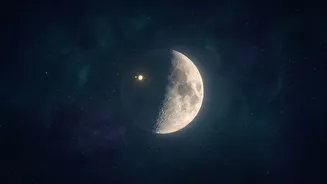
In astronomy, a conjunction happens when two celestial objects appear to pass very close to each other in the sky, as seen from our vantage point on Earth. On the nights of October 24 and 25, 2026, the Moon will have its turn, gliding near the majestic
planet Saturn. While they look like close neighbours during this event, it's all a matter of perspective. The Moon is our closest celestial companion, but Saturn is hundreds of millions of miles farther away in the vastness of space. This alignment simply places them along the same line of sight, offering a beautiful and easily observable pairing for us back on Earth.
The Stars of the Show
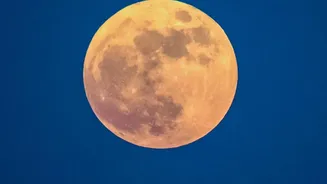
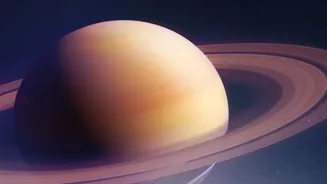
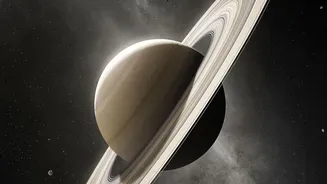
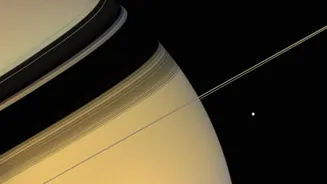
Our Moon, a familiar face in the night sky, will be in its bright waxing gibbous phase, meaning it will be well-lit and easy to find. Its partner for the evening is Saturn, the sixth planet from the Sun and a true jewel of the solar system. Saturn is famous for its breathtaking system of rings, a feature that has captivated observers since telescopes were first invented. To the naked eye, Saturn doesn't reveal its rings; instead, it shines with a steady, yellowish-golden light, distinguishing it from the twinkling of distant stars. This conjunction offers a perfect chance to identify the famous ringed planet by using the Moon as a convenient signpost.
Why This Conjunction Is Special
This particular event is noteworthy because Saturn has been putting on a great show throughout October. The planet reached opposition on October 4, an alignment where Earth passes directly between Saturn and the Sun. This makes Saturn appear at its biggest and brightest for the year, making it a brilliant target in the night sky. So when the Moon swings by on October 24 and 25, it will be meeting Saturn at its most radiant. Furthermore, after appearing to vanish in 2025 due to their edge-on angle to Earth, Saturn's rings are once again visible through telescopes, tilted enough to be easily seen. This makes the conjunction a fantastic opportunity for those with binoculars or a small telescope to get a memorable view.
Your Viewing Guide for India
For skywatchers across India, the celestial duo will be visible in the evenings of October 24 and 25. Simply step outside after sunset and look for the bright Moon. Nearby, you will spot a constant, bright point of light with a distinct golden hue—that will be Saturn. The pair will be visible for much of the night, gracefully moving across the sky. On October 24, the nearly-full Moon will appear to the left of Saturn after sunset. The exact position will shift slightly through the evening and into the next night as the Moon continues its eastward journey across the constellations. No special equipment is needed to enjoy the sight, but the view is always better away from bright city lights.
Tips for the Best Experience
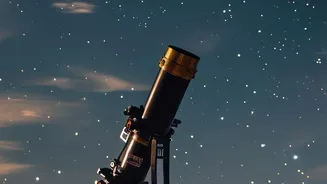
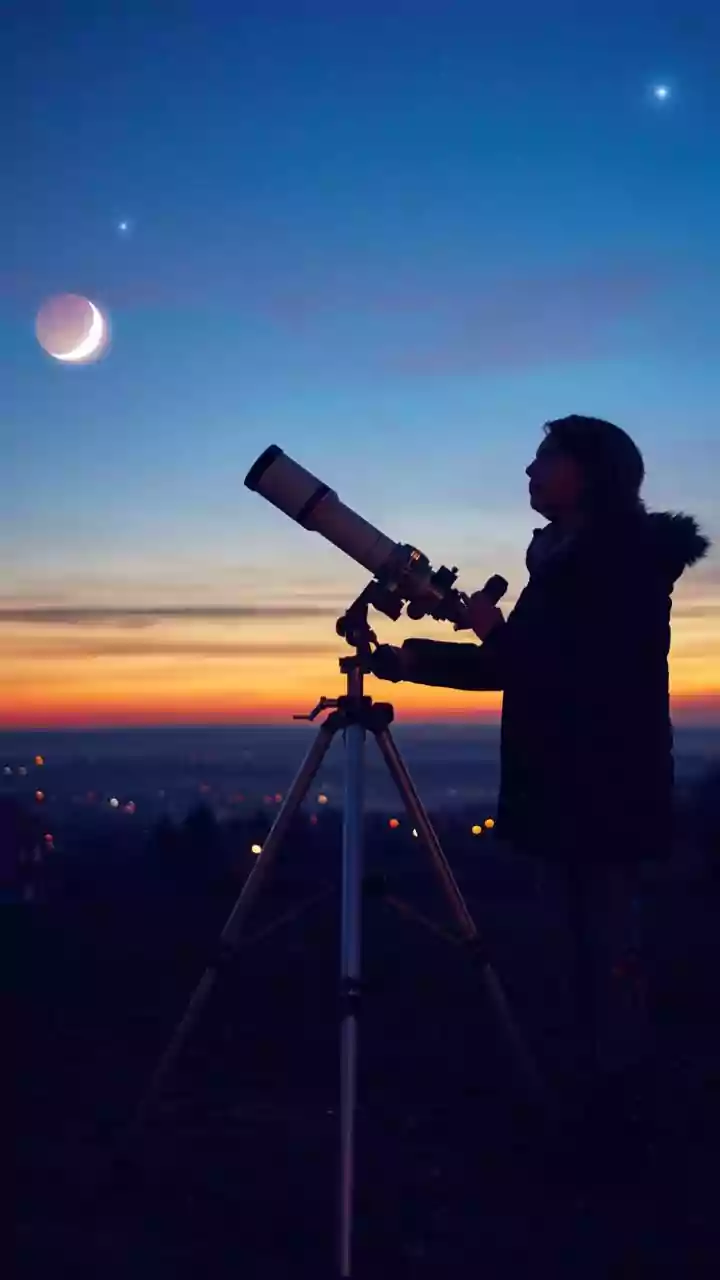
To make the most of this celestial event, find a location with a clear, unobstructed view of the horizon, away from the glare of streetlights. Give your eyes about 15-20 minutes to fully adapt to the darkness; this will help you see fainter objects and appreciate the view even more. While you can easily spot Saturn with just your eyes, a simple pair of binoculars will enhance the view, making the planet appear as a small, distinct disc. If you have access to a backyard telescope, even a small one with about 25x to 50x magnification should be enough to reveal Saturn's iconic rings, a truly unforgettable sight. Don't forget to check your local weather forecast for clear skies before you head out.