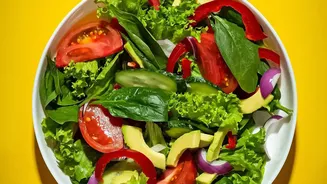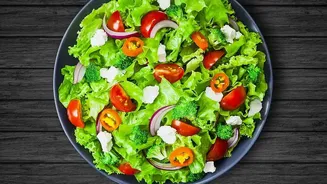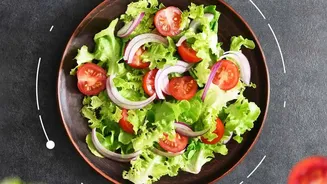



The Problem with a Crowded Bowl
When you pile all your salad ingredients into a bowl that’s too small, you create a dense, compacted mass. Tossing becomes a messy, difficult task. Instead of gracefully coating the ingredients, the dressing pools at the bottom, drenching the lower layers
while leaving the top untouched. This not only results in an inconsistent eating experience but also risks bruising delicate greens. The motion required to mix a crowded salad is more of a stir or a mash than a toss, which damages the texture of tender leaves and can break down other ingredients, leading to a limp and unappetizing final product. Without adequate space, you can't get the proper distribution of all the delicious components you've so carefully prepared.
The Science of a Perfect Toss
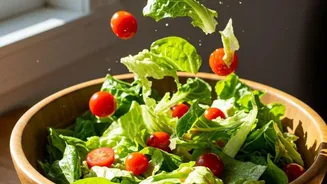
Properly tossing a salad is about more than just mixing; it’s about aeration and emulsification. When you have enough room, you can lift the ingredients from the bottom and gently turn them over. This movement allows air to circulate, keeping the greens fluffy and crisp. More importantly, it helps the dressing do its job effectively. A good vinaigrette is an emulsion of oil and acid (like vinegar or lemon juice). Tossing helps to lightly coat each leaf with this emulsion. This thin coating provides flavour in every bite and acts as a barrier, preventing the greens from becoming soggy too quickly. When the bowl is overcrowded, there is no room for air, and moisture gets trapped, steaming the greens instead of dressing them.
Choose the Right Tool for the Job
The ideal salad bowl is larger and wider than you might think. Many experts recommend using a bowl that seems comically large for the amount of salad you're making. A wide, shallow bowl is often better than a deep, narrow one. This shape gives you maximum surface area to work with, allowing you to toss the ingredients freely without them spilling over the sides. The sloped walls of a large mixing bowl help guide the leaves back into the centre as you toss, making the process cleaner and more efficient. Whether you choose wood, glass, or ceramic, the most important feature is size. For a family-sized salad, don't be afraid to break out your largest mixing bowl.
A Step-by-Step Tossing Technique
To achieve a restaurant-quality toss at home, follow these simple steps. First, ensure your greens are completely dry; a salad spinner is an excellent tool for this, as dressing won't stick to wet leaves. Next, consider adding a little salt and pepper directly to the greens and giving them a preliminary toss. This seasons the leaves themselves. Then, add your dressing. Instead of pouring it directly on top, drizzle it down the sides of the bowl. This allows you to pick up the dressing from the bottom as you toss. Using your hands or a pair of tongs, gently lift the ingredients from the bottom of the bowl and fold them over the top. Continue this gentle lifting and turning motion until every leaf is lightly glistening with dressing. If you have a very large salad, it's better to toss it in batches to avoid overcrowding.
Timing and Texture Are Everything
The final touches can make or break your salad. Always dress your salad immediately before serving. The longer dressed greens sit, the more they will wilt, especially delicate varieties. The only exception is for very tough greens like kale, which can benefit from being massaged with dressing ahead of time to tenderize them. If your salad includes heavy or delicate ingredients like soft cheese, avocado, or berries, add them after the main tossing is complete. Gently fold them in at the end to ensure they don't get smashed or lost at the bottom of the bowl. This preserves their texture and ensures they are distributed evenly for a perfect bite, every time.