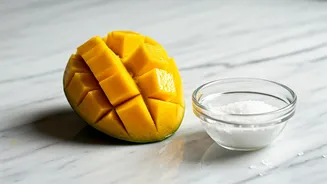









The Age-Old Wisdom in Your Kitchen
If you've ever seen your grandmother or mother dunking a fresh batch of mangoes into a bucket of water, you’ve witnessed a piece of timeless Indian wisdom. While soaking fruit in water is a common practice for cleaning, the addition of salt elevates this
simple step into a powerful food preparation technique. This isn’t just an old wives' tale; it's a practical method rooted in both tradition and basic science. Before you slice into that fragrant Alphonso or juicy Langda, letting it sit in a mild brine can significantly improve your eating experience, making the fruit safer, more digestible, and arguably even more delicious.
The Science Behind the Salt
So, what exactly does a saltwater soak do? The benefits are threefold. First, it’s a superior cleaning agent. Mango skins can harbour dirt, grime, and residual pesticides from the farm. Salt acts as a natural abrasive and disinfectant. The saline solution helps dislodge surface chemicals and kill common bacteria more effectively than plain tap water ever could. Second, it tackles the infamous ‘heat’ of the mango. Traditionally, overindulging in mangoes is believed to cause pimples, indigestion, or an increase in body heat. Modern science offers a potential explanation: phytic acid. Mangoes, like many plant-based foods, contain this anti-nutrient which can interfere with mineral absorption and generate heat during digestion. Soaking the mangoes helps leach out a significant amount of this phytic acid from the skin and pulp, making the fruit easier on your system. Finally, the process of osmosis comes into play. The higher concentration of salt in the water draws out excess water and some compounds from the mango’s skin without penetrating the flesh, helping to firm up the fruit and enhance its natural sweetness.
How to Do It Perfectly
Getting this right is incredibly simple, and you already have everything you need. There’s no need for precise measurements, but a good rule of thumb ensures the best results. 1. **Start with a Clean Bowl:** Grab a large bowl or pot, big enough to fully submerge all your mangoes. 2. **Add Water and Salt:** Fill the bowl with room-temperature water. For every litre of water, add about one to two tablespoons of regular table salt or rock salt. Stir until the salt is mostly dissolved. You’re aiming for a mild brine, not seawater. 3. **Submerge the Mangoes:** Place your mangoes into the saltwater bath. Ensure they are completely covered by the water. If they float, you can place a small plate on top to keep them submerged. 4. **Let Them Soak:** Leave the mangoes to soak for at least 30 minutes. If you have more time, an hour is even better. Avoid soaking them for much longer, as you don’t want the salt to affect the flesh. 5. **Rinse and Enjoy:** Once the time is up, remove the mangoes from the saltwater. Give them a good rinse under running tap water to wash off any residual salt from the skin. Pat them dry, and they are now perfectly prepped for you to peel, slice, and devour.
Will It Make My Mangoes Salty?
This is the most common concern, and the answer is a resounding no. The mango's thick skin is a natural barrier, and a soak of 30-60 minutes is not long enough for the salt to penetrate the flesh and alter its taste. As long as you give the fruit a thorough rinse after its bath, the only thing you will taste is the pure, unadulterated sweetness of a perfectly prepped mango. In fact, many people find that this process actually enhances the fruit’s natural flavour profile. By removing the slight bitterness of phytic acid and any surface impurities, you are left with a cleaner, sweeter, and more vibrant taste. It’s a small step that makes a noticeable difference, allowing the king of fruits to truly shine.