







Your Gut is Talking, But is Your Brain Listening?
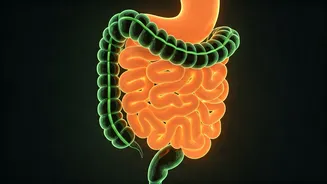
The feeling of fullness, or satiety, isn't just about a physically full stomach. It’s a complex conversation between your digestive system and your brain, orchestrated by a series of hormonal and nerve signals. [17] When you eat, your stomach stretches,
activating nerve receptors that send a message to the brain via the vagus nerve. [17] But this is only one part of the story. The more nuanced, and powerful, signals come from hormones released as food travels from your stomach into your intestines. [10, 17] The problem is, this entire communication process isn't instantaneous. It takes time—roughly 20 minutes, according to most experts—for these signals to be produced, travel through your bloodstream, and be registered by your brain. [1, 4, 8] If you finish your meal in five or ten minutes, you can easily consume more food than your body needs before your brain even gets the memo that you're full. [4]
Meet the Hormones: The Science of Satiety
Two key players in this hormonal dialogue are ghrelin and leptin. Think of ghrelin as the "go" or "hunger" hormone. [25] Produced primarily in the stomach, its levels rise when your stomach is empty, telling your brain it's time to eat. [19] After you eat, ghrelin levels fall. [19] Its counterpart is leptin, the "stop" or "satiety" hormone. [25] Produced by fat cells, leptin tells your brain that you have enough energy stored and can stop eating. [19] Other hormones like cholecystokinin (CCK) and peptide YY also play a role, released by the intestines to enhance the feeling of fullness. [2, 7] When you eat too fast, you outpace this delicate hormonal cascade. You've already reached for a second helping before leptin and CCK have had a chance to rise and tell your brain to put the brakes on. [17] This hormonal lag is a primary reason why fast eating is strongly linked to overeating. [4]
The Downside of Dining and Dashing
The consequences of consistently eating too quickly extend beyond post-meal discomfort. Over time, it can lead to significant health issues. The most immediate result is often weight gain, as studies consistently show that fast eaters tend to consume more calories and have a higher body mass index (BMI). [4, 6] This is linked to an increased risk of developing metabolic syndrome—a cluster of conditions including high blood pressure, excess belly fat, high blood sugar, and abnormal cholesterol levels—and type 2 diabetes. [1, 6] Beyond metabolic health, speed-eating can cause digestive distress. Swallowing food without chewing thoroughly forces your stomach to work harder and can lead to indigestion, bloating, and gas. [1, 15] It also means you swallow more air, which only adds to the discomfort. [1] Finally, you miss out on the psychological satisfaction of a meal, as the brain doesn't have time to process the flavors and textures, which can leave you feeling less content. [1]
How to Reclaim Your Mealtime Pace
Slowing down might feel unnatural in a fast-paced world, but a few mindful habits can make a big difference. Start by eliminating distractions; turn off the TV, put your phone away, and focus on your food. [3, 9] One of the most effective techniques is to simply put your utensils down between bites. [5, 9] This simple pause gives your body a moment to process and allows you to engage in conversation or simply breathe. Chewing more thoroughly is also crucial. Not only does it physically slow you down, but digestion actually begins in the mouth with enzymes in your saliva, so better chewing means better digestion. [10] Taking sips of water throughout the meal can also help you pace yourself and aids in feelings of fullness. [8] You can even try a challenge, like using your non-dominant hand to eat, which forces your brain out of autopilot mode. [11]
More Than Just Fullness: Other Perks of Pacing
The benefits of mindful, slower eating go beyond just registering satiety correctly. When you chew your food properly, you break it down into smaller, more manageable pieces for your stomach, which can significantly improve digestion and nutrient absorption. [1, 10] Slower eating reduces the risk of uncomfortable issues like acid reflux and bloating. [15] There's also a major psychological component. By taking the time to savor your meal, you engage all your senses, which increases enjoyment and satisfaction. [22] This can help foster a healthier relationship with food, where meals become a moment of nourishment and pleasure rather than a task to be completed. [11] Ultimately, slowing down helps you transition from mindless eating to mindful eating, a practice that supports both physical and mental well-being. [3]