







The Dangerous Illusion of Clarity
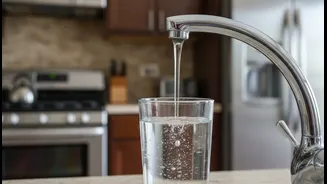
The single biggest misconception about water is that clarity equals purity. While cloudy or discoloured water is an obvious red flag, clear water offers a false sense of security. The most hazardous contaminants are often completely invisible to the naked
eye. These include harmful bacteria like E. coli, viruses that cause diseases like cholera and typhoid, and parasites. Beyond microbes, there are dissolved chemical threats such as heavy metals like lead and arsenic, which can leach from old pipes. Industrial and agricultural runoff can also introduce pesticides and other chemicals into the water supply. These substances don't alter the water's appearance, taste, or smell, yet they pose significant long-term health risks, including organ damage and even cancer.
Your Brain's Unhelpful Shortcut
So why do we instinctively trust what we see? The answer lies in psychology. Our brains are wired to use cognitive shortcuts, or heuristics, to make quick judgments about the world. Judging something's quality based on its appearance is one of these shortcuts. For early humans, assessing food and water visually was a key survival skill. However, in a modern urban environment filled with invisible chemical and microbial threats, this instinct is dangerously outdated. This tendency to equate 'looks good' with 'is good' is a powerful bias. Studies show that people, even young children, make rapid, unconscious judgments about everything from a person's trustworthiness to the safety of their environment based on superficial visual cues. When applied to water in a city, this ancient mental programming falls short.
The Urban Disconnect from Water's Source
Life in a bustling metropolis creates a significant disconnect from our natural resources. For many urban youths, water doesn't come from a visible well or a nearby river; it simply appears from a tap. This lack of visibility into the water's journey—from the treatment plant, through kilometres of ageing pipelines, to the home—obscures the many opportunities for contamination. A study on adolescents in Bengaluru revealed that while they were aware of pollution from industrial effluents and sewage, their primary understanding was linked to visible issues like overflowing drains. This highlights a gap in understanding the unseen risks within the piped supply itself. Rapid urbanisation in India has put immense stress on water infrastructure, leading to issues like intermittent supply and inadequate sewage treatment, which can compromise water safety long after it has been treated.
A Generation Raised on Purifiers and Bottled Water
Many young adults today have grown up in an era dominated by RO purifiers and the ubiquitous plastic water bottle. This has cultivated a somewhat binary perception of water safety: water from a purifier or a sealed bottle is clean, and everything else is suspect. While filtration systems are effective, this mindset can lead to complacency. It overlooks the fact that filters require regular maintenance to function correctly and doesn't account for situations where one must rely on other water sources. This generation may have less experience with traditional safety measures like boiling, and may be more inclined to trust the clear appearance of tap water in a pinch, underestimating the potential for contamination that even municipal systems can face.
How to Judge Water Quality Beyond Appearances
Trusting your eyes is not enough; you need to be more proactive. The only definitive way to know what's in your water is to test it. Simple, affordable home water testing kits are available that can check for common contaminants, bacteria, and pH levels. An electronic meter can quickly tell you the Total Dissolved Solids (TDS) level, an indicator of the total amount of mobile charged ions, including minerals, salts or metals dissolved in a given volume of water. For more comprehensive results, you can send a water sample to a state-certified laboratory. If you rely on municipal water, you can request the latest Consumer Confidence Report (CCR) from your local water utility, which details their testing results. And never forget the most reliable method of all for microbial threats: bringing water to a rolling boil for at least one minute kills most bacteria, viruses, and parasites.