




The Logic of Going Up
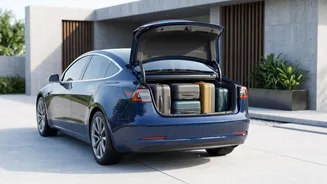
The typical approach to packing a car boot is to lay everything flat, covering the floor before starting a second, unstable layer. Vertical trunk stacking flips this idea on its side—literally. The principle is to treat your boot space like a library
shelf, not a floor. By placing your largest, sturdiest suitcases upright along the back of the rear seats, you create a solid, organised base. This method, often compared to a game of Tetris, uses the full height of the boot from the very beginning. It establishes a stable wall of luggage, preventing the inevitable slide and collapse that happens when you corner too quickly. This foundation makes the rest of the space far more efficient and easier to pack.
A Step-by-Step Guide
First, prepare your boot by removing any non-essential items. Next, identify your heaviest and most rigid suitcases; these are your building blocks. Place them upright on their sides, with the wheels facing up or to the side, pressed firmly against the back of the passenger seats. This keeps the car’s centre of gravity low and stable. Continue lining up your large bags to form a solid first row. With this base established, you now have a series of well-defined vertical gaps and a solid top surface to work with. Use soft-sided bags, duffels, and backpacks to fill these empty spaces. These pliable bags can be moulded into the gaps between the hard suitcases, ensuring no space is wasted. Finally, place the lightest items, like pillows or jackets, on top, making sure not to block your rear view.
The Right Bag for the Right Gap
This technique works best with a mix of luggage types. Hard-sided suitcases are excellent for creating that initial stable wall. Their rigid structure provides the support needed to hold everything else in place. However, a car full of only hard-shell luggage can be difficult to pack perfectly, as you’re left with awkward, unfillable gaps. This is where soft-sided bags, like duffel bags and backpacks, become your most valuable players. Their flexibility allows them to be squeezed into narrow slots and irregular spaces that a rigid case could never fit into. For a group trip, a good rule of thumb is to have each person bring one hard-case and one smaller, soft 'overflow' bag for maximum packing efficiency. Using packing cubes within your luggage can further compress clothing and keep items organised.
Common Mistakes to Avoid
The most common packing error is loading heavy items last and placing them on top of lighter ones. This not only crushes whatever is underneath but also makes the vehicle less stable by raising its centre of gravity. Another frequent mistake is burying essentials. Items you might need during the drive—like a first-aid kit, snacks, water, or a rain jacket—should always be packed last, in an accessible spot either at the top of the boot or inside the car with the passengers. Also, resist the urge to pack so high that your view out of the rear window is obstructed. This is not just an inconvenience; it’s a significant safety hazard that can get you ticketed.
Beyond the Boot
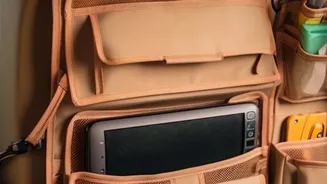
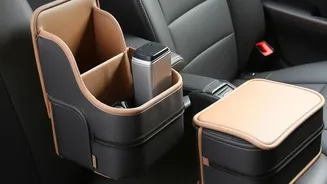
Once the boot is perfectly packed, don't forget the underutilised spaces inside the car. The footwells in the back seat (if unoccupied) can hold soft bags or a cooler. Door pockets and seat-back organisers are perfect for stashing smaller items like charging cables, books, and wet wipes that you'll want to access easily. Having a dedicated bag for in-transit essentials prevents the need to pull over and unpack the entire boot to find a phone charger. By thinking strategically about every available nook and cranny, you ensure the main cabin stays comfortable and clutter-free, making the journey itself as enjoyable as the destination.