



A Universe of Data
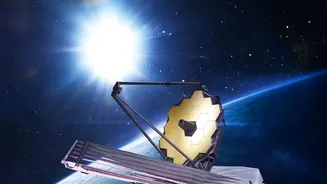
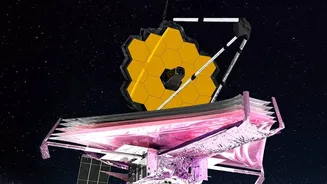
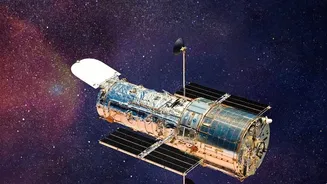
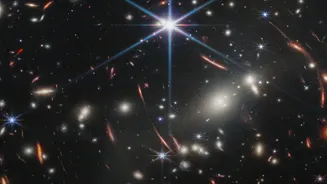
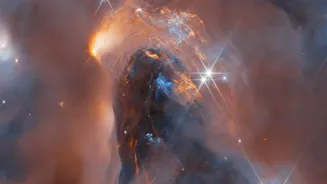
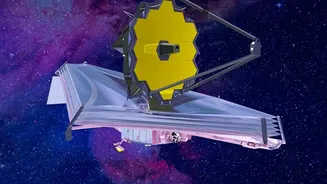
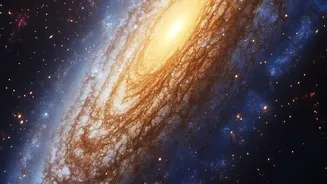
Modern astronomy is a story of big data. Telescopes like the Hubble and James Webb, along with numerous other observatories, generate petabytes of information, capturing images and signals from the farthest reaches of space. For decades, the process of sifting
through this data for new discoveries has been a monumental task, often relying on painstaking manual review by astronomers or the help of citizen scientists. While human eyes are excellent at spotting anomalies, the sheer volume of data makes it impossible to analyze everything thoroughly. This data deluge means that countless discoveries might be lying dormant in archival data, waiting to be found. It’s a classic needle-in-a-haystack problem, but the haystack is the size of a galaxy.
Enter the AI Astronomer
To conquer this data challenge, NASA is turning to artificial intelligence. Instead of replacing human scientists, these AI tools act as powerful assistants, capable of scanning massive datasets in a fraction of the time. A key part of this strategy involves developing 'foundation models'—large AI systems trained on vast quantities of unlabeled data. These models learn to recognize patterns on their own, from the tell-tale dip in a star's light that signifies an exoplanet to the strange, distorted shapes of merging galaxies. For example, a deep learning system called ExoMiner analyzed data from the Kepler Space Telescope and successfully identified 301 new exoplanets that had previously been missed.
From Months of Work to Minutes of Code
The speed at which these AI tools operate is transformative. One team of astronomers used an AI tool named AnomalyMatch to scan nearly 100 million image cutouts from the Hubble Legacy Archive. In just two and a half days, it identified over 1,300 objects with unusual appearances, more than 800 of which had never been documented. These included interacting galaxies, gravitational lenses, and even objects that defied existing classifications. Similarly, other machine learning programs have been used to identify over 1,000 previously undiscovered asteroids by spotting their faint, curved trails in Hubble images. This process of automating data analysis reduces what used to take months or even years of work down to mere hours or days, dramatically accelerating the pace of discovery.
Training AI to See the Unseen
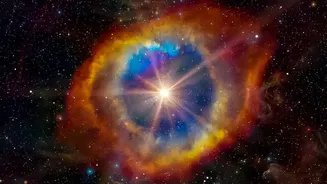
How does an AI learn to spot a cosmic anomaly? The process is similar to how humans learn, but on a massive scale. The models are 'trained' on huge libraries of existing astronomical images and data. For instance, they are fed thousands of examples of what a normal spiral galaxy looks like, what a planetary nebula looks like, and so on. Over time, the AI builds an internal understanding of these categories. Once trained, it can then scan new, unclassified data and flag anything that doesn't fit its learned patterns. These anomalies are then presented to human astronomers for verification and further study. This collaborative approach combines the speed and scale of machine learning with the expert intuition of scientists.
The Future of AI-Powered Exploration
This is just the beginning. NASA is systematically rolling out foundation models for different areas of science, including planetary science, heliophysics (the study of the Sun), and more. The recently announced Genesis Mission, a White House initiative that NASA has joined, aims to further accelerate this fusion of AI with science and engineering to solve complex challenges. Beyond data analysis, AI is also crucial for mission autonomy. On Mars, the Perseverance rover uses AI to navigate the surface and select rock samples for analysis without constant human input. Future applications could include AI-powered systems that manage satellite constellations, predict solar flares, and even help navigate spacecraft on long journeys through the cosmos.