


A Constant Eye on the High-Energy Sky
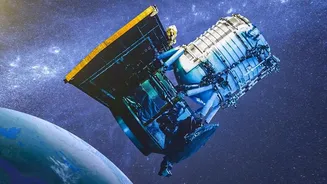
For well over ten years, NASA's Fermi Gamma-ray Space Telescope has been circling the Earth, staring into the cosmos. Its mission is not to capture pretty pictures of planets and nebulae, but to detect gamma rays—the most energetic form of light in the universe.
These rays are thrown off by some of the most violent and extreme environments space has to offer, places where physics is pushed to its absolute limits. Before Fermi, our view of the gamma-ray sky was fleeting, like catching a glimpse of a lightning strike. But by mapping the entire sky continuously for years, Fermi has created a long-exposure photograph, revealing the secrets of objects and events we could only guess at before. This has allowed scientists to move from simply cataloging bizarre events to truly understanding the processes that drive them.
What Makes an Environment 'Extreme'?
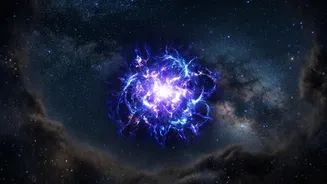
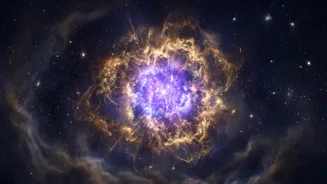
When scientists talk about 'extreme environments', they're referring to places with conditions far beyond anything we experience on Earth. Think of the crushing gravity near a black hole, the mind-boggling density of a neutron star, or the explosive fury of a star's death. These environments involve temperatures of millions of degrees, magnetic fields trillions of times stronger than Earth's, and particles accelerated to nearly the speed of light. Gamma rays are the unique fingerprints of these cosmic powerhouses. They are produced when matter is annihilated, accelerated, or otherwise subjected to unimaginable forces. Studying them gives us a direct line of sight into the hearts of these enigmatic cosmic engines.
Solving Black Hole and Pulsar Mysteries
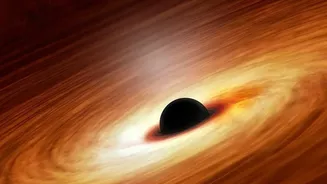
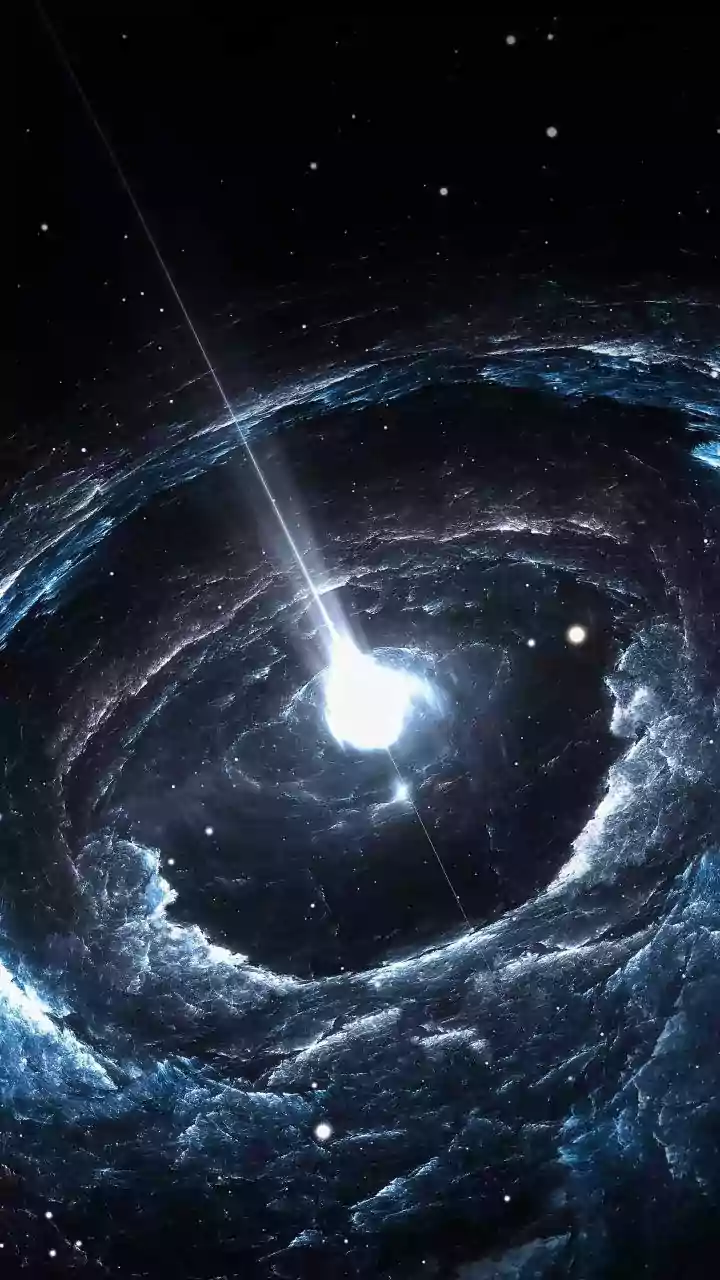
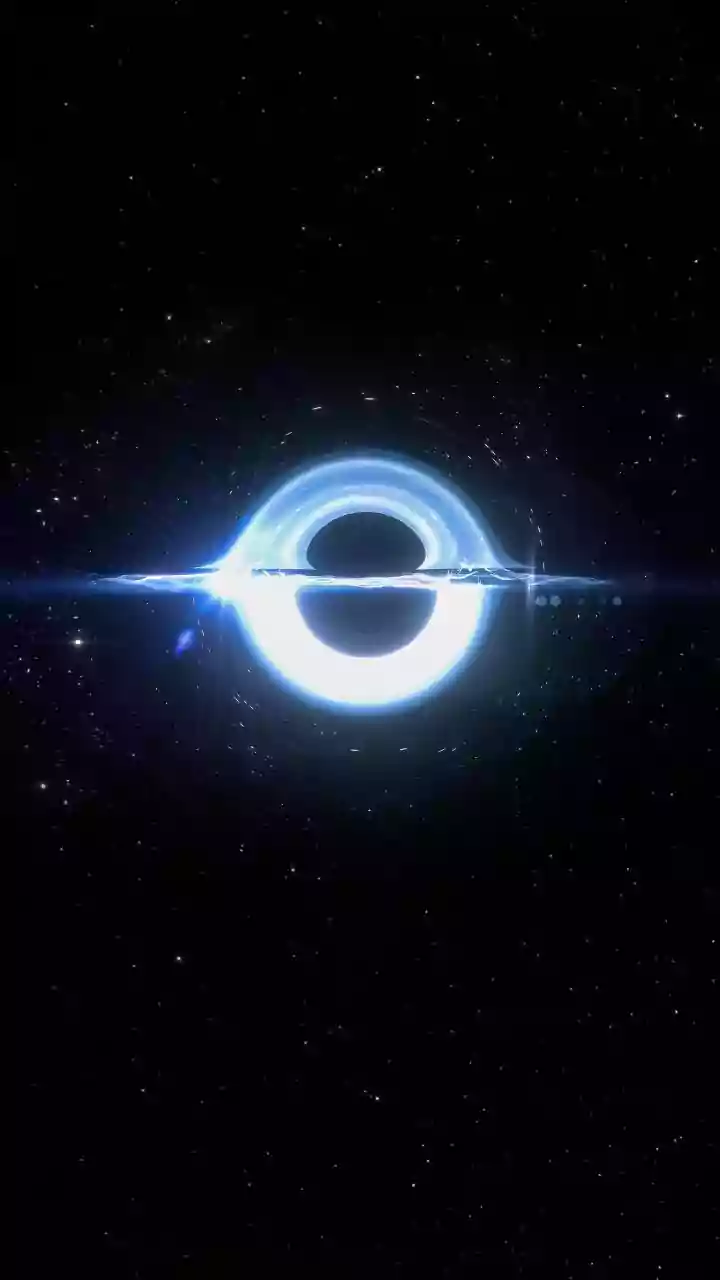
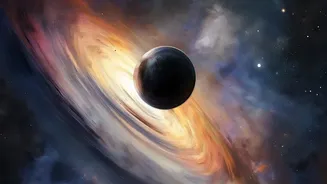
Supermassive black holes, millions or billions of times the mass of our sun, lurk at the center of most galaxies, including our own Milky Way. While they don't emit light themselves, the material swirling around them can create colossal jets of particles, glowing brightly in gamma rays. Thanks to Fermi's long-term monitoring, scientists have seen these jets flicker and change over time, providing clues about how black holes 'feed'. The decade of data also helped uncover two giant, previously unknown structures erupting from our galaxy's center, dubbed 'Fermi Bubbles'. These 25,000-light-year-tall lobes of hot gas are thought to be the remnants of an ancient eruption from our galaxy's central black hole. Furthermore, Fermi has been a revolutionary tool for studying pulsars—the rapidly spinning, super-dense corpses of massive stars. It discovered the first pulsars that emit only gamma rays and has now cataloged hundreds, up from just a handful known before its launch.
A New Era of Multi-Messenger Astronomy
Perhaps the most groundbreaking contribution of this decade of data is Fermi’s role in launching 'multi-messenger astronomy'. This is the idea of observing a single cosmic event using completely different kinds of signals, like light and gravitational waves. On August 17, 2017, this idea became a reality. Fermi detected a short burst of gamma rays from the collision of two neutron stars. At almost the exact same time, gravitational wave detectors on Earth felt the ripple in spacetime caused by that same collision. It was the first time in history that a single cosmic event was 'seen' through both light and gravity, confirming theories and opening a completely new window to the universe. This event, made possible by Fermi's constant watch, marked a turning point in how we explore the cosmos.