
Why A Daily Practice Matters
The key to improving flexibility isn't about contorting yourself into a pretzel on day one; it's about consistency. A short, daily practice is far more effective than one long, occasional session. When you stretch regularly, you're not just lengthening
muscles; you're also communicating with your nervous system, improving blood flow, and enhancing your range of motion. Studies and practitioners suggest that with consistent practice, you can start to notice improvements in flexibility in as little as two to four weeks. The goal is to create a sustainable habit that feels good, not to push into pain. Remember to listen to your body, breathe deeply, and never force a stretch.
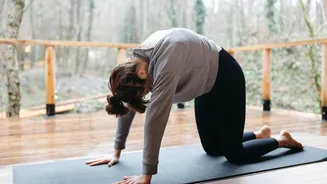
Cat-Cow Stretch (Marjaryasana-Bitilasana)
This is the perfect warm-up for your spine and torso. Start on all fours with your wrists directly under your shoulders and your knees under your hips. As you inhale, drop your belly, lift your chest and tailbone, and look forward into Cow Pose. As you exhale, round your spine toward the ceiling, tuck your chin to your chest, and press the mat away in Cat Pose. Flow between these two movements for 5-10 breaths. This gentle sequence increases spinal mobility and brings awareness to your breath, preparing your body for the poses to come.
Downward-Facing Dog (Adho Mukha Svanasana)
From your hands and knees, tuck your toes, lift your hips up and back, forming an inverted 'V' shape with your body. This quintessential yoga pose is a full-body stretch, targeting the hamstrings, calves, spine, and shoulders all at once. If your hamstrings are tight, keep a generous bend in your knees to maintain a long, straight spine—this is more important than getting your heels to the floor. Spread your fingers wide and press firmly into your hands. You can 'pedal' your feet, bending one knee and then the other, to gently deepen the stretch in your calves.
Low Lunge (Anjaneyasana)
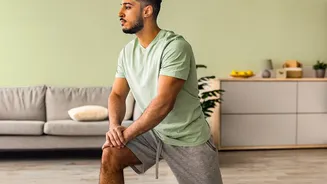
From Downward-Facing Dog, step one foot forward between your hands and gently lower your back knee to the mat. Make sure your front knee is stacked directly over your ankle. You can keep your hands on the floor or on yoga blocks for support, or you can bring them to your front thigh. This pose provides a fantastic stretch for the hip flexors and quadriceps of the back leg, an area that often becomes tight from prolonged sitting. Hold for 5-8 breaths before switching to the other side.
Seated Forward Bend (Paschimottanasana)
Sit on the floor with your legs extended straight out in front of you. You can sit on the edge of a folded blanket to help tilt your pelvis forward. Inhale to lengthen your spine, and as you exhale, begin to hinge at your hips, walking your hands forward. It doesn't matter how far you go; the goal is to feel a stretch in your hamstrings and lower back, not to touch your toes. Avoid rounding your upper back. With each inhale, find a little more length, and with each exhale, gently deepen the fold. Hold for 5-10 deep breaths.
Cobra Pose (Bhujangasana)
Lie on your stomach with your legs extended behind you and place your hands under your shoulders, fingers pointing forward. Hug your elbows into your body. On an inhale, press into your hands to gently lift your head, chest, and shoulders off the floor. Keep your gaze slightly forward to avoid crunching your neck. Cobra Pose is a gentle backbend that helps improve spinal flexibility and opens the chest and shoulders. Only lift as high as you can without straining your lower back. Hold for a few breaths, then release back down.
Supine Spinal Twist (Supta Matsyendrasana)
Lie on your back and hug both knees into your chest. Extend your arms out to the sides in a 'T' shape. As you exhale, let both knees fall to one side, keeping your shoulders grounded on the mat. You can turn your head to look in the opposite direction of your knees to complete the twist. This restorative pose helps to release tension in the spine, lower back, and hips. It’s a perfect way to wind down your practice. Hold for 5-10 breaths on each side.