






Understanding the Monsoon Gap
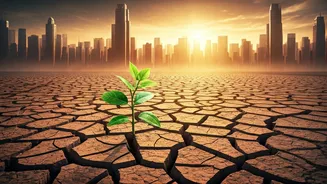
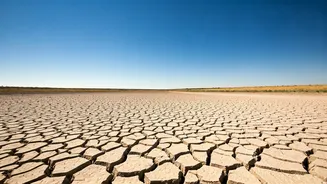
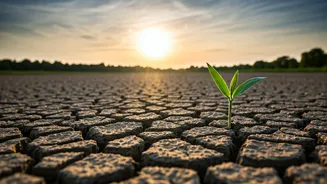
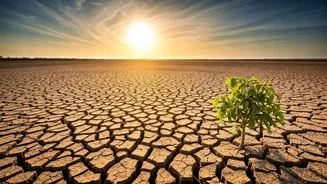
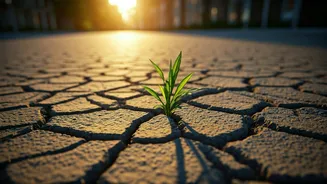
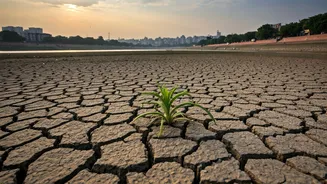
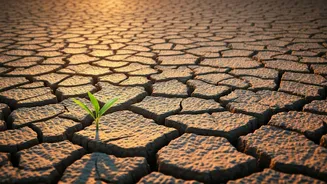
The monsoon doesn’t rain continuously. It has always had wet and dry spells. A 'break' or 'gap' is a period of days or even weeks with little to no rainfall, even in the middle of the season. These breaks are a natural part of the monsoon cycle, often
caused by shifts in the monsoon trough, a low-pressure belt that dictates rainfall. However, climate change is making these gaps longer, more frequent, and more unpredictable, turning a normal phenomenon into a critical problem.
From Rain-Rich to Water-Poor
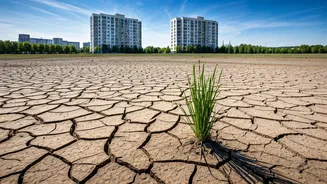
How can a country receiving months of rain face water stress? The issue lies in dependency and timing. Our cities and farms are built on the expectation of consistent rainfall to replenish reservoirs and recharge groundwater. A weak start to the monsoon, as seen in June 2026 with a countrywide deficit of over 40%, means reservoirs are not filled on schedule. When a prolonged gap follows, demand quickly outstrips the stored supply, creating an immediate shortage even before the summer heat returns.
The Urban Connection
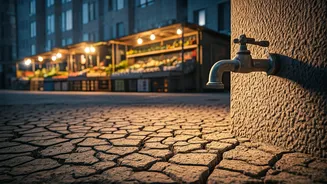
Cities are particularly vulnerable. Many, like Mumbai, Bengaluru, and Delhi, rely on a network of lakes and distant reservoirs that depend on steady monsoon rains. When these sources fail to fill, municipal corporations are forced to impose water cuts, as seen in Mumbai, where construction and swimming pools faced restrictions. The problem is worsened by rapid, often unplanned urbanization that has paved over natural recharge zones and an over-reliance on groundwater, which is already critically depleted in many urban centres. About 70% of India's water comes from groundwater, and erratic rains prevent this crucial buffer from being replenished.
A Cascade of Consequences
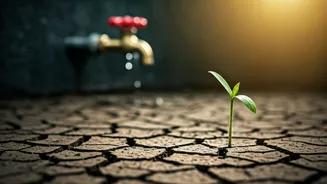
Dry taps are just the most visible symptom. For farmers, a monsoon gap during the crucial sowing months of June and July can be devastating, leading to delayed planting and fears of crop failure. This agricultural stress can ripple through the economy, threatening food security and pushing up inflation. It also impacts energy production from hydropower dams, which may have to choose between generating electricity and conserving water for drinking and irrigation. The burden often falls heaviest on ordinary families, who face long queues at public taps and may be forced to pay exorbitant prices for water from private tankers.
Adapting to the New Normal
The increasing frequency of monsoon gaps makes it clear that we can no longer rely on old patterns. The solution requires a two-pronged approach. At a systemic level, cities must invest heavily in water conservation and infrastructure. This includes restoring urban water bodies like lakes and ponds, scaling up rainwater harvesting, and improving wastewater treatment to enable reuse. Strengthening planning and governance is crucial to ensure poor rainfall doesn't automatically translate to water stress. At an individual level, conserving water at home becomes not just a good habit but a civic duty. Simple measures, when adopted by millions, can significantly reduce the strain on a stressed system.