




Shilpa's Latest Brain-Body Drill
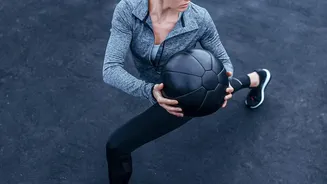
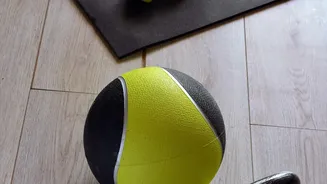
In a recent social media post, Shilpa Shetty showcased a unique and accessible exercise designed to improve the connection between mind and body. The workout involves using two small balls in a coordination drill that looks deceptively simple. It begins
with standing and repeatedly dropping and catching the balls with crossed arms, a movement that requires intense focus and hand-eye coordination. To increase the difficulty, she performs the same drill while balancing on one leg, adding a significant stability challenge to the cognitive task. Shetty explained that this type of exercise helps activate different areas of the brain, improve mental clarity, strengthen motor control, and enhance overall body awareness by forcing the brain and body to work together.
The Classic Tool: The Stability Ball
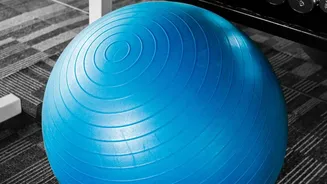
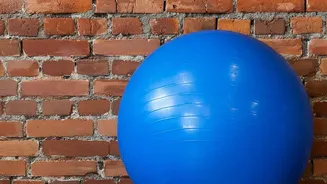
While Shilpa's drill highlights cognitive-motor skills, the broader world of ball workouts often centres on the large, inflatable stability ball, also known as a Swiss ball. Originally used in physical therapy, this piece of equipment has become a fitness staple for a key reason: its instability. When you perform exercises on its wobbly surface, your body has to constantly make tiny adjustments to stay balanced. This process forces deep stabilizing muscles in your core, hips, and back—muscles often neglected in traditional workouts—to engage and work harder, providing a much more effective workout for balance and coordination.
Building a Foundation of Core Strength
The secret to better balance lies in a strong, stable core. Stability ball exercises are exceptionally effective at targeting these foundational muscles. Every movement, whether it's a plank, squat, or push-up, requires your abdominals and lower back to fire up to keep you from toppling over. This constant engagement does more than just tone your midsection; it builds functional strength that translates directly into everyday life. A strong core improves your posture, reduces the risk of back pain and injury, and enhances your ability to perform daily movements like lifting and bending with greater control and stability.
Beginner-Friendly Stability Ball Exercises
Integrating a stability ball into your routine doesn't have to be intimidating. There are several effective exercises perfect for beginners. Start with a Wall Squat by placing the ball between your lower back and a wall, then squatting down. This helps you perfect your squat form while engaging your core. Another great exercise is a modified Plank, where you place your forearms on the ball instead of the floor; the instability will immediately challenge your core. You can also try a Ball Pass by lying on your back and passing the ball from your hands to your feet, lifting your shoulders and legs to meet in the middle, which targets the entire abdominal wall.
Tips for a Safe and Effective Workout
To get the most out of your ball workout and avoid injury, safety is paramount. First, ensure you choose the correct ball size for your height. When you sit on it, your hips should be level with or slightly higher than your knees. Always use the ball on a non - slip surface to prevent it from sliding out from under you. When you 're just starting, focus on slow , controlled movements. The goal is to maintain balance and proper form , not to rush through the repetitions. As your strength and coordination improve , you can gradually progress to more challenging exercises. Remember to keep your core engaged throughout every movement.