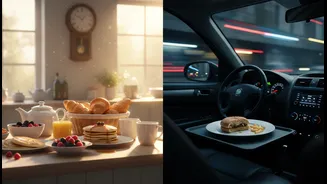










The Morning Time Crunch
When the alarm rings, it’s a race against time. For many with a long commute, the first thing to be sacrificed is a proper breakfast. The choice between an extra 20 minutes of sleep or sitting down for a meal is often an easy one. This leads many to either
grab something unhealthy on the go or skip the morning meal entirely. Studies have shown that time pressure is a significant reason for altered eating habits. Skipping breakfast, in particular, has been linked to several health concerns, including an increased risk for obesity and metabolic syndrome. When you start your day on an empty stomach after a long journey, you're more likely to feel sluggish and overcompensate with a larger, less healthy lunch.
The Late-Night Dinner Spiral
Just as the morning commute steals breakfast time, the evening journey pushes dinner later into the night. After navigating traffic and crowded public transport, cooking is often the last thing anyone wants to do. This exhaustion and delay mean dinner might not happen until 8, 9, or even 10 pm. Research links late-night eating to several negative health outcomes. Eating heavy meals close to bedtime can disrupt sleep, cause digestive issues like acid reflux, and may lead to weight gain because the body's metabolism naturally slows down at night. Over time, this pattern can interfere with your body's internal clock, or circadian rhythm, affecting everything from hormone regulation to how your body stores fat.
Stress, Fatigue, and Unhealthy Choices
Commuting is inherently stressful. Traffic jams and delays increase fatigue and mental strain, which can directly influence food choices. Studies have found that people with longer commutes are more likely to consume fast food and unhealthy snacks. These foods are often high in sugar and fat, offering a quick but fleeting sense of comfort or energy. A survey found that many drivers even choose their commuting route based on the availability of drive-thru restaurants. This cycle of stress-induced eating can lead to consuming hundreds of extra calories a week, contributing to weight gain and other health issues over the long term.
Reclaim Your Breakfast: Quick and Smart Tips
Fighting back against the commuter-driven meal skip starts with planning. You don't need a leisurely breakfast to start your day right. Focus on portable, nutrient-dense options. Overnight oats, prepared in a jar the night before, are a perfect grab-and-go meal. Smoothies can be blended in minutes and sipped during your journey. Even simpler options like a piece of fruit, a handful of nuts, or a hard-boiled egg can provide the necessary fuel to avoid a mid-morning energy crash. The key is to prepare these items in advance so they are as convenient as an unhealthy alternative.
Strategies for a Better Dinner Routine
To avoid excessively late dinners, meal prepping is your best ally. Spend an hour or two on the weekend cooking in batches. Prepare large portions of grains like quinoa or brown rice, roast a tray of vegetables, and cook a lean protein source. With these components ready, you can assemble a healthy meal in minutes when you get home. Simple recipes like one-pot meals or sheet-pan dinners also minimise cooking and cleaning time. If cooking after a long day is not an option, ensure your freezer is stocked with healthy, pre-portioned meals you made yourself.