







A New Generation of Climate Warriors
The Indian Space Research Organisation is actively cultivating the next generation of scientists through a variety of outreach and training programs. Initiatives like the YUva VIgyani KAryakram (YUVIKA) or "Young Scientist Programme" are designed to impart
basic knowledge on space technology and its applications to school children, particularly from rural areas. Furthermore, ISRO's Indian Institute of Remote Sensing (IIRS) regularly conducts certification courses and Massive Open Online Courses (MOOCs) focused on critical topics like climate change. A recent course in June 2026, for example, focused on "Climate Change Induced Disasters," aiming to equip participants with the skills to use geospatial technologies for disaster management. These programs are not just about education; they are a strategic effort to "catch them young" and encourage students to pursue careers in Science, Technology, Engineering, and Mathematics (STEM), creating a pipeline of talent ready to tackle national challenges.
The Power in the Data
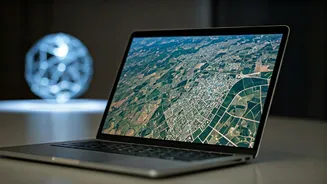
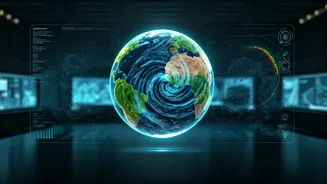
At the heart of this initiative is ISRO's treasure trove of Earth Observation (EO) data. Through portals like the National Information system for Climate and Environment Studies (NICES), ISRO provides access to long-term data on what are known as Essential Climate Variables (ECVs). These are critical measurements of the Earth's systems—spanning the atmosphere, oceans, and land—that help us understand and model climate change. The NICES program, operational since 2012, makes dozens of geophysical products available, tracking everything from cloud properties and sea levels to soil moisture and forest fires. Data from platforms like the Meteorological and Oceanographic Satellite Data Archival Centre (MOSDAC) and Bhuvan are invaluable resources that allow students and researchers to move beyond theory and work with real-world, high-quality scientific information.
From Data to Solutions
When this data is placed in the hands of innovative students, practical solutions begin to emerge. While specific projects vary by challenge, the goal is consistent: turn complex data into usable tools. Imagine a team of students from a coastal state developing a model that uses ISRO's ocean surface data to predict localised flooding with greater accuracy. Another group might use land cover and soil moisture data to create an early warning system for farmers, helping them anticipate drought conditions. Challenges like the ATL Space Challenge, a collaboration between NITI Aayog's Atal Innovation Mission and ISRO, have provided platforms for students to develop such innovations. These projects demonstrate the core purpose of ISRO's outreach: empowering young minds to build tangible solutions for their own communities using cutting-edge space technology.
Building a Future-Ready India
Beyond the immediate innovations, these programs serve a larger, long-term national purpose. By engaging students directly with space science, ISRO is fostering a culture of scientific inquiry and problem-solving. It's an investment in human capital that aims to position India not just as a user of climate data, but as a leader in developing climate solutions. Initiatives like the ISRO Robotics Challenge, which tasks students with designing rovers and UAVs for planetary exploration, show a commitment to building a deep pool of talent capable of tackling complex engineering problems. This strategy ensures that India will have the skilled workforce necessary to drive innovation, support its ambitious space programs, and contribute meaningfully to global scientific challenges for decades to come.