




The Ultimate Survival Challenge
Sustaining human life in the harsh vacuum of space is the single greatest challenge for long-duration missions. Every kilogram of water, oxygen, and food launched from Earth is incredibly expensive and finite. For a multi-year mission to Mars, resupply
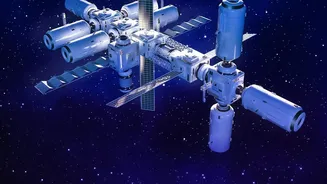
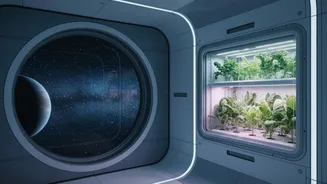
is not an option. The solution is to mimic Earth's own natural cycles within the confines of a spacecraft. This is the core idea behind closed-loop systems: creating a miniature, self-sustaining ecosystem. The International Space Station (ISS) serves as the primary testbed for these technologies, which are collectively known as the Environmental Control and Life Support System, or ECLSS. This complex network of machines is responsible for everything from maintaining air pressure to managing waste and providing clean water.
From Urine to Drinking Water
The most famous—and perhaps misunderstood—part of the ECLSS is the Water Recovery System. This system reclaims about 98% of all water on the station, including from astronauts' sweat, breath, and, yes, urine. The process is a marvel of engineering. The Urine Processor Assembly uses vacuum distillation to boil urine at a low temperature, separating pure water vapor from contaminants. A special centrifuge helps separate liquids and gases in microgravity. This recovered water, along with moisture collected from the cabin air, is then sent to the Water Processor Assembly. Here, it passes through a series of multi-filtration beds and a catalytic oxidizer that breaks down any remaining impurities. The result is water that is often cleaner than what most people drink on Earth.
Creating Breathable Air
Oxygen is just as critical as water, and the ISS generates most of its own. The primary method is electrolysis, performed by the Oxygen Generation System (OGS). This system takes the ultra-pure recycled water and passes an electric current through it, splitting the H2O molecules into hydrogen and oxygen. The oxygen is released into the cabin atmosphere, while the hydrogen is vented into space or used in another recycling process. But the system also has to deal with what astronauts exhale: carbon dioxide. A separate Air Revitalization System uses a series of filters and special materials called molecular sieves to capture the CO2, keeping the air safe to breathe.
Closing the Loop Further
True self-sufficiency means wasting nothing. NASA has even developed systems to get more out of waste products. For instance, the Sabatier system combines the waste hydrogen from oxygen generation with the captured carbon dioxide exhaled by the crew. This chemical reaction produces two valuable outputs: water, which can be cycled back into the system, and methane, which is currently vented but could one day be used as a propellant. This constant drive to improve efficiency is critical. Recent advancements in brine processors, for example, are now wringing out the last drops of water from the concentrated urine brine, pushing water recovery rates ever higher. These might seem like small gains, but on a thousand-day mission to Mars, every drop and every breath counts.
The Next Frontier: Mars and Beyond
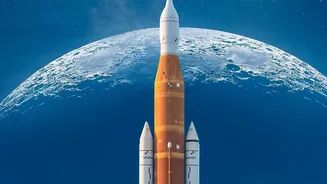
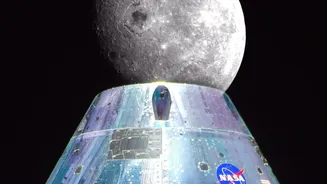
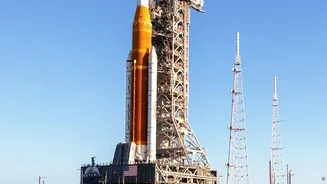
The lessons learned from the ECLSS on the ISS are directly informing the design of systems for future missions, including NASA's Artemis program to the Moon and eventual journeys to Mars. Engineers are focused on making these systems even more reliable, smaller, and more autonomous for the deep-space transit habitats that will carry the first explorers to the Red Planet. Technologies are also being developed to use resources found on-site, a concept known as In-Situ Resource Utilization (ISRU). For instance, the MOXIE experiment on the Perseverance rover has already proven that it's possible to generate oxygen from the thin, carbon-dioxide-rich Martian atmosphere. Combining these advanced recycling systems with the ability to live off the land will be the key to establishing a sustained human presence beyond Earth.