



The Sun’s Unpredictable Temper
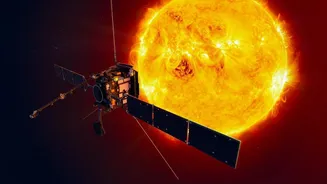
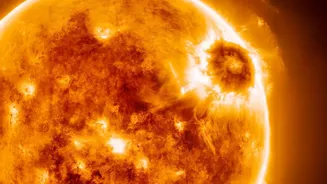
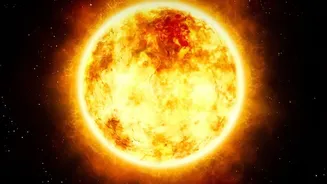
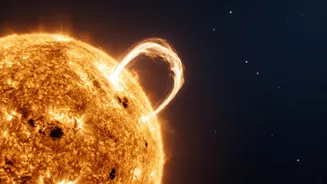
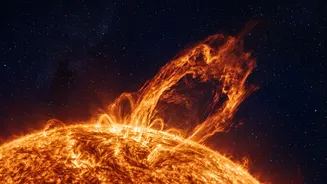
Our sun is not always the calm, life-giving star it appears to be. It has a volatile side, prone to violent eruptions known as coronal mass ejections (CMEs). These are colossal clouds of magnetised plasma and charged particles hurled into space. While
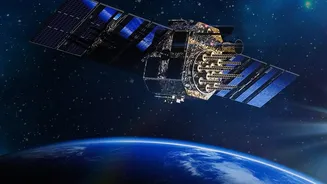
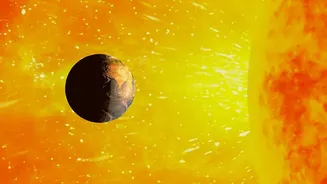
most CMEs miss our planet entirely, the ones that score a direct hit can be catastrophic. When a powerful, Earth-directed CME interacts with our planet's magnetic field, it triggers a geomagnetic storm. The historical benchmark for such an event is the 1859 Carrington Event, a solar superstorm that set telegraph offices on fire and created auroras so bright people could read newspapers by their light. In today's hyper-connected world, a similar event could be devastating, threatening to knock out power grids, permanently damage satellites, and disrupt global communications for months or even years.
The Challenge of Forecasting
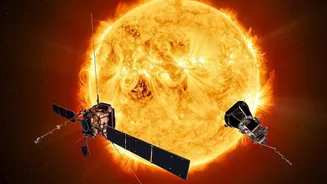
Predicting which solar eruptions will impact Earth is incredibly difficult. Scientists can see explosions on the sun's surface, but determining their trajectory and intensity is another matter. A CME can take anywhere from one to three days to travel the 150 million kilometres to our planet. This journey gives us a warning window, but it's not enough to know if a storm is coming; we need to know how severe it will be when it arrives. Current methods rely on a network of satellites monitoring the sun, but this gives an incomplete picture. The sheer volume of data and the complex physics involved make accurate and timely forecasting a monumental challenge for human analysts alone.
AI Enters the Space Weather Arena
This is where artificial intelligence comes in. Instead of just observing present conditions, AI models can be trained on decades of solar data to recognise the subtle, hidden patterns that precede a dangerous, Earth-directed storm. By analysing vast datasets of solar wind measurements, magnetic field changes, and satellite imagery, machine learning algorithms can learn to connect specific solar phenomena with their eventual impact on Earth. One of the most promising developments is an AI model known as DAGGER (Deep Learning Geomagnetic Perturbation). Developed with support from NASA, DAGGER can predict the specific location and severity of a geomagnetic disturbance anywhere on Earth with about 30 minutes of advance warning. While 30 minutes may not sound like much, it can be just enough time for power grid operators and satellite controllers to take protective measures.
A Boost for India’s Digital Backbone
For a nation as technologically ambitious and digitally integrated as India, the threat of space weather is significant. The country's growing reliance on satellite constellations for communication, weather forecasting, and its indigenous navigation system, NavIC, makes it vulnerable. A severe solar storm could disrupt these vital services, impacting everything from aviation and shipping to agriculture and disaster management. Early warnings from AI-powered systems would be a game-changer, providing crucial time to safeguard these assets. Indian scientists are also at the forefront of this research. A team from the Indian Institute of Astrophysics recently discovered that the thermal properties of CMEs—how they heat or cool during their journey—can indicate how severe a storm will be. This research, combined with data from India’s own solar observatory, Aditya-L1, will be crucial for developing even more sophisticated predictive models.