

Worlds Bigger Than Our Own
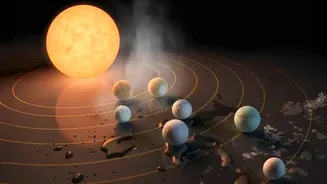
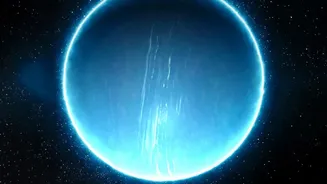
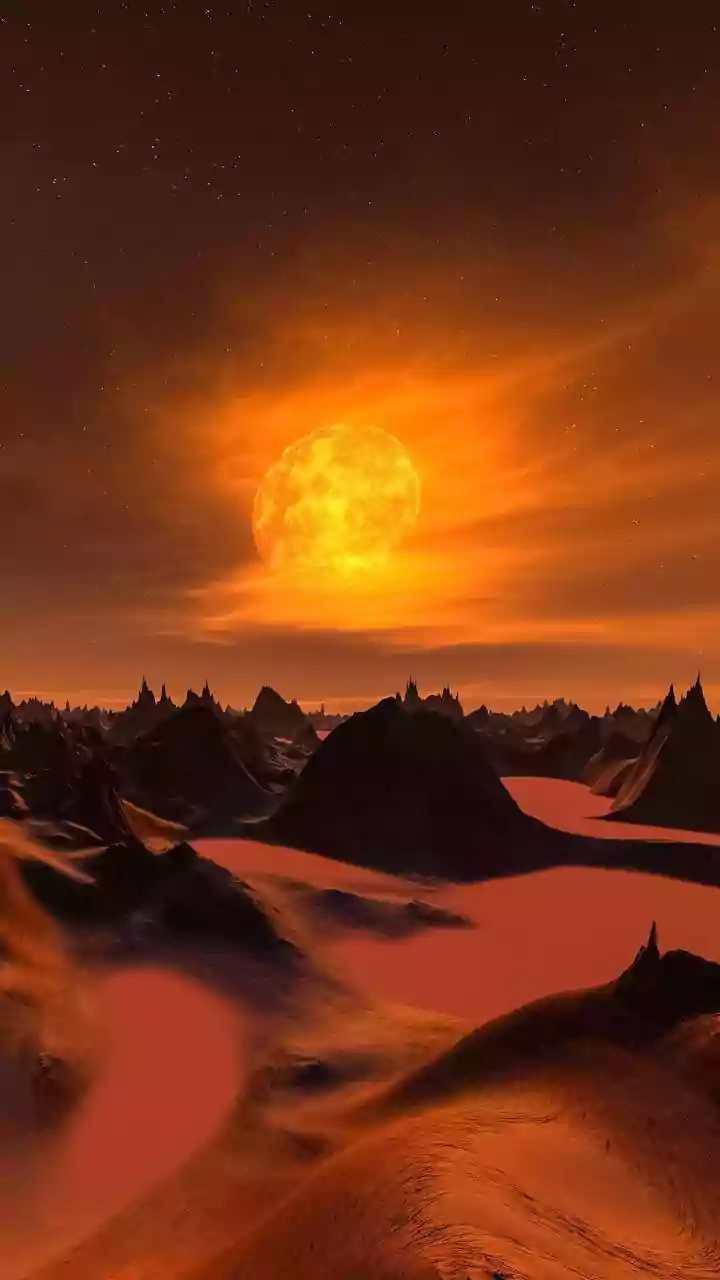
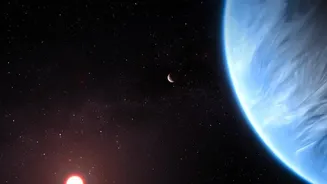
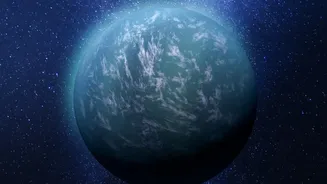
First, let's talk about the target: super-Earths. The name is a little misleading, as it only refers to a planet's size. A super-Earth is an exoplanet—a planet outside our solar system—that is larger than Earth but smaller than Neptune. Our own solar system doesn't
have a planet of this size, which makes them a fascinating mystery. They are incredibly common in our galaxy, making up about a third of all known exoplanets, so understanding them is crucial. Scientists are intensely curious about these worlds because if a rocky planet just a bit larger than ours falls within its star's 'habitable zone'—the region where temperatures could allow for liquid water—it becomes a prime candidate in the search for life.
Catching a Planet's Shadow
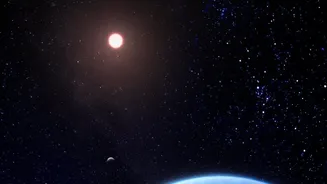
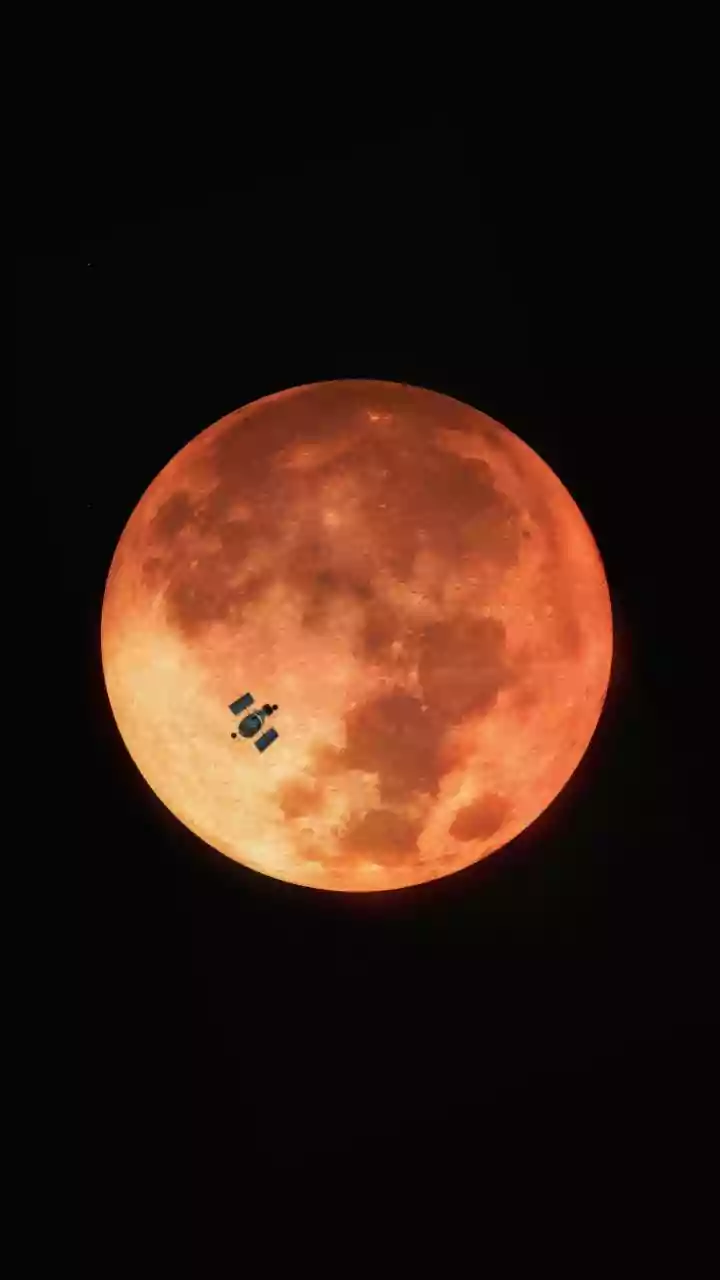
Before you can study a planet’s atmosphere, you have to find it and track it. Most exoplanets studied by the James Webb Space Telescope (JWST) are detected using the 'transit method'. This occurs when a planet passes directly between its star and our telescope, causing a tiny, temporary dip in the star's brightness. It’s like a tiny eclipse. By measuring this dip, astronomers can calculate the planet’s size. The incredible precision of the JWST allows it to measure minuscule changes in starlight, which is the key to the next step: analysing the planet's atmosphere.
The Magic of Transmission Spectroscopy
This is where the magic happens. As the exoplanet transits its star, a tiny sliver of starlight filters through the planet's atmosphere on its way to the telescope. This technique is called transmission spectroscopy. The gases in the atmosphere absorb light at very specific wavelengths. Think of the atmosphere as a filter that blocks certain colours of light. By analysing the light that does get through, astronomers can see which 'colours'—or wavelengths—are missing. Each molecule, like water (H2O) or methane (CH4), has a unique absorption pattern, like a chemical fingerprint or signature. If the signature for water is missing from the starlight, it means water must be present in the planet's atmosphere to have absorbed it.
Webb’s Infrared Eyes
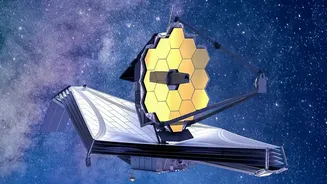
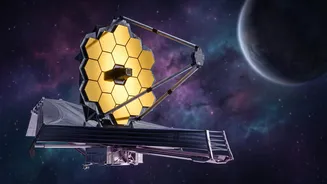
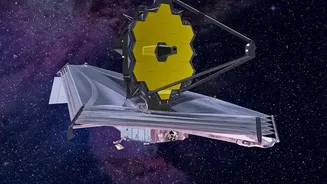
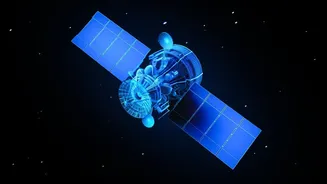
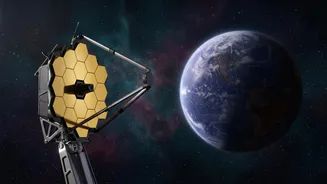
The JWST is uniquely equipped for this task because it sees the universe in infrared light. Many of the key molecules scientists are looking for, including water, methane, and carbon dioxide, have strong, clear signatures in the infrared part of the spectrum. Two of Webb's key instruments are the Near-Infrared Spectrograph (NIRSpec) and the Near-Infrared Imager and Slitless Spectrograph (NIRISS). These instruments are essentially highly advanced prisms that can spread the incoming starlight into a rainbow, or spectrum, of over 2,000 infrared shades. They are so sensitive they can detect the faint dips in brightness caused by an exoplanet's atmosphere. Combining the capabilities of NIRISS, which is excellent at detecting water, and NIRSpec, which is great for methane and carbon dioxide, gives scientists a comprehensive picture of an exoplanet's atmospheric chemistry.
Putting It All Together
By combining the transit method with high-precision spectroscopy, the JWST builds a chart showing how much light was blocked at each wavelength. This chart will have peaks and valleys. The valleys, or absorption lines, are the fingerprints of the chemicals in the atmosphere. For example, when observing the super-Earth K2-18 b, JWST detected the tell-tale signatures of methane and carbon dioxide, which supported the theory that it could be a 'Hycean' world—a planet with a water ocean under a hydrogen-rich atmosphere. This ability to not just detect a planet, but to begin to understand its chemical makeup from light-years away, is a revolutionary leap in astronomy. It turns abstract points of light into tangible places with distinct environments.