






The Ultimate Ejection Seat
Sending humans to space is inherently risky, with the most dangerous moments occurring during launch. To counter this, ISRO has developed a critical piece of hardware called the Crew Escape System (CES). Think of it as a powerful, high-tech ejection seat,
not for a single pilot, but for the entire astronaut capsule. This system is a tower-like structure fitted with its own set of quick-acting solid rocket motors. If the main launch vehicle suffers a catastrophic failure on the launchpad or during its ascent through the atmosphere, the CES is designed to fire within milliseconds. It forcefully pulls the crew module away from the malfunctioning rocket, carrying the astronauts to a safe altitude and distance. ISRO has rigorously tested this life-saving technology through a series of demonstrator missions, including a Pad Abort Test, which simulated an emergency on the launchpad, and a Test Vehicle (TV-D1) flight that proved the system works during the challenging transonic phase of ascent.
Ensuring a Perfect Landing
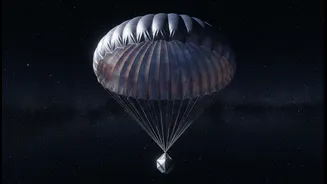
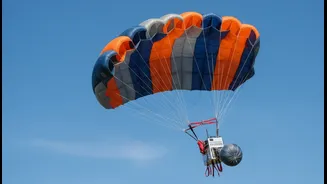
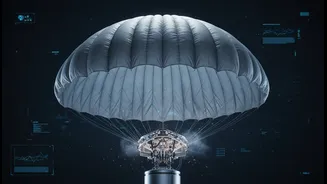
Just as critical as a safe launch is a safe return. After completing its mission in orbit, the crew module must re-enter the atmosphere and slow down from hypersonic speeds for a gentle splashdown in the ocean. This is achieved through a complex and precisely choreographed deceleration system. The process relies on a sequence of different parachutes. After the module is initially slowed by atmospheric drag, smaller drogue parachutes are deployed to stabilize its descent. These are followed by the massive main parachutes, which open to reduce the landing speed to a manageable velocity before the capsule touches the water. To perfect this system, ISRO is conducting extensive tests. In July 2026, it successfully tested the motor for a new Sub-Orbital Launch Vehicle for Experiments (SOLVE). This vehicle is specifically designed to carry a test version of the crew module to high altitudes repeatedly, allowing engineers to validate the complex 10-parachute deployment sequence under various conditions, ensuring it is flawless when astronauts are on board.
The Spacecraft's 'Nervous System'
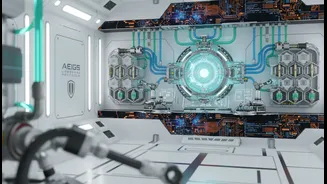
Deciding when to trigger the Crew Escape System is a decision that must be made in an instant. This is the job of the Integrated Vehicle Health Management System (IVHMS), essentially the brain and nervous system of the entire rocket. This intelligent system is a vast network of sensors embedded throughout the launch vehicle and crew module. It continuously monitors thousands of parameters in real-time, from engine pressure and temperature to structural loads. Its software constantly analyses this flood of data, looking for any sign of an anomaly that could endanger the crew. The IVHMS is programmed to distinguish between minor issues and critical failures, ensuring it can make the split-second decision to activate the escape system only when absolutely necessary, thereby preventing false alarms while guaranteeing a rapid response to genuine emergencies.
A 'Human-Rated' Ride to Orbit
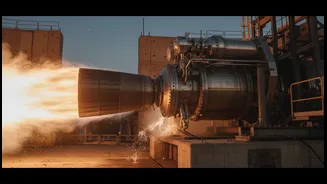
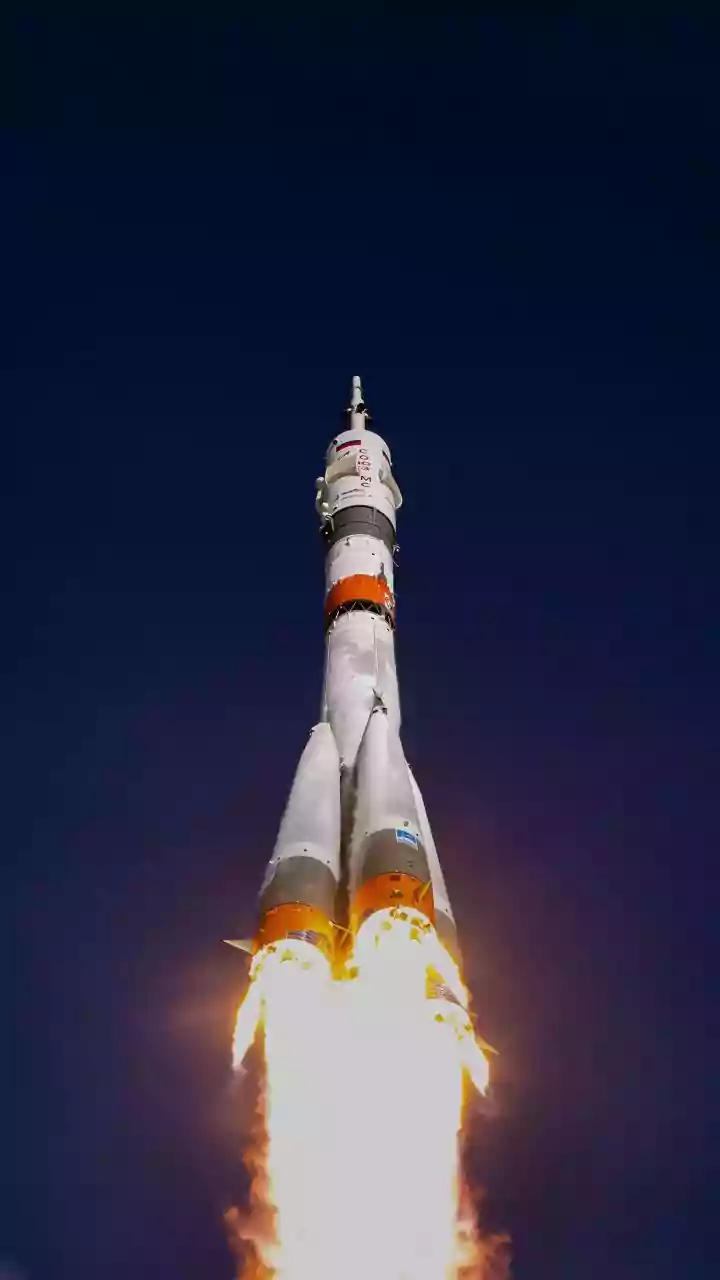
Instead of designing a launch vehicle from scratch, ISRO is upgrading its most reliable rocket, the LVM3, to make it safe for human travel. This process is known as "human-rating." It involves far more than just placing a capsule on top. Every component of the rocket is re-evaluated for maximum reliability and safety. Key systems are given backups, a concept known as redundancy, to ensure that if one part fails, another can take over. The rocket's engines, including the powerful CE20 cryogenic engine, have undergone testing for far longer durations than required for a normal flight to prove their robustness. The entire structure is strengthened to handle any unexpected stresses. This meticulous process transforms a proven satellite launcher into a vehicle that meets the exceptionally high safety standards required to carry human beings into the unforgiving environment of space.