

What is a Reusable Launch Vehicle?
Think of a traditional rocket as a disposable cup—you use it once and then throw it away. This is how most space missions have worked. The rocket, a marvel of engineering, launches a satellite into orbit and its expensive stages either burn up in the atmosphere
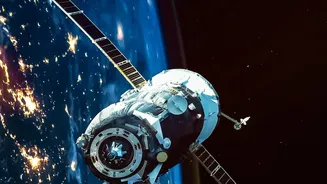
or fall into the ocean. This is the single biggest reason why sending anything to space is so costly. A Reusable Launch Vehicle (RLV) completely changes this model. An RLV is designed to fly into space, deploy its payload, and then return to Earth intact, ready to be refurbished and flown again. By recovering and reusing the most valuable parts of the rocket, the cost of each launch can be dramatically reduced. ISRO's goal is to slash the cost of putting a payload into orbit by as much as 80%, a move that could transform the space industry.
Introducing 'Pushpak': The Latest Test
ISRO's winged RLV technology demonstrator is named 'Pushpak'. Recently, ISRO successfully conducted its third and final landing experiment (LEX-03) at the Aeronautical Test Range in Chitradurga, Karnataka. In this crucial test, the Pushpak vehicle was carried to an altitude of 4.5 km by an Indian Air Force Chinook helicopter and then released. From there, the unmanned vehicle had to autonomously navigate its way to a runway and perform a precise, high-speed landing. The test was designed to be more challenging than previous ones, with the vehicle released further away from the runway and under more severe wind conditions. Pushpak nailed the landing at a speed of over 320 kmph—faster than a typical fighter jet—and used a brake parachute to slow down. This success proves the robustness of its autonomous navigation, guidance, and control systems, which are essential for a vehicle returning from orbit.
Why Reusability is a Game-Changer
The primary benefit of reusable technology is economic. By making launch services significantly cheaper, ISRO can make India a highly competitive player in the global commercial launch market. This opens the door for more frequent satellite launches, not just for communication and navigation, but also for scientific research, Earth observation, and disaster management. Cheaper access to space stimulates innovation, allowing smaller companies, startups, and universities to send their own experiments and satellites into orbit. This technology is a critical step towards achieving India's long-term space ambitions, which include setting up the 'Bharatiya Antariksh Station' (Indian Space Station) by 2035 and conducting future human spaceflight missions.
A Different Approach to Landing
While other players in the space industry, most notably SpaceX, have also mastered reusability, ISRO is taking a different approach. SpaceX's Falcon 9 boosters perform a vertical, powered landing, essentially using their engines to slow down and land upright on a drone ship or landing pad. ISRO's Pushpak, on the other hand, is a winged vehicle. It is designed to re-enter the atmosphere and glide down to a runway, landing horizontally like an airplane. This method leverages ISRO's decades of experience in both launch vehicle and aerospace technology. The successful landing experiments have validated this unique winged-body approach, demonstrating ISRO's expertise in developing complex, homegrown technologies.
The Road Ahead for ISRO
The successful completion of the landing experiment series is a massive milestone, but it's just one part of a larger journey. With the landing phase now proven, ISRO will focus on the next major challenge: the Orbital Re-entry Experiment (ORE). This will involve launching a similar vehicle into orbit and having it successfully re-enter Earth's atmosphere, withstand the extreme heat and pressure, and then perform an autonomous runway landing. These technology demonstrations are paving the way for a Two-Stage-To-Orbit (TSTO) fully reusable launch vehicle, which remains the ultimate goal. This ambitious project positions India to become a leader in providing low-cost, reliable access to space for the entire world.