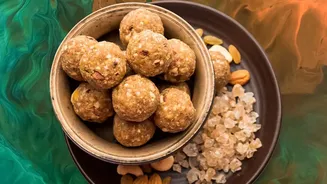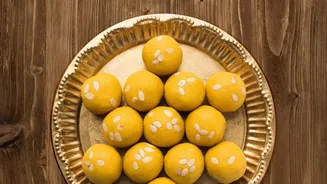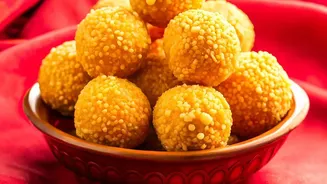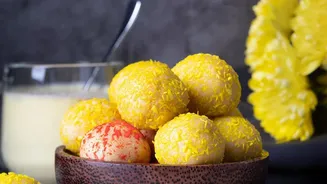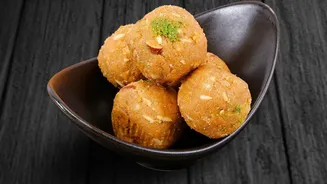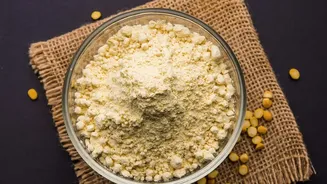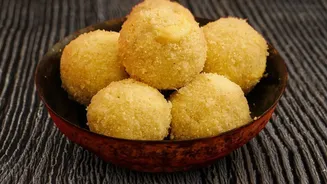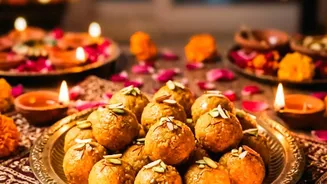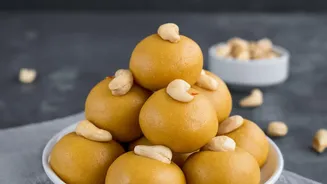



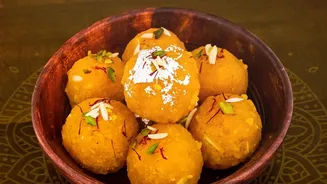
The perfect besan ladoo is a thing of beauty: a fragrant, golden sphere that melts in your mouth. But the reality can often be a tray of hard, disappointing discs. Why does this beloved sweet sometimes go so wrong? It all comes down to science.
The Crucial Roasting Process
The single
most important step in making besan ladoo is roasting the gram flour, or besan. This is not a process to be rushed. Roasting on high heat is a primary cause of hard ladoos. While the outside of the besan granules may brown quickly, the inside remains raw, resulting in a bitter, pasty taste and a texture that sticks to the roof of your mouth. The key is to roast the besan in ghee on a consistently low to medium-low flame. This slow and steady approach, which can take 20 to 25 minutes, ensures each granule cooks through evenly. You'll know it's ready when the raw flour smell disappears and is replaced by a deep, nutty aroma, the colour turns a uniform golden brown, and the ghee begins to separate from the mixture, making it look glossy.
Getting the Ghee Ratio Right
Ghee is what gives besan ladoo its rich flavour and melt-in-the-mouth texture. However, the amount of ghee is a delicate balance. Too little ghee will result in a dry, crumbly mixture that is difficult to bind and creates hard ladoos. Too much ghee, on the other hand, can make the mixture too loose and greasy, preventing the ladoos from holding their shape. A good rule of thumb is to use about half as much ghee as besan by weight; for example, 200 grams of besan would require around 100-120 grams of ghee. It's often best to add the ghee gradually during the roasting process. If your final mixture seems too dry to shape, you can always mix in a tablespoon of warm, melted ghee until it comes together.
The Right Sugar at the Right Time
The type of sugar and when you add it are critical. Using regular granulated sugar is a common mistake, as the crystals won't dissolve properly in the dry mix, leading to a gritty, sandy texture. The best choice is 'boora' or 'tagar', a special fine-grained sugar used by halwais, which gives a traditional texture. If you can't find it, finely powdered sugar is the next best option. Crucially, you must let the roasted besan mixture cool down until it is just lukewarm before adding the sugar. If you add sugar to a hot mixture, it will melt and caramelise, making the final ladoos hard and sticky. This step requires patience but is essential for achieving a soft, yielding texture.
The Importance of Texture and Binding
The final texture of your ladoo mixture is a key indicator of success. After roasting and cooling, the mixture should be easy to handle. If it's too crumbly and won't hold its shape, it's usually due to a lack of ghee. If the mixture is too soft or greasy, you may have used too much ghee or added the sugar when it was too hot. A quick fix for a greasy mixture is to refrigerate it for 10–20 minutes to allow the ghee to firm up slightly before you try shaping the ladoos again. For a classic 'danedar' or grainy texture, some recipes suggest using a coarser variety of besan, sometimes sold as 'ladoo besan'. If you only have fine besan, adding a tablespoon of semolina (rawa) or even a splash of milk or water at the end of roasting can help create a slightly coarser grain.