

The Path of Totality: A Global Journey
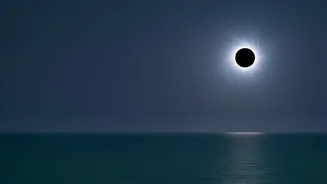
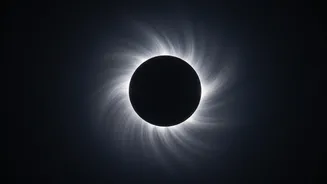
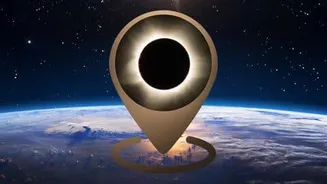
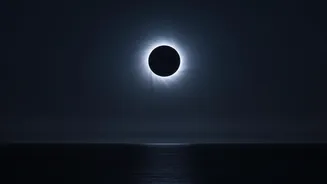
A total solar eclipse occurs when the Moon passes directly between the Sun and Earth, casting a shadow that completely blocks the Sun's face. This shadow, known as the umbra, creates a narrow track across the planet called the path of totality. For the 2026
eclipse, this path is exceptionally unique. It begins over a remote part of Siberia, arcs over the Arctic Ocean just south of the North Pole, and then sweeps down across three distinct and dramatic landscapes: Greenland, Iceland, and Spain. Anyone inside this relatively narrow, 293-kilometre-wide band will experience the fleeting moments of daytime darkness, while surrounding regions in Europe, North Africa, and North America will only see a partial eclipse.
Greenland: An Icy, Remote Spectacle
The eclipse's first major landfall is over Greenland's vast and largely uninhabited eastern coast. Viewing totality here offers a surreal experience: the Sun's corona blazing in the sky above a landscape of glaciers, ice sheets, and deep fjords like Scoresby Sund. The geographical remoteness makes it one of the least populated places to witness the event, promising an unspoiled and profound connection with nature. Despite its Arctic location, weather prospects are surprisingly favourable, with studies of satellite data suggesting a good chance of clear skies, especially in the far reaches of the fjords. For scientists and adventurous eclipse chasers, Greenland provides a pristine, if challenging, natural laboratory.
Iceland: Fire, Ice, and a Near Miss
After crossing the Denmark Strait, the path of totality clips the western part of Iceland. While the capital, Reykjavík, is just outside the path, areas like the Snæfellsnes and Reykjanes peninsulas will be plunged into darkness. This geography is significant because the centreline of the eclipse, where totality lasts the longest, actually passes just off the western coast. This means viewers on land will experience a slightly shorter duration, but the backdrop is extraordinary: a volcanic landscape of fire and ice. The maximum duration of the entire eclipse, about 2 minutes and 18 seconds, occurs just off the Icelandic coast. Watching from here highlights the trade-off between accessibility and maximising those precious moments of totality.
Spain: A Dramatic Sunset Eclipse
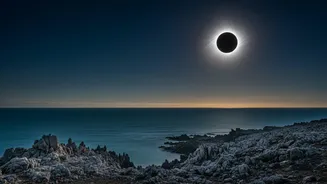
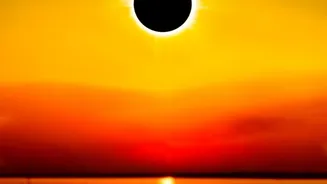
The final act of this celestial drama unfolds across northern Spain, making it the first total solar eclipse visible in mainland Europe in 27 years. The path crosses from the Atlantic coast toward the Mediterranean, passing over major cities like Bilbao and Valencia. What makes this location geographically special is the timing. Totality will occur in the late evening, shortly before sunset. This creates the potential for a stunning and rare visual: a totally eclipsed Sun hovering low over the horizon. For many in Spain and a tiny corner of Portugal, the Sun will actually set while still partially eclipsed, offering a unique photographic opportunity. The favourable weather prospects for Spain in August make it the most reliable and accessible destination for millions hoping to witness the event.
Why This Eclipse's Geography Matters
From a scientific perspective, like that of NASA, this eclipse's path offers diverse opportunities. NASA-funded teams will use high-altitude aircraft and scientific balloons in Iceland and Spain to study the Sun's corona and Earth's atmospheric response to the sudden darkness. The different latitudes and atmospheric conditions—from the cold, dry Arctic to the temperate Spanish coast—provide a range of environments for these experiments. The event's geography also coincides with the peak of the Perseid meteor shower, offering the tantalising, though slim, possibility of seeing meteors streak through a darkened daytime sky. Ultimately, the geography of the 2026 eclipse demonstrates that where you are on Earth is fundamental to how you experience the cosmos.