





1. The Underarm Ball: A Dark Day
It was February 1981 at the Melbourne Cricket Ground. New Zealand needed six runs off the final ball to tie a one-day international against Australia. To ensure the Kiwi batsman couldn't hit a six, Australian captain Greg Chappell instructed his younger
brother, Trevor, to bowl the ball underarm, rolling it along the ground. The batsman, Brian McKechnie, blocked the ball and threw his bat in disgust. While technically legal at the time, the act was universally condemned as a violation of the spirit of sportsmanship. The Prime Ministers of both countries weighed in, with New Zealand's Robert Muldoon calling it 'an act of true cowardice'. The incident led to an immediate ban on underarm bowling in limited-overs cricket and remains a textbook example of prioritising a win at all costs over fair play.
2. Bodyline: When Cricket Became Dangerous
To counter the genius of Australian batsman Sir Donald Bradman, England's captain Douglas Jardine devised a ruthless strategy for the 1932-33 Ashes series. He instructed his fast bowlers, led by Harold Larwood, to bowl short-pitched deliveries aimed at the batsman's body, with a packed field on the leg side. This tactic, dubbed 'Bodyline', was not just intimidating; it was physically dangerous. Several Australian batsmen, including their captain Bill Woodfull and wicketkeeper Bert Oldfield, suffered painful blows. The series created a diplomatic firestorm, with cricket boards exchanging furious cables and public outrage reaching a fever pitch. While England won the Ashes, the controversy forced the Marylebone Cricket Club (MCC) to change the laws of cricket to prevent such overtly hostile bowling, fundamentally altering the balance between bat and ball.
3. The 'Mankad': Legal but Loathed
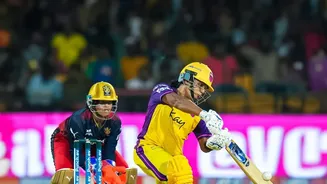
Few dismissals spark as much debate as the 'Mankad'. Named after Indian all-rounder Vinoo Mankad, it involves the bowler running out the non-striking batsman for backing up too far before the ball is delivered. Mankad first did this to Australia's Bill Brown in 1947, and even then, it was controversial. While Australian captain Don Bradman defended Mankad, arguing the batsman was gaining an unfair advantage, others saw it as unsporting. The debate rages on today. Proponents argue it's a legitimate run-out, punishing a batsman trying to steal a few yards. Critics feel it violates the unwritten 'spirit of cricket' and that a warning should be issued first. High-profile instances, like Ravichandran Ashwin dismissing Jos Buttler in the IPL, always reignite the fierce argument, proving that what is legal isn't always seen as right.
4. Sandpapergate: A National Disgrace
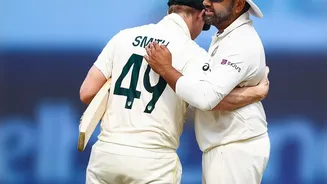
In March 2018, during a Test match against South Africa in Cape Town, television cameras caught Australian player Cameron Bancroft trying to alter the condition of the ball with a small, yellow piece of sandpaper. The immediate aftermath was chaotic, as Bancroft awkwardly hid the sandpaper in his trousers. The investigation that followed revealed a pre-planned attempt at cheating involving captain Steve Smith and vice-captain David Warner. The scandal, dubbed 'Sandpapergate', led to unprecedented sanctions. Smith and Warner were banned from cricket for a year, while Bancroft received a nine-month ban. It triggered a period of deep introspection in Australian cricket, forcing a review of the team's 'win-at-all-costs' culture and leaving a permanent stain on the careers of those involved.
5. Monkeygate: A He-Said, She-Said Saga
The 2008 Sydney Test between Australia and India was already tense due to poor umpiring, but it exploded into a major international incident. Australian all-rounder Andrew Symonds accused Indian off-spinner Harbhajan Singh of racially abusing him by calling him a 'monkey'. Harbhajan vehemently denied this, stating he used a common Hindi slur that sounded similar. Match referee Mike Procter handed Harbhajan a three-match ban based on the testimony of Australian players. The decision caused outrage in the Indian camp, which threatened to abandon the tour. The Board of Control for Cricket in India (BCCI) appealed, and the charge was eventually downgraded to a lesser offence, with the ban overturned for a fine. The incident strained relations between the two cricket-loving nations and highlighted the complexities of handling on-field sledging when it crosses into deeply sensitive territory.