


The Rise of the Citizen Scientist
Citizen science is a collaboration where the public participates in scientific research. Volunteers, regardless of their background, can help with everything from data collection and analysis to participating in various stages of the scientific process.
This approach democratizes science, making it more accessible and responsive to public interest. In a country as vast and diverse as India, citizen science holds immense potential. Initiatives range from tracking urban air pollution and monitoring tree health to documenting biodiversity. These projects not only generate vast amounts of data that would be impossible for small research teams to collect alone but also foster a deeper connection between communities and the scientific process. The key is turning public curiosity into a powerful tool for discovery.
A Discovery from a Sikkim Village
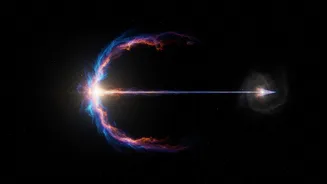
A recent astronomical breakthrough perfectly illustrates this potential. A team of Indian astronomers, researchers, and citizen scientists discovered a unique 'bow-and-arrow' shaped radio galaxy. The crucial first clue was identified not in a high-tech lab, but by Pranim Limbo, a citizen scientist from a remote village in Sikkim. He made the observation while participating in RAD@home, India's first citizen science astronomy research platform. This network trains volunteers to analyse telescope data online, connecting them with professional astronomers. The discovery of the galaxy, named BAARG, was significant because its unusual shape — created as it travels at supersonic speed through a cluster of other galaxies — had been predicted by scientists but never so clearly observed before. The find was later published in a prestigious international astronomy journal, highlighting the credibility and impact of such collaborations.
The Digital Bridge Connecting Stars and Screens
The success of projects like RAD@home hinges on digital platforms. Online tools, from web portals to mobile apps, serve as the essential bridge connecting volunteers with expert teams. Platforms like Zooniverse, iNaturalist, and the one used by RAD@home allow scientists to upload massive datasets — such as images from radio telescopes — for volunteers to analyse. Volunteers can receive online training, classify images, submit observations, and communicate with both researchers and other participants through forums. This model allows someone in Sikkim to contribute to data analysis from a telescope located anywhere in the world. Remarkably, in the case of the bow-and-arrow galaxy, the human eye of a trained volunteer spotted the anomaly that automated machine-learning algorithms had previously missed, proving that human pattern recognition remains invaluable.
More Than Just Data Collection
The importance of citizen science extends far beyond the data itself. For volunteers, it's an opportunity to engage directly with their passions, whether it's astronomy, conservation, or meteorology. For amateur astronomers, it provides a structured way to contribute meaningfully to the field, assisting professionals in tracking asteroids, monitoring variable stars, and discovering new cosmic events. These projects also serve a vital educational purpose, raising scientific awareness and literacy, especially among young people. Initiatives like SeasonWatch in India specifically focus on schools to enhance environmental awareness. By involving local communities, these programs build a sense of ownership and foster a scientific temper, empowering people to become active participants in understanding the world—and universe—around them.