





The Core Difference: Sit vs. Stand
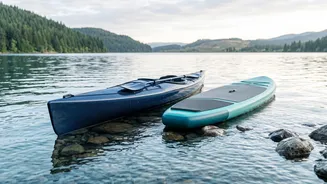
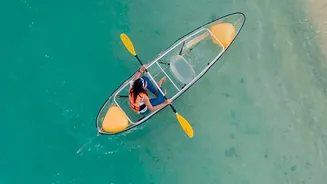
At its heart, the choice between a kayak and a paddleboard comes down to posture. A kayak is a vessel you sit inside or on top of, keeping your centre of gravity low to the water. This seated position is fundamental to its design and function. You are
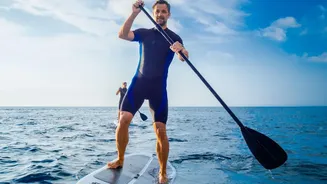
enclosed, secure, and part of the boat. In contrast, a stand-up paddleboard is designed for you to stand on its surface, offering a higher vantage point and a more open, free-form experience. This basic difference in body position dictates everything that follows, from how you propel yourself to the muscles you use and the type of workout you get.
Seated Paddling: The Kayak's Realm
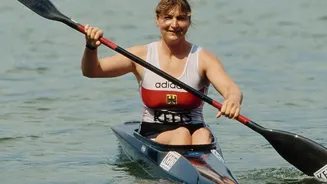
Kayaking is the master of efficient seated paddling. Using a double-bladed paddle, you perform rhythmic, alternating strokes that pull the craft through the water. True power in kayaking comes not just from your arms, but from rotating your core. Your upper body, back, and abdominal muscles do most of the work, allowing you to cover significant distances with surprising speed. Because you are sitting low and stable, your legs play a more supportive role, primarily bracing against footrests to help with power transfer and balance during turns. This makes kayaking an excellent choice for longer journeys or for those who want to explore more varied water conditions, as the low profile handles wind and chop more effectively than a SUP.
Seated Paddling: An Option on a Paddleboard
While standing is its main draw, you are not locked into one position on a paddleboard. You can easily switch to kneeling or sitting. Paddling from a seated position on a SUP is a great way to take a break, handle an unexpected gust of wind, or simply enjoy a more relaxed pace. However, it is less efficient than kayaking. On a SUP, you use a single-bladed paddle, requiring you to switch it from side to side like in a canoe. Your seated position is also higher than in a kayak, making you less stable and more susceptible to wind. It’s a useful secondary function, but not its primary strength for propulsion over distance.
Standing Balance: The Paddleboard's Unique Challenge
Here is where the paddleboard stands alone. Balancing on an unstable surface provides a unique, full-body workout. It engages not just your major muscle groups but also the small, stabilising muscles in your legs, feet, and core that are rarely challenged in other activities. To stay upright, you must constantly make micro-adjustments. Beginners are often advised to start on their knees and work their way up, keeping their feet parallel, knees slightly bent, and their gaze fixed on the horizon—not down at their feet. This act of balancing is a workout in itself, even before you start paddling. Once you are comfortable, the combination of balancing and paddling engages your legs, core, back, and arms, offering a truly comprehensive fitness experience.
Which Experience is Right For You?
Your choice depends on your goals. If you want to cover long distances, travel efficiently, and have maximum stability from the moment you get on the water, the kayak is your champion. It provides an incredible upper-body and core workout focused on endurance and power. If you seek a versatile, full-body fitness experience that challenges your balance and offers a unique, elevated perspective of the water, the stand-up paddleboard is the clear winner. It’s a dynamic activity that can be as intense or as relaxing as you make it, perfect for everything from fitness to on-water yoga. Many modern inflatable SUPs even come with kits to add a kayak seat, offering a hybrid experience for those who want the best of both worlds.