




A Journey to a Metal World
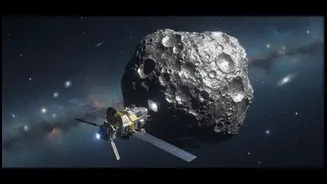
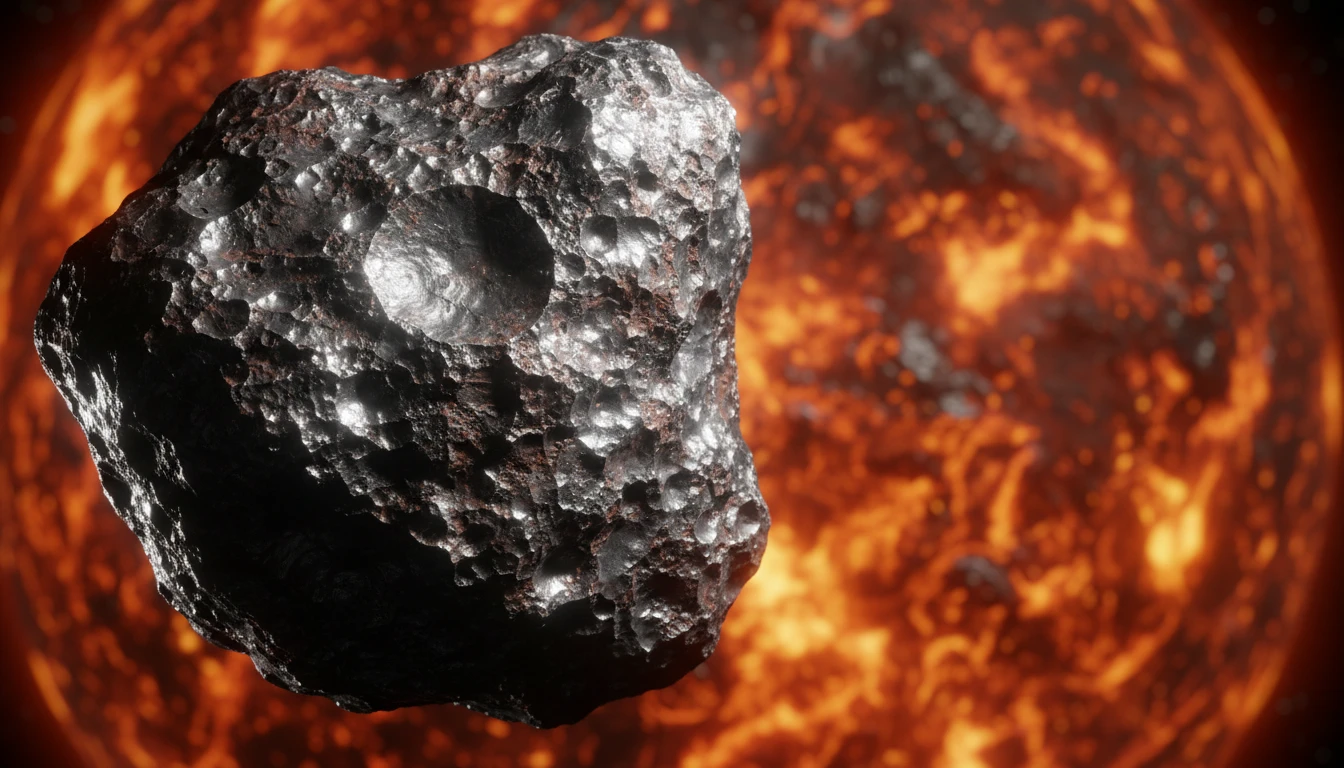
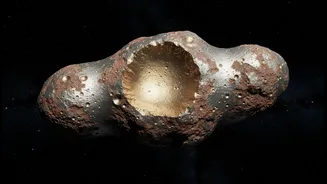
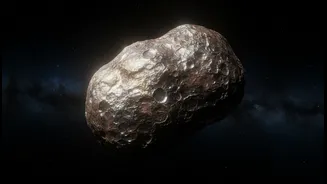
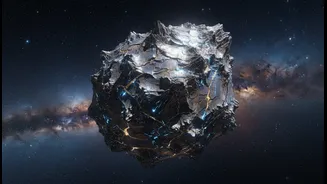
The Psyche mission, which launched in October 2023, is on a multi-billion-kilometre trek to an enigmatic object in the main asteroid belt between Mars and Jupiter. Its destination, 16 Psyche, is no ordinary space rock. Scientists believe this 280-kilometre-wide
body could be the exposed nickel-iron core of a planetesimal, an ancient building block of a planet that was smashed apart billions of years ago. Since we can't drill down to Earth's own core, visiting Psyche is the next best thing—a one-of-a-kind window into the violent history of our solar system and the birth of rocky planets. The mission aims to determine if Psyche is truly a planetary core or something else entirely, like a chunk of unmelted, primordial material that has been around since the solar system first formed.
The Latest from Deep Space
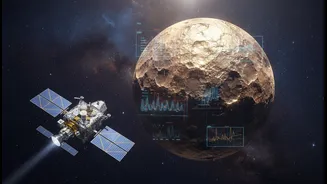
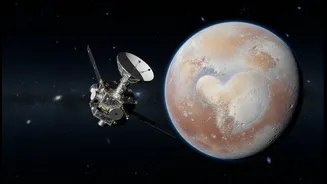
While the spacecraft won't arrive at the asteroid until August 2029, the headline-grabbing news from mid-2026 is the successful completion of a crucial milestone: the Mars gravity assist. In May 2026, the Psyche probe executed a flyby of the Red Planet, skimming just over 4,500 kilometres above its surface. This wasn't a sightseeing trip; the manoeuvre used Mars' gravity like a slingshot to increase the spacecraft's speed and adjust its trajectory, lining it up perfectly for its eventual rendezvous. The flyby was also a critical test for the probe's science instruments, which were powered on to capture stunning images of a crescent Mars and calibrate their sensors for the main event in three years' time. The images of Mars, while not the primary goal, proved the systems are working flawlessly.
Revolutionary Tech on Display
Perhaps the most significant "latest data" has nothing to do with the asteroid itself, but with the groundbreaking technology propelling the spacecraft. Psyche is the first interplanetary mission to use Hall-effect thrusters. These highly efficient solar electric propulsion engines work by accelerating and expelling xenon ions, producing a gentle but continuous thrust. This faint blue beam of energy, exerting about the same pressure as holding a few coins, is powerful enough to accelerate the spacecraft to speeds of up to 200,000 kilometres per hour over its long journey. Data from the cruise phase has shown the thrusters are performing largely as expected, even after overcoming a minor pressure drop issue in its fuel system in 2025 by switching to a backup line. This technology is vital for making future deep-space missions more feasible and affordable.
Rethinking the Metal World
Even as the probe cruises through space, our understanding of its destination continues to evolve thanks to ground-based observations and new modelling. Originally believed to be almost entirely metal, recent studies suggest Psyche might be more of a mix, with metal composing 30% to 60% of its volume, blended with silicate rock. Furthermore, observations have detected the presence of hydroxyl on the surface, which could indicate water delivered by impacts from other asteroids—a surprising finding for a body thought to have formed in a dry environment. New simulations published in early 2026 are helping scientists predict what the probe's instruments will find when they examine the asteroid's large impact craters, which could help settle the debate over its true composition and origin.
The Promise of an Iron-Rich Future
Beyond the pure science, the Psyche mission holds immense long-term significance. As a metal-rich body, the asteroid represents a tantalizing, albeit highly speculative, look at the future of space resources. While the Psyche mission is purely scientific and not a mining expedition, the data it collects on the composition and structure of a metallic asteroid will be invaluable. It will inform future discussions about the feasibility and techniques for sourcing materials in space, a concept that could one day reduce the need to extract resources from Earth. For now, Psyche is a mission of discovery, not exploitation. It's a journey to understand our past, but in doing so, it is undeniably paving the way for humanity's future in the cosmos.