







The Returning Comet
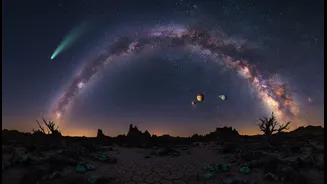
Headlining the month's events is the return of Comet 10P/Tempel 2. First discovered in 1873, this periodic comet visits our cosmic neighbourhood every five years or so. Throughout July, it will be making its way through the evening sky, gradually brightening
as it nears the sun. While you might need a small telescope to spot it early in the month, by late July, it should become a rewarding target for binoculars, appearing as a faint, fuzzy patch of light. Look for it near the constellation Capricornus during its journey. Catching a glimpse of this icy wanderer is a chance to connect with a celestial object that has been orbiting our sun for centuries.
A Dazzling Dance of Planets
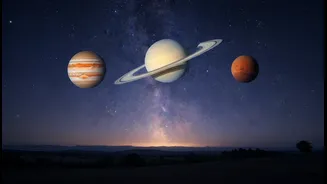
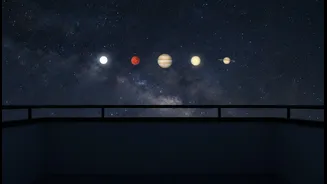
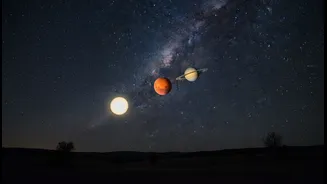
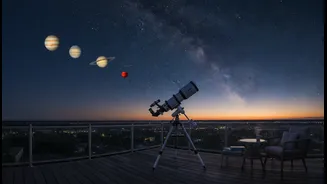
The planets are putting on a spectacular show this month. Your best bet for an easy spot is the brilliant planet Venus, which will shine brightly as an 'evening star' in the west just after sunset. It's hard to miss its dazzling glow. For the early risers, the pre-dawn sky offers its own rewards. Saturn will be visible for much of the night, rising earlier and earlier as the month progresses. On the morning of July 8, skywatchers in India can witness a beautiful conjunction, where the Moon will appear close to Saturn in the constellation Pisces. Just a few days later, on the morning of July 11, a crescent moon will form a striking trio with the reddish planet Mars and the famous Pleiades star cluster. These alignments are a beautiful and easily observable reminder of our solar system's constant motion.
The Year's Best Milky Way Views
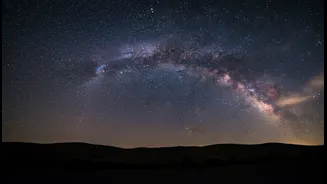
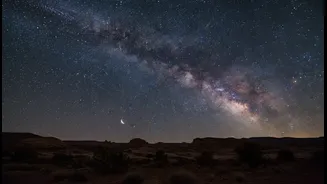
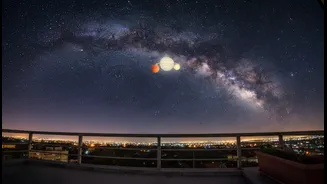
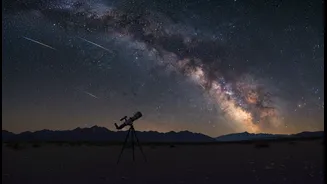
July's warm, clear nights provide one of the best opportunities of the year to witness the breathtaking sight of our own galaxy, the Milky Way. The ideal time for this is around the new moon on July 14, when the sky is at its darkest without any lunar glare. To get the best view, you’ll need to escape the light pollution of the city and find a truly dark location. Allow your eyes at least 20 minutes to fully adjust to the darkness. Soon, you will see a luminous, milky band stretching across the sky. This is the dense core of our galaxy, a sight filled with billions of stars that is both humbling and awe-inspiring.
A Moon of Cultural Significance
The month culminates with a major lunar event on July 29: the Full Buck Moon. For viewers in India, this full moon holds special importance as it coincides with the revered festival of Guru Purnima. The full moon will officially peak at 8:06 PM IST. As it rises in the east shortly after sunset, it will likely appear enormous and cast a golden hue, an optical effect known as the 'moon illusion'. This celestial and cultural convergence makes it a particularly meaningful night to look up and appreciate our natural satellite, which will be visible all night long across the world.
The First Sparks of Meteor Season
As if the month wasn't packed enough, July also marks the beginning of the annual meteor season. Two showers, the Southern Delta Aquariids and the Alpha Capricornids, become active in the latter half of the month, both peaking around July 30-31. While the light from the nearly full moon will wash out the fainter meteors, you still have a good chance of seeing the brighter ones. The Alpha Capricornids are particularly known for producing slow, bright fireballs, which are exceptionally brilliant meteors that can light up the entire sky for a moment. It’s a perfect excuse to lay back and scan the heavens for a shooting star.