





What Exactly Is Zone 2 Training?
Fitness jargon can be confusing, but Zone 2 is simple: it’s exercising at a steady, moderate pace where your body becomes incredibly efficient. In this zone, your heart rate is elevated to roughly 60-70% of its maximum, but you aren't pushing into a breathless,
high-intensity state. The easiest way to know you’re in Zone 2 is the “talk test.” You should be able to hold a full conversation in complete sentences without gasping for air. If you can sing comfortably, you're likely going too easy; if you can only get out a few words at a time, you've pushed too hard. This type of low-intensity steady-state (LISS) exercise is designed to be maintained for longer periods, making it perfect for building a solid aerobic foundation.
Why It's a Game-Changer for Desk Workers
A sedentary job can take a toll, but Zone 2 training directly counteracts its effects. A key benefit is that it trains your body to burn fat for fuel more efficiently. This improves metabolic health and helps with weight management without the intense stress of high-intensity workouts. Because it's a low-impact activity, cycling in Zone 2 is gentler on your joints, reducing the risk of injury that can derail a fitness routine. Regular sessions also strengthen your heart, improve circulation, and can lower your resting heart rate over time. It’s also a powerful tool for mental clarity and stress relief, acting as a form of moving meditation to break up a long day of screen time.
How to Find Your Zone 2
To get started, you need to estimate your Zone 2 heart rate range. The simplest method is to first find your estimated maximum heart rate (MHR). A widely used formula is 220 minus your age. For example, if you are 40 years old, your estimated MHR is 180 beats per minute (bpm). Your Zone 2 range will be between 60% and 70% of that number. For a 40-year-old: The lower end is 180 x 0.60 = 108 bpm. The higher end is 180 x 0.70 = 126 bpm. So, your target heart rate for a Zone 2 cycling session would be between 108 and 126 bpm. While a heart rate monitor provides the most accurate data, the talk test remains a reliable, real-world guide.
Putting It Into Practice: Your First Month
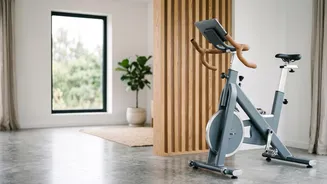
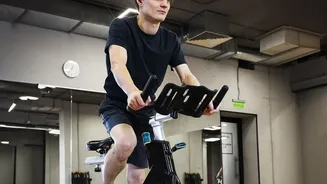
Consistency is far more important than intensity when you're starting. Don't feel pressured to ride for an hour every day. Begin with a manageable goal, such as two or three 30-minute sessions per week. Whether you use an indoor stationary bike or ride outdoors, the key is to maintain a steady effort within your target heart rate zone. Don't fixate on speed or distance; focus on the time spent in the zone. Laying out your gear the night before can reduce friction and make it easier to get started. Even a short 15-minute ride is a victory because it reinforces the habit. After a few weeks of consistency, you can gradually increase the duration of your rides.
Building a Habit That Sticks
The secret to long-term fitness is integrating movement into your life, not just adding another task to your to-do list. Treat your cycling sessions like non-negotiable appointments by scheduling them in your calendar. Try habit stacking: link your ride to an existing part of your routine, like cycling for 20 minutes right after you log off from work. To make it enjoyable, listen to a podcast, an audiobook, or your favorite music. Finding a friend to join you can also provide social accountability. Remember that motivation often follows action, not the other way around. By focusing on small, consistent efforts, you build an identity as someone who moves regularly, and the fitness benefits will naturally follow.