





The Ultimate Recycling Challenge
On Earth, we take water for granted. In space, it's one of the heaviest and most expensive resources to transport. A long-duration mission to Mars, for example, cannot simply pack all the water it needs. The cost and weight would be astronomical. The only
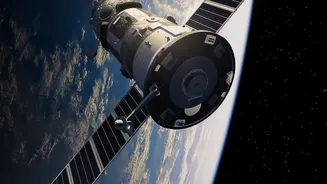
viable solution is to create a closed-loop system, where every drop of moisture—from an astronaut's breath and sweat to their urine—is collected, purified, and reused. The International Space Station (ISS) already does this with remarkable efficiency, using its Environmental Control and Life Support System (ECLSS) to recover nearly 98% of its water. This system is a marvel of engineering, combining multiple stages of filtration and processing to turn wastewater into potable water that is often cleaner than what comes out of our taps on Earth.
Defining a Standard for Safety
While the ISS systems are effective, future missions beyond low-Earth orbit require even greater reliability and certainty. This is where a 'preliminary limit' comes into play. Rather than being a single piece of hardware, this refers to the establishment of standardized benchmarks for water purity. For years, NASA and other organizations have been developing Spacecraft Water Exposure Guidelines (SWEGs) for various contaminants. These guidelines set maximum allowable levels for specific chemicals and compounds that can build up in a closed water system over time. By setting a clear, preliminary limit for certain contaminants, space agencies create a unified target. This allows them to compare different water purification technologies from various private companies and research labs on an even playing field. It moves the conversation from 'Does your filter work?' to 'Does your filter meet this exact, mission-critical safety standard?'
From Apples to Oranges
Before such standards, comparing competing decontamination systems was difficult. One company might excel at removing organic compounds, while another might have a better method for filtering out mineral salts or preventing microbial growth. Each system—whether it uses reverse osmosis, catalytic oxidation, or advanced ion exchange beds—has its own strengths. Without a common set of performance requirements, it’s like comparing apples to oranges. The establishment of a preliminary limit for contaminants creates a clear goalpost. It forces innovation toward a specific, measurable outcome, ensuring that any new system proposed for a future lunar base or Mars-bound spacecraft is fundamentally safe and reliable according to a shared definition of 'clean'.
Paving the Way for Deep Space
This level of standardization is not just a bureaucratic exercise; it is a fundamental enabler for humanity's future in space. A round-trip mission to Mars could take up to three years. During that time, astronauts will be entirely dependent on their life support systems, with no option for quick resupply from Earth. A failure in the water system wouldn't just be an inconvenience; it would be catastrophic. By developing and testing against rigorous contamination limits now, NASA and its commercial partners are building the foundation of trust needed for these ambitious journeys. Technologies like the Brine Processor Assembly on the ISS, which pushes water recovery rates even higher, are tested against these evolving standards. Each successful test proves that a closed-loop life support system is not just theory, but a practical reality for sustaining human life far from home.