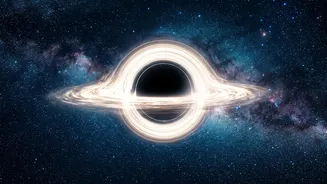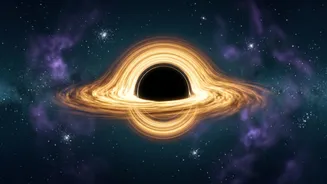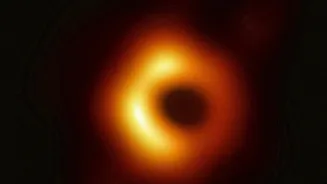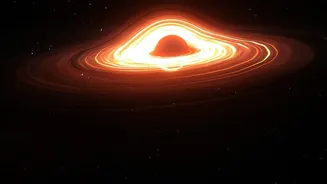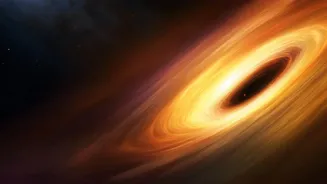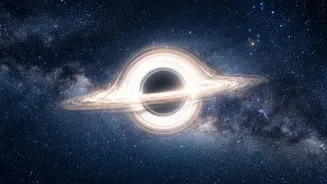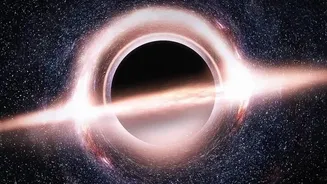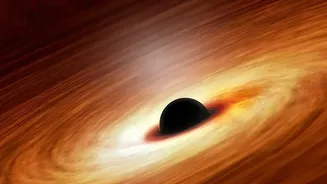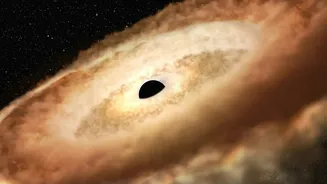





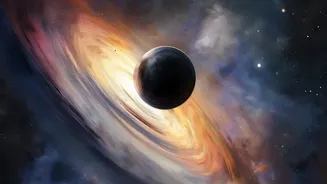
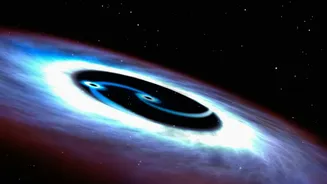
The Milky Way is thought to be teeming with hundreds of millions of black holes, yet we've only found a tiny fraction. Now, a new breed of explorer is joining the hunt: everyday people armed with nothing more than a computer and their curiosity.
Meet the Black Hole Hunters
They are
teachers, students, artists, and retirees. They come from all walks of life, united by a common goal: to find the invisible. The Black Hole Hunters are part of a citizen science project hosted on the Zooniverse platform, which connects professional researchers with a global army of volunteers. Led by scientists from institutions like the University of Southampton and The Open University, the project asks the public to help sift through enormous datasets from modern telescopes. The mission is to locate stellar-mass black holes that are not actively feeding, making them otherwise invisible to traditional detection methods.
The Challenge: A Cosmic Data Deluge
Modern telescopes like NASA's Transiting Exoplanet Survey Satellite (TESS) are powerful instruments, generating a torrent of data on millions of stars. While astronomers have theories that suggest our galaxy should have about 100 million black holes, only around 70 have been located. The sheer volume of information makes it impossible for professional scientists to analyse every single star's light curve manually. This is where citizen science becomes indispensable. While artificial intelligence can help by shortlisting millions of potential candidates, human eyes are still superior at recognizing the subtle, specific patterns that might signify a hidden black hole.
How to See the Invisible
Black holes are, by definition, impossible to see directly because their gravity is so intense that not even light can escape. So, how do you hunt for one? The Black Hole Hunters project looks for an effect predicted by Einstein's theory of general relativity: gravitational lensing. A massive object like a black hole warps the fabric of space-time around it. If it passes in front of a distant star, its gravity can act like a magnifying glass, briefly making the star appear brighter. Volunteers are trained to look at graphs showing a star's brightness over time and flag any that show this characteristic short, sharp peak—a potential calling card of an invisible black hole passing by.
No PhD Required
The beauty of the project is its accessibility. As project leaders have noted, you don't need a degree in astrophysics to participate. The task is essentially pattern recognition. Volunteers are shown examples of what a 'lensing event' looks like and what other stellar variations look like, then they classify new graphs from the TESS satellite data. According to Grace Clarke, a student involved with the project, the data is easy to understand, and anyone can make a real impact on space science from their own home. This collaborative effort between humans and machines allows researchers to focus their efforts and powerful telescopes on the most promising candidates identified by the public.
The Growing Movement in India
This model of public participation in science is gaining significant traction in India as well. Projects like RAD@home, the country's first citizen science astronomy research program, train undergraduate students and citizens to analyse data from facilities like the Giant Metrewave Radio Telescope (GMRT). This initiative has already led to remarkable discoveries, including the identification of a unique 'Bow-and-Arrow' shaped radio galaxy by a citizen scientist, a structure that automated systems had missed. Similarly, the Pune Knowledge Cluster runs programs inviting citizens to help analyse large astronomical datasets, further demonstrating the power of collaborative discovery.