






The Soaring Ambition for Indian Skies
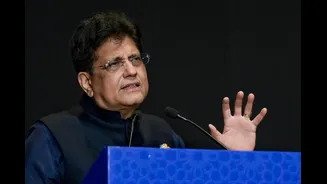
India’s aviation goals are nothing short of monumental. With passenger traffic surging, the government and airlines are pushing to expand connectivity to every corner of the country. Recent statements from Commerce and Industry Minister Piyush Goyal,
made during a visit to Egypt, put a fine point on the scale of this ambition. He stated that after already placing orders for over 1,200 aircraft, Indian carriers are preparing to order another 1,000 planes to meet a total projected need of over 2,000 aircraft. This massive fleet expansion is central to India's plan to double its number of operational airports and cater to a market where air travel is no longer a luxury but a crucial economic engine. Projections estimate the Indian commercial fleet will grow at 7.1% annually over the next decade, one of the fastest rates in the world.
A Global Production Bottleneck
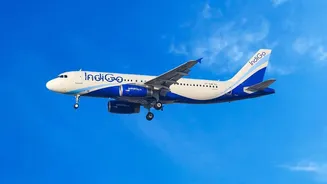
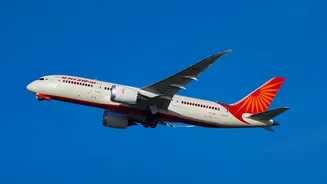
The problem is that ordering planes and receiving them are two very different things. The global commercial aircraft market is dominated by a duopoly of Airbus and Boeing, both of which are facing unprecedented production challenges. Their collective order backlog now exceeds 15,000 aircraft, creating a long queue for airlines worldwide. These delays are caused by persistent global supply chain disruptions, including shortages of critical components like engines, castings, and electronics. As a result, Indian carriers like IndiGo, Air India, and Akasa Air, despite their record-breaking orders, are facing extended delivery timelines. Some aircraft ordered by Indian airlines are not scheduled for induction until as late as 2034, according to Ministry of Civil Aviation data. Goyal confirmed that the government is actively pursuing these manufacturers to expedite deliveries, framing the situation as an 'acute' shortage that could constrain growth.
More Than Just Acquiring Aircraft
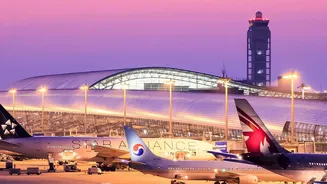
Even if the planes were to arrive tomorrow, the challenges wouldn't end there. A rapidly expanding fleet requires a massive support ecosystem that also needs to be scaled up. This includes a growing need for trained pilots, cabin crew, and, crucially, Maintenance, Repair, and Overhaul (MRO) facilities. For years, Indian carriers have been heavily reliant on foreign MROs, which increases operational costs and turnaround times. Furthermore, airport infrastructure, from parking bays to terminal capacity, must keep pace to avoid on-the-ground congestion. The government is addressing some of these issues, including simplifying aircraft leasing through initiatives at GIFT City, as over 85% of India's current fleet is leased rather than owned. These efforts are critical, as simply having more planes without the pilots to fly them or the facilities to maintain them creates a new set of problems.
The Path Forward: From Buyer to Builder?
Faced with global supply constraints, India is also looking at long-term solutions. There is a growing push for global manufacturers like Boeing and Airbus to deepen their supply chain and engineering capabilities within India. Both companies have significantly increased their sourcing of components and services from India, with hundreds of Indian firms now supplying parts for their global aircraft programs. This evolution from being just a major buyer to a manufacturing partner is a strategic shift. The government is encouraging foreign original equipment manufacturers (OEMs) to support the development of an indigenous civilian passenger aircraft. While a full-scale 'Made in India' passenger jet is still a distant goal, strengthening the domestic aerospace ecosystem is seen as vital for supply chain resilience and capturing more value from the booming aviation market.