


An Annual Weather Report
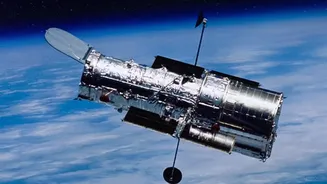
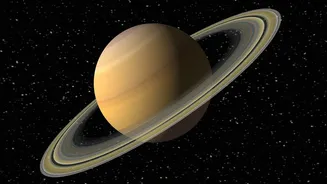
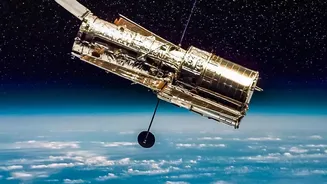
Scientists are getting yearly updates on the weather of the outer solar system's gas giants, thanks to the Hubble Space Telescope's Outer Planet Atmospheres Legacy (OPAL) program. This long-term project dedicates time each year to capture high-resolution
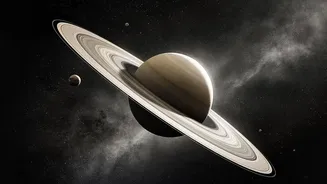
images of Jupiter, Saturn, Uranus, and Neptune as they make their closest approaches to Earth. This consistent monitoring allows researchers to build a timeline of atmospheric changes, moving beyond single snapshots to understand long-term weather patterns and seasonal evolution on these distant worlds. For Saturn, whose year is about 29 Earth years long, these annual check-ins are crucial for tracking the slow progression of its seven-year-long seasons. Recent images are charting the end of summer in the northern hemisphere as it moves toward its 2025 equinox.
Seeing Through the Haze
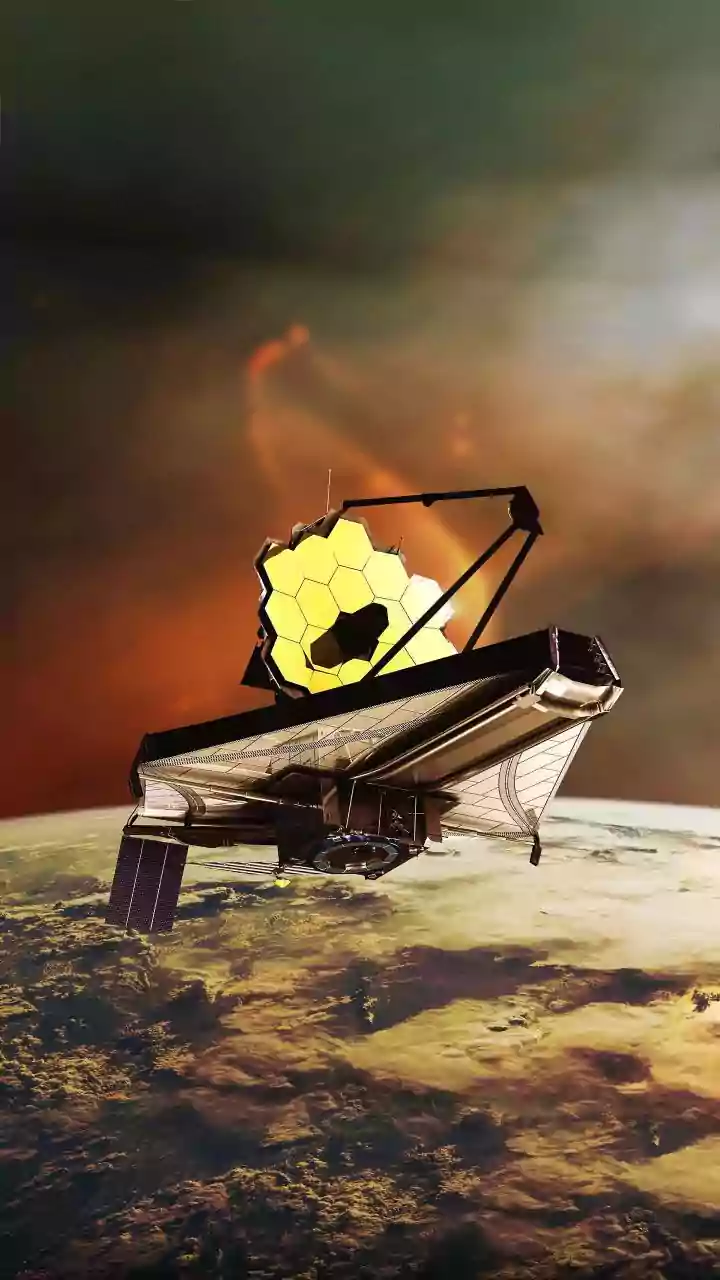
While Hubble observes in visible and ultraviolet light, its recent work complements infrared observations from the James Webb Space Telescope (JWST). This multi-wavelength approach is like peeling back the layers of an onion. Hubble excels at capturing subtle color variations in the planet's upper cloud bands, which can indicate changes in the chemical composition or altitude of the clouds. The use of different filters emphasizes these slight differences in cloud height and makeup. For instance, a reddish haze observed over the northern hemisphere might be due to increased heating from summer sunlight, altering atmospheric circulation or the amount of photochemical haze produced. By combining this with infrared data, which peers deeper into the atmosphere to sense heat and different chemical layers, scientists get a more complete, three-dimensional view of how the planet's massive weather systems work.
Subtle Shifts, Big Implications
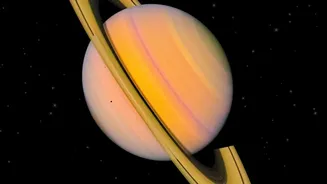
The year-over-year changes captured by Hubble between 2018 and 2020 may seem subtle, but they paint a picture of a planet in transition. During this period, as the northern hemisphere moved from summer toward autumn, its equatorial region brightened by 5 to 10 percent. Scientists believe this could be related to changes in cloud height or the density of atmospheric haze. Some color bands have also slightly changed from year to year. These annual observations provide crucial data points that show the slow progression toward the next season, building on the legacy of previous missions like Cassini and Voyager.
Winds of Change
Beyond cloud colors, Saturn's powerful winds have shown fascinating fluctuations. Winds near the equator have been measured at incredible speeds, sometimes exceeding 1,600 kilometers per hour. Data from Hubble showed that wind speeds measured in 2018 were significantly faster than those recorded by the Cassini spacecraft between 2004 and 2009. However, by 2019 and 2020, the speeds had dropped back to the levels Cassini observed, highlighting that the atmosphere can vary on much shorter timescales than just the long seasons. These shifts in wind velocity, along with the appearance and disappearance of smaller storms, make Saturn a natural laboratory for studying fluid dynamics under extreme conditions.
A Farewell Look at the Hexagon
The recent observations also captured Saturn's famous north polar hexagon, a massive, six-sided jet stream discovered by Voyager in 1981. This remarkably stable weather pattern has persisted for decades. The 2024 views from Hubble and Webb may be among the last high-resolution looks scientists get of this feature until the 2040s. As Saturn's northern pole tilts away from the sun and enters a 15-year-long winter darkness, the hexagon will become obscured from our view. These final glimpses provide essential data on a unique atmospheric structure before it temporarily disappears, leaving scientists with years of information to analyze as they await its return.