


What Are Super-Earths?
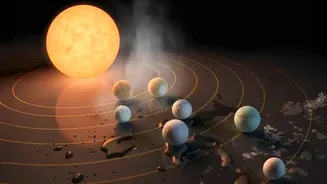
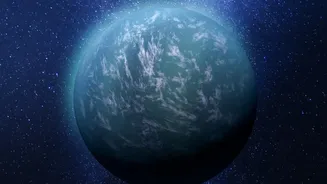
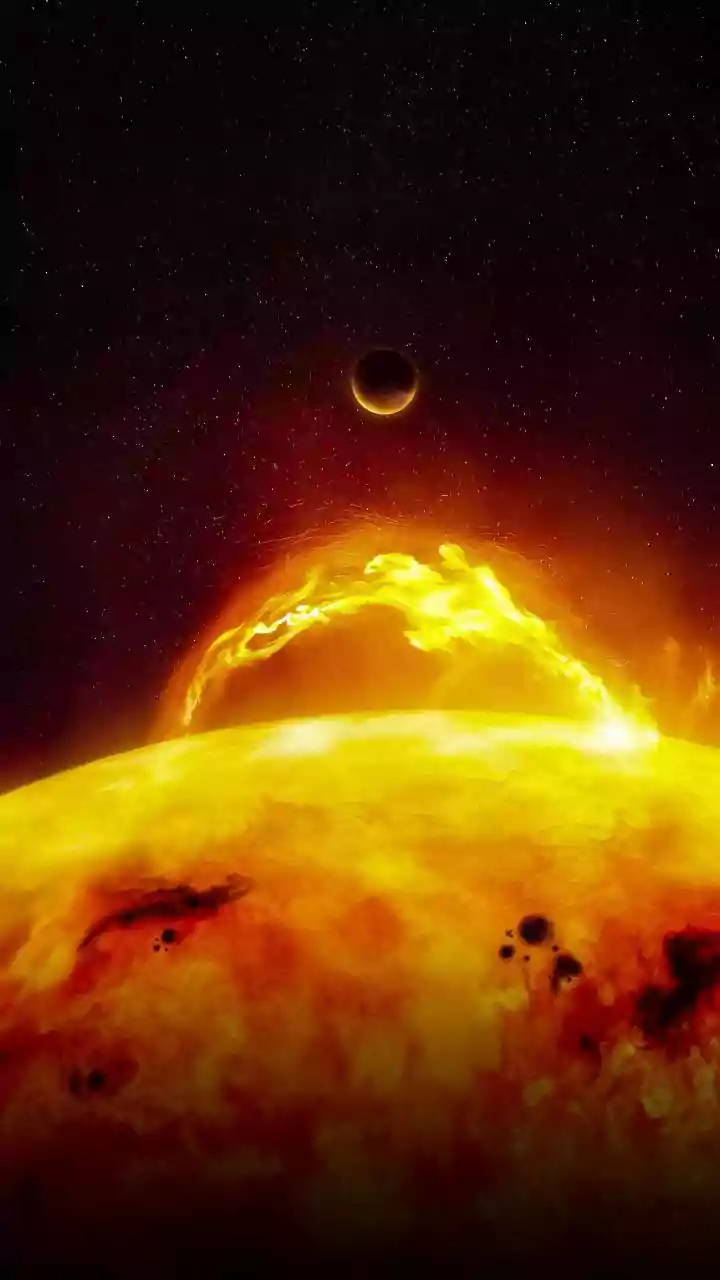
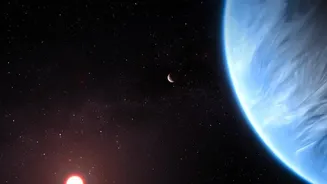
Super-Earths are a class of exoplanets unlike any found in our solar system. They are more massive and larger than Earth but smaller than ice giants like Neptune. This category of planet is one of the most common types discovered in our galaxy so far.
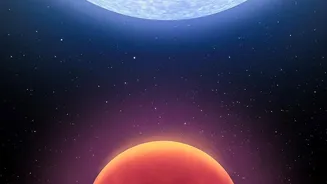
They can be rocky, gaseous, or a combination of both, with some potentially being "water worlds" covered by deep oceans. Because they aren't present in our own solar system, studying them offers a crucial window into how planets form and whether the conditions for life might exist elsewhere. The search for water, even as vapour in the scorching atmospheres of hot super-Earths, provides vital clues about which of these alien worlds could be potentially habitable.
The Power of Infrared Light
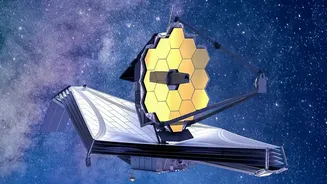
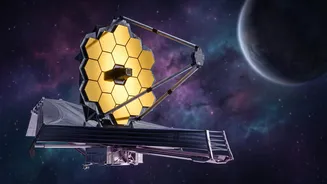
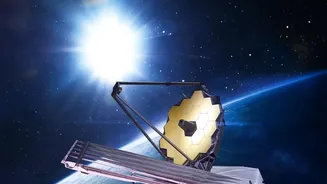
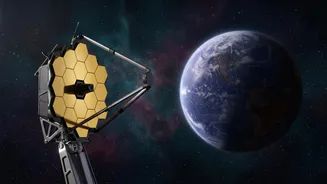
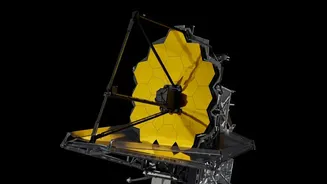
The key to JWST's unique ability lies in its sensitivity to infrared light. This range of the light spectrum, which is invisible to the human eye, is where many molecules—including water, methane, and carbon dioxide—leave their most distinct chemical fingerprints. While telescopes like Hubble have detected water before, JWST's massive mirror and advanced instruments allow it to capture a much broader and more detailed range of infrared wavelengths. This capability is essential for analyzing the thin atmospheres of distant planets with unprecedented precision, opening a new era in the study of exoplanets.
A Technique Called Transmission Spectroscopy
To find water, astronomers use a clever method called transmission spectroscopy. This technique relies on observing an exoplanet as it transits, or passes in front of, its host star from our point of view. As the starlight filters through the planet's atmosphere, gases present will absorb very specific wavelengths of that light. Each chemical has a unique absorption pattern, like a barcode. By capturing the spectrum of the star's light before the transit and then again during the transit, scientists can measure the difference. That difference reveals the unique "barcode" of chemicals present in the planet's atmosphere.
JWST's Eyes: NIRSpec and MIRI
Two of the telescope's key instruments for this task are the Near-Infrared Spectrograph (NIRSpec) and the Mid-Infrared Instrument (MIRI). These instruments act like cosmic prisms, splitting the incoming starlight into thousands of different shades or wavelengths. NIRSpec covers the near-infrared part of the spectrum (from 0.6 to 5.3 microns), while MIRI handles the mid-infrared range (5 to 28 microns). Together, they provide comprehensive wavelength coverage that is crucial for detecting a wide range of molecules. When the data from these spectrographs is analyzed, the presence of water vapor shows up as distinct dips or dark lines at specific infrared wavelengths where the water molecules absorbed the starlight.
Decoding the Water Signature
Finding these dips in the light spectrum is the 'eureka' moment. By analyzing the precise location and depth of these absorption lines, astronomers can confirm the presence of water vapor. They can even estimate its abundance in the planet's atmosphere. While the process is complex, it's this method that allows humanity to probe the chemistry of worlds hundreds or even thousands of light-years away. It transforms these distant planets from simple points of light into tangible places with atmospheres, weather, and, potentially, the building blocks for life. The detection of water in the terrestrial-forming zones of young star systems further suggests that rocky planets may have water available to them right from the very beginning of their formation.