



The Solar System's New Moon King
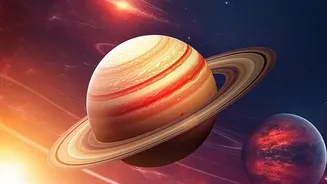
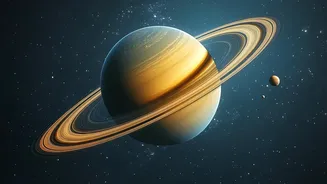
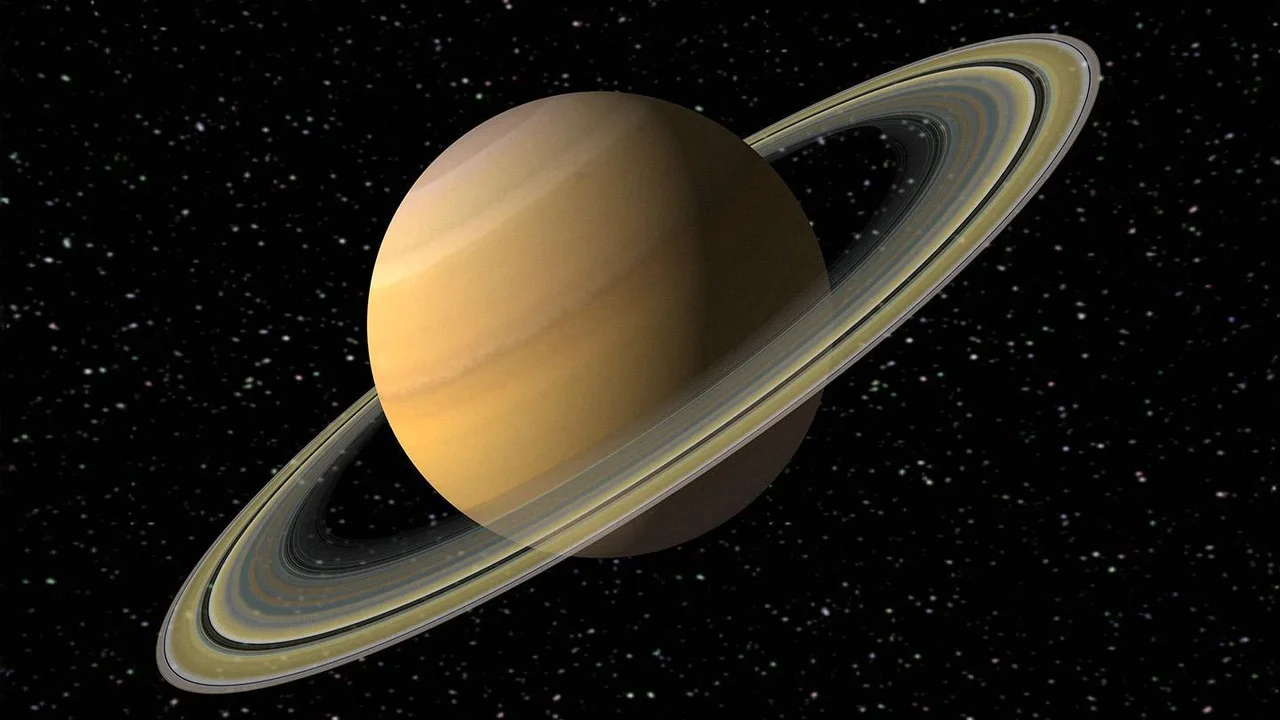
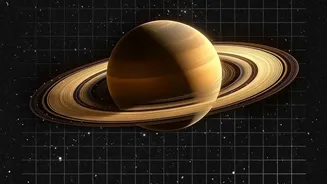
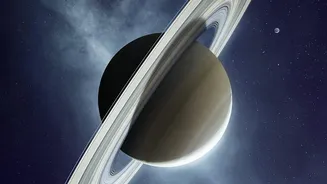
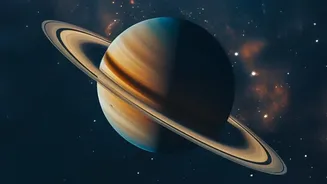
For decades, Jupiter held the title for the most moons in the solar system. But a recent flurry of discoveries has completely rewritten the planetary leaderboard. Thanks to advanced telescope surveys, Saturn's confirmed moon count has skyrocketed. The
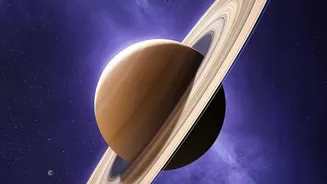
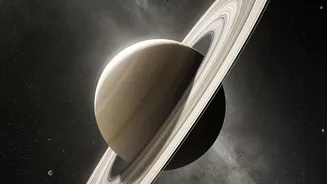
biggest leap came in March 2025, when a staggering 128 new moons were announced at once, catapulting its total from 146 to 274. Subsequent discoveries in 2026, including another batch of eleven in March and more in June, have pushed the official tally to an incredible 293. This makes every astronomy textbook printed before 2025 quietly obsolete and firmly establishes Saturn as the system's undisputed 'moon king'. These new additions are not giants like Titan, which is larger than the planet Mercury; most are tiny, irregular satellites just a few kilometres wide.
The Hunt for Hidden Worlds
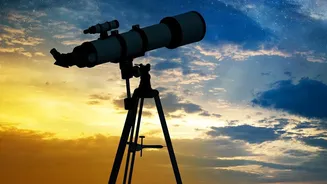
Discovering a new moon isn't a single 'eureka' moment but a patient, painstaking process. It begins with powerful telescopes, often located at high-altitude observatories like Mauna Kea in Hawaii, scanning the skies around a planet. Astronomers use a technique called 'shift-and-stack', where they take multiple images of the same patch of sky over hours or days. They then digitally layer these images, aligning them based on the predicted movement of a potential moon. While stars remain fixed in the background, a moon will appear as a faint dot moving in a consistent path. This method allows them to detect objects that are millions of times fainter than what the naked eye can see, some as small as a couple of kilometres across. This was the technique used by the team that found the massive batch of 128 moons, using data from the Canada-France-Hawaii Telescope.
From Candidate to Confirmed Moon
Spotting a moving dot is just the beginning. To be officially recognised, the object must be proven to be a natural satellite, not a passing asteroid or comet. This is where the International Astronomical Union (IAU) and its Minor Planet Center (MPC) come in. The MPC acts as the official clearinghouse for all new solar system discoveries. When a team of astronomers submits a potential moon, the MPC cross-references the data with millions of observations to ensure it's not a previously catalogued object. Scientists then need to track the object for an extended period—sometimes years—to precisely map its orbit and confirm it is gravitationally bound to the planet. Once its orbit is definitively calculated and it's clear the object orbits the planet (a planetocentric orbit) rather than the Sun (a heliocentric orbit), the IAU grants it a provisional designation, like S/2023 S 51, and officially adds it to the moon count.
The Naming Ceremony
Receiving a permanent name is the final step in a moon's journey to official recognition. Once a moon's orbit is secured and it's given a Roman numeral designation (like Saturn CXXIII), the discovery team can propose a name. The IAU's Working Group for Planetary System Nomenclature has strict conventions for this. Saturn’s moons follow specific mythological themes. Its inner, 'regular' moons are traditionally named after Titans, the mythological brethren of the Roman god Saturn. The newer, 'irregular' moons—which have distant, tilted orbits—are named after giants from three distinct mythologies: Gallic, Inuit, and Norse. This system helps astronomers categorize the moons into orbital families that likely formed from ancient collisions of larger captured objects. However, with over 200 of Saturn's irregular moons still awaiting names, the IAU may decide that only the most scientifically interesting small moons will receive one in the future.