






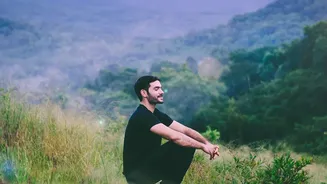
The Rise of the ‘Nothing-cation’
The concept is simple yet revolutionary: a holiday dedicated to intentionally doing nothing. Coined the 'nothing-cation,' this trend sees travellers actively choosing rest over a relentless schedule. A recent Airbnb report highlighted that nearly two-thirds
of Indian Gen Z travellers take trips simply to relax, recharge, and embrace doing very little. This marks a significant departure from the FOMO-driven (fear of missing out) trips of the past, where every moment was scheduled and documented. Instead of collecting passport stamps or chasing viral photo ops, the goal is to decompress. The itinerary might feature sleeping in, reading a book, taking long walks with no destination, or simply enjoying a cup of tea without the pressure to be anywhere else. It’s a conscious uncoupling from the idea that a holiday’s value is measured by how much you do.
A Rebellion Against Hustle Culture
This shift can be seen as a direct response to the 'always-on' nature of modern life. For a generation that grew up with smartphones and constant connectivity, the lines between work, social life, and rest have become irrevocably blurred. The pressure to be productive is relentless. As a result, burnout is rampant. A 2024 Deloitte survey found that a staggering 70% of Indian Gen Z reported feeling persistently exhausted. In this context, the 'nothing-cation' isn't just a holiday; it's a form of resistance. It’s a deliberate act of reclaiming one's time and energy from a culture that equates busyness with worth. By choosing to do nothing, Gen Z is making a powerful statement: their well-being is not negotiable. Travel becomes less about escaping life and more about recovering from it.
Prioritising Peace Over Performance
For previous generations, holiday photos were for the family album. For millennials, they were for the Facebook album. For Gen Z, the pressure to perform for an online audience can be immense. One survey revealed that over half of travellers feel pressured to book activities just to show their social media followers they did more than relax. The move towards unstructured holidays is a pushback against this performative pressure. It reflects a deeper understanding of mental health, where genuine rest is prioritised over curating a perfect-looking life online. According to a June 2026 Airbnb report on Indian Gen Z, 95% say it's important their trips feel personal and unique, not just a popular option. This desire for authenticity means choosing experiences that nourish the soul, even if they don’t make for a viral Reel. It's about finding joy in the moment, not capturing it for later.
Slow Travel as a Form of Self-Care
The 'nothing-cation' is a close cousin of the 'slow travel' movement, which has also gained significant traction among young Indians. Instead of sprinting through five cities in seven days, slow travel encourages longer stays in a single destination, allowing for deeper immersion and less stress. This approach inherently builds in time for doing nothing. It allows for spontaneity and discovery that a packed itinerary simply can't accommodate. It also aligns with a growing desire for more sustainable and mindful travel. By slowing down, travellers reduce their environmental footprint and have more meaningful interactions with local communities. For a generation highly attuned to mental wellness and sustainability, this less-is-more approach to exploring the world feels not just appealing, but necessary.