





A One-in-a-Million Discovery
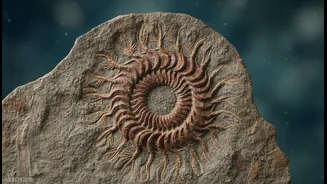
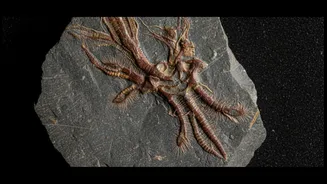
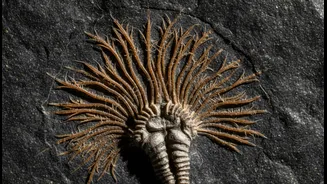
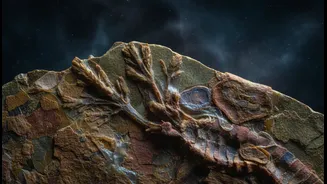
Sometimes the biggest discoveries aren't made in remote deserts, but on a forgotten shelf. That's exactly what happened with a 450-million-year-old fossil of a crinoid, an ancient relative of the modern starfish. Initially collected near Quebec, Canada,
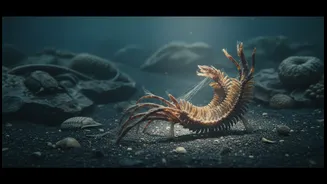
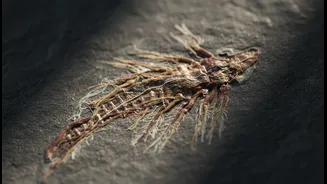
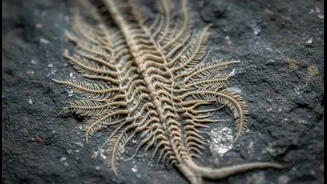
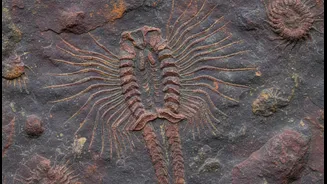
the specimen sat in a small Montreal museum until visiting researchers took a closer look. They found something almost unheard of: preserved soft tissue. The fossil belongs to a species called Dendrocrinus simcoensis, which resembled a plant rooted to the seafloor. While millions of crinoid fossils exist, they are almost always just the hard skeletal plates. This find was different. It contained the delicate, feather-like tube feet the animal used for feeding, marking only the second time in history that crinoid soft tissue has been found, and by far the oldest example.
The Challenge of Imagining the Past
For scientists who study ancient life, the fossil record is frustratingly incomplete. After an animal dies, its soft parts—skin, eyes, muscles, and internal organs—are the first to decay. Scavengers and bacteria typically erase them within days, leaving only hard parts like bones and shells to fossilise. This creates a huge challenge. Without soft tissue, understanding how an extinct creature moved, fed, or interacted with its environment involves a great deal of educated guesswork. Reconstructions are often based on comparisons with distant living relatives, a method that is useful but can be misleading. To get soft tissue preservation, the conditions have to be perfect. One scientist described the necessary environment as a “natural refrigerator or vacuum-sealer,” where an animal is buried almost instantly in fine mud with no oxygen, stopping decay in its tracks. These conditions are extraordinarily rare, making any such fossil a priceless window into a lost world.
A Glimpse of Ancient Behaviour
The preserved tube feet of this crinoid provide more than just a clearer picture of what it looked like; they offer direct evidence of its lifestyle. In living crinoids, tube feet are essential for capturing food from water currents. By studying the structure of these 450-million-year-old appendages, researchers can infer how this ancient animal fed. When they compared the fossil to modern crinoids, the team found that the anatomy of this ancient species was very different. This suggests that Dendrocrinus simcoensis may have had a unique feeding strategy and occupied an ecological role that no longer exists today. It wasn't just another version of what we see in the oceans now; it was something distinct. Instead of just a skeleton, scientists now have a glimpse of the animal's actual behaviour, frozen in time.
Why Museum Drawers Still Hold Secrets
This discovery powerfully illustrates that our understanding of the past is constantly evolving. It also makes a strong case for the importance of museum collections, big and small. The fossil was not found on a grand expedition, but was identified by researchers with fresh eyes and new technology examining an old specimen. There are potentially countless other revolutionary discoveries waiting in the archives of museums around the world. As imaging techniques and analytical tools become more powerful, specimens collected decades ago can yield new and exciting information. This single crinoid fossil, once overlooked, has provided a crucial piece of the puzzle, forcing a re-evaluation of how we reconstruct life from the Ordovician period and reminding us that there is more than a lifetime's worth of discoveries still waiting to be found.