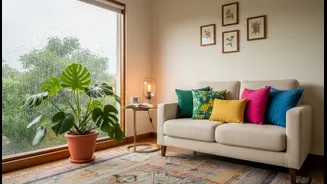









Swap Heavy Fabrics for Light Alternatives
The single biggest change you can make is with your textiles. Heavy fabrics like velvet, thick wool, and even some dense cottons absorb and hold moisture, leading to musty smells and potential mildew. Switch to lightweight, breathable materials for curtains,
cushion covers, and bed linens. Crisp cottons, airy linens, and sheer voiles are excellent choices. They dry quickly, allow for better air circulation, and prevent that stuffy feeling that is common during the rains. Sheer curtains are particularly effective as they let in maximum natural light on overcast days, making a small space feel brighter and more open.
Choose Furniture That Resists Humidity
Wooden furniture can swell, warp, and attract mould in high humidity. In a small flat where furniture is used constantly, durability is key. Opt for pieces made from materials that are more forgiving. Powder-coated aluminum, stainless steel, and weather-resistant wicker or rattan are fantastic options that resist moisture damage. If you love the look of wood, choose teak, which is naturally oily and water-resistant, or look for well-sealed pieces. Multi-functional furniture, like storage ottomans or foldable tables, is also a wise investment for compact homes, helping you stay organised and reduce clutter, which improves airflow.
Maximise Light to Beat the Gloom
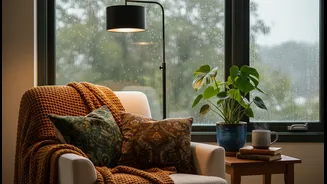
Grey skies can make small apartments feel dark and cramped. Counteract this by strategically enhancing light. Use mirrors to create an illusion of space and reflect what little light is available. Placing a large mirror opposite a window is a classic designer trick that works wonders. For artificial lighting, upgrade to warm LED lights and consider layered lighting with floor or table lamps. This creates a cosy, inviting atmosphere and eliminates the cold, stark feeling of a single overhead light. Bright and cheerful colours on walls or in accessories like cushions can also instantly lift the mood.
Protect Your Floors and Entryway
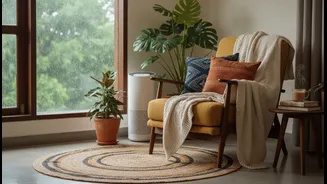
The entrance to your home takes a beating during the monsoon. To prevent muddy footprints and water trails, create a designated zone for wet items. A stylish umbrella stand and a durable, water-absorbent doormat are essentials. Inside, consider swapping out heavy, hard-to-dry carpets for lightweight dhurries or rugs made from jute, sisal, or synthetic blends that are easier to clean and dry. This not only protects your flooring but also prevents the damp, musty smell that can come from a waterlogged rug. Keeping floors as clear as possible also makes cleaning easier and enhances the sense of space.
Embrace Greenery, But with Care
Indoor plants can make a space feel fresh and vibrant, which is especially welcome during the monsoon. Many plants, like ferns, peace lilies, and snake plants, thrive in the high humidity of the season and help purify the air. In a small flat, hanging planters or vertical gardens are great space-saving solutions. However, be mindful of moisture. Ensure your pots have proper drainage to prevent water from stagnating, which can lead to mould growth on the pot and surrounding surfaces. Good air circulation around your plants is also crucial.
Keep the Air Fresh and Fragrant
One of the biggest challenges of the monsoon is the pervasive musty odour caused by dampness. Good ventilation is your first line of defence; open windows whenever it’s not raining and use fans to keep air moving. To actively combat smells, use natural fragrances. Scented candles, essential oil diffusers with scents like eucalyptus or lavender, or even bowls of camphor can help keep your home smelling fresh and clean. These small touches not only fight mustiness but also add to a cosy, romantic monsoon ambiance.