




A Faint Pulse From a Stellar Remnant
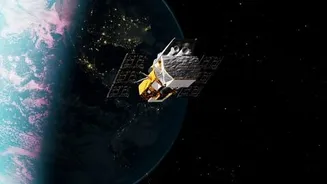
The story begins with a faint, rhythmic dimming from a star 270 light-years away. Using NASA's Transiting Exoplanet Survey Satellite (TESS), researchers detected a consistent dip in brightness from a white dwarf known as HS 0209+0832 every 4.4 days. This
kind of repeating signal is often the tell-tale sign of a planet passing in front of its star, an event called a transit. In this case, the data points to a giant, Jupiter-sized world orbiting incredibly close to its star. But this isn't just any star, and this isn't just any planet. The star is a white dwarf, the collapsed, smouldering core of a star that has run out of fuel. This discovery, if confirmed, isn't just another dot on our map of the galaxy; it represents a potential 'phoenix' world, risen from the dead.
The Life and Violent Death of a Star
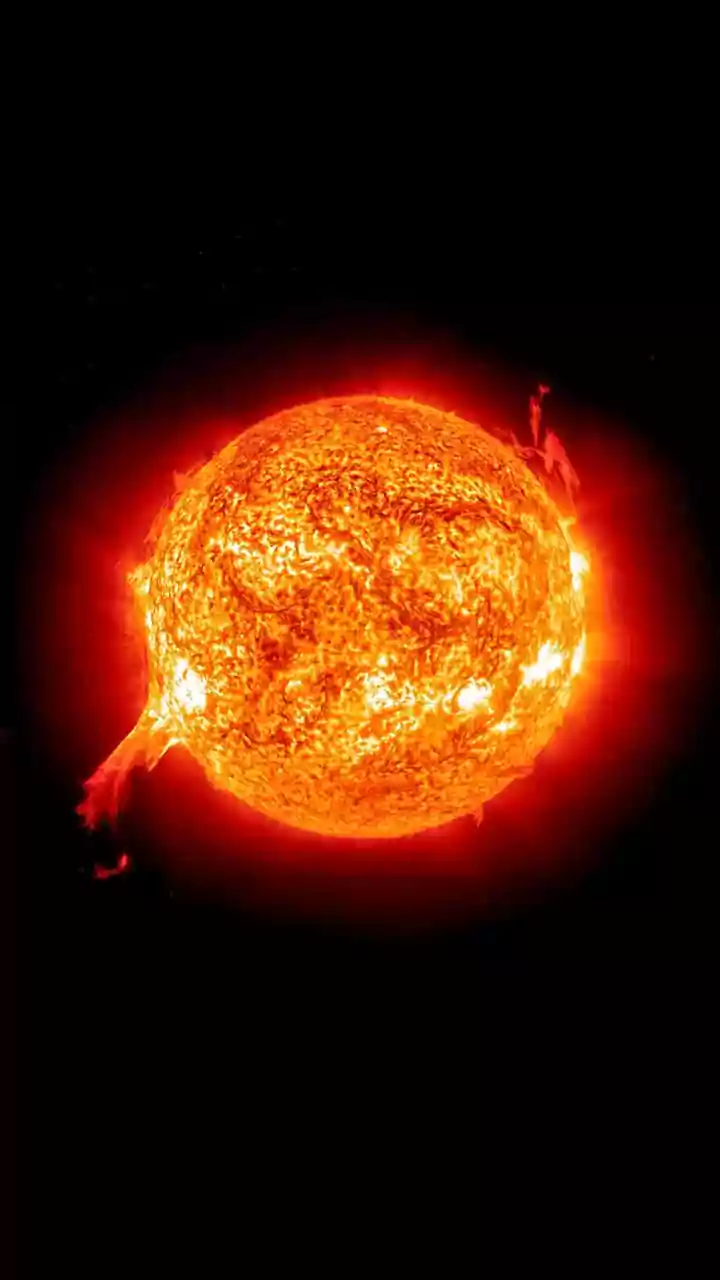
To understand why this is so remarkable, we need to know what a white dwarf is. It’s the final evolutionary stage for stars like our Sun. When such a star exhausts its fuel for nuclear fusion, its core collapses while its outer layers swell dramatically, transforming it into a red giant. This phase is incredibly destructive. When our own Sun becomes a red giant in about six billion years, it is expected to expand and engulf the inner planets, including Mercury, Venus, and almost certainly Earth. Any planet that survives this inferno must have been in a very distant orbit. After the red giant phase, the star sheds its outer layers, leaving behind the hot, dense core: a white dwarf. This stellar remnant is essentially a cosmic graveyard, a monument to a once-thriving solar system.
A Chemical Signature of Rebirth
What makes the planet around HS 0209+0832 so special is not just its existence, but its composition. A team of astronomers, led by researchers at the University of Warwick, revisited archival data from the Hubble Space Telescope. They found a strange chemical signature in the white dwarf’s atmosphere. It was polluted with heavy elements, which is not unusual, as white dwarfs often pull in material from nearby asteroids. However, the specific mix was baffling. It contained elements like zinc and copper, but the showstopper was Niobium, an element never before seen in a white dwarf's atmosphere and present at over 1,000 times the concentration found in our Sun.
Forged in Stellar Fire
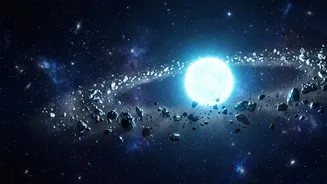
This chemical fingerprint was the key. Elements like Niobium are forged through specific nuclear reactions that happen deep inside large, aging stars just before they die. A normal 'first-generation' planet, formed alongside the star at its birth, wouldn't have this unique signature. The team concluded that this material must have come from the star's own ashes. The theory is that after the star died, a disk of its expelled gas and dust formed around the white dwarf. From this recycled material, a completely new 'second-generation' planet coalesced. The intense radiation from the hot white dwarf is now likely boiling away the new planet's atmosphere, causing this Niobium-rich material to rain down onto the star's surface where telescopes can detect it.
What This Discovery Means for the Universe
While the world around HS 0209+0832 is still considered a planet candidate, the evidence is compelling. It is the first strong case for a second-generation planet orbiting a white dwarf, the most common fate for stars in the galaxy. Previously, such reborn planets had only been theorised around pulsars, which are much rarer stellar remnants. This discovery opens up the tantalising possibility that planetary formation is not a one-time event. It suggests that even after the violent death of a star, new worlds can form from the debris. This forces us to rethink the life cycle of planetary systems and consider that even in a stellar graveyard, new life can, quite literally, rise from the ashes. It provides a glimpse into a possible, distant future for our own solar system, long after the Earth is gone.