



The 'All-Natural' Illusion
The word 'natural' paints a picture of wholesome, unprocessed goodness. However, in India, the term isn't strictly regulated in the way 'organic' is. While the Food Safety and Standards Authority of India (FSSAI) states claims must be truthful and not
misleading, 'natural' can still be used on products that contain processed ingredients. For example, a product can be called 'natural' as long as it doesn't have added colours, artificial flavours, or synthetic substances, but it might still be high in sugar, salt, or unhealthy fats. A truly organic product, by contrast, must be certified and will carry a specific logo like the 'Jaivik Bharat' mark to prove it.
Decoding 'Grain' Claims
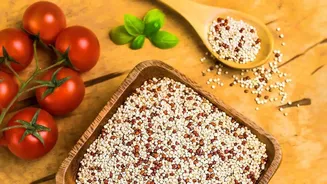
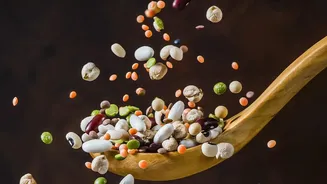
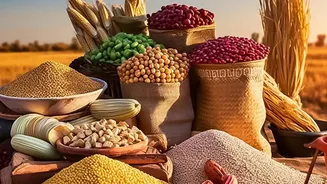
Don't let the words 'multigrain' or 'made with whole grain' fool you. 'Multigrain' simply means a product contains more than one type of grain, but these grains could be highly refined, stripping them of their fibre and nutrients. A 'made with whole grain' product might only contain a small amount of whole grains, with refined flour (maida) still being the primary ingredient. Always check the ingredients list. For a product to be genuinely high in whole grains, the first ingredient should be listed as 'whole wheat flour' or another whole grain. According to FSSAI proposals, for a bread to be labelled 'whole wheat,' it should contain at least 75% whole wheat flour.
The 'Zero Trans Fat' Loophole
Seeing 'Zero Trans Fat' or 'Trans Fat-Free' on a label feels reassuring, but it can be misleading. Regulations in India and other countries allow manufacturers to make this claim if the product contains less than a certain threshold of trans fat per serving (e.g., under 0.5 grams). The catch is that serving sizes are often unrealistically small. If you eat multiple servings—as most people do with a bag of chips or a packet of biscuits—your intake of these harmful fats can add up quickly. To spot hidden trans fats, check the ingredient list for terms like 'partially hydrogenated oils,' 'hydrogenated oils,' or 'vanaspati.' If you see these, the product contains trans fat, regardless of what the front of the pack says.
'No Added Sugar' Doesn't Mean Low Sugar
A 'no added sugar' claim is one of the trickiest. It means the manufacturer hasn't added table sugar (sucrose) during processing. However, the product can still be loaded with naturally occurring sugars or other sweeteners that have a similar effect on your body. These can include fruit juice concentrates, honey, maltose, or high-fructose corn syrup. Some products might even contain these ingredients and still list 'sugar' as zero on the nutrition panel, which can be confusing. FSSAI regulations require that claims be substantiated, but it's always wise to check the ingredients list for these alternative sugar sources and look at the 'Total Carbohydrates' and 'Sugars' line on the nutrition panel.
The Serving Size Deception
Perhaps the most common tactic is manipulating the serving size. A snack may seem low in calories, fat, and sugar per serving, but the listed serving size might be just a few chips or one small biscuit. This makes the nutritional information look much healthier than it is for a realistic portion. Before you trust the numbers on the front, always flip the pack over and check two things: the serving size and the 'per 100g' column. The 'per 100g' information gives you a standardised way to compare the nutritional content of different products, stripping away the marketing trick of a tiny serving size.