

A New Era of Planetary Science
For decades, finding planets outside our solar system, known as exoplanets, was a groundbreaking achievement in itself. We have discovered thousands, ranging from massive gas giants larger than Jupiter to smaller, rocky worlds. But simply knowing they
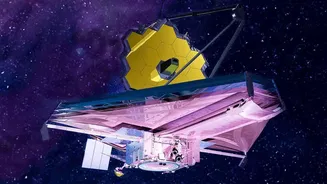
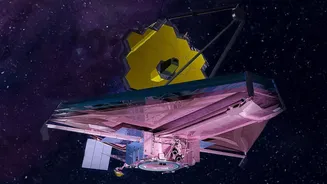
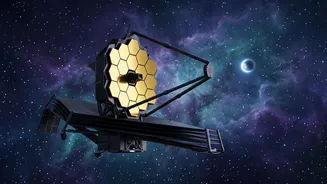
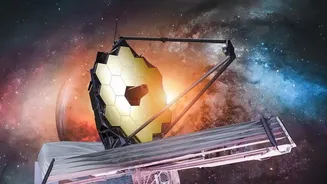
exist is only the first step. The real prize is understanding what they are like. Are they barren rocks? Do they have atmospheres? And crucially, do those atmospheres contain molecules essential for life as we know it, like water? This is where the James Webb Space Telescope has changed the game. Building on the work of predecessors like the Hubble and Spitzer telescopes, JWST is ushering in what NASA has called a "new era in exoplanet research" by moving from simply detecting planets to characterizing them.
Webb’s Infrared Superpower
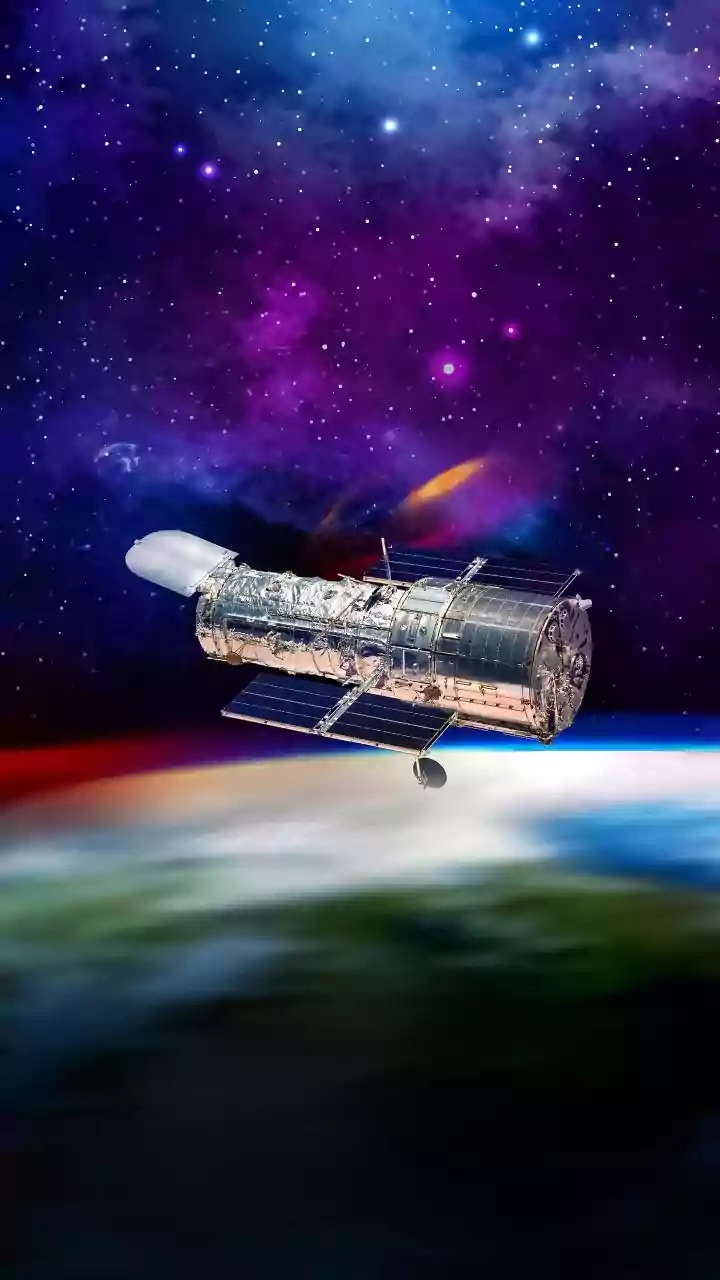
The secret to JWST’s ability lies in its specialization in infrared light. While the Hubble Space Telescope primarily observes the universe in visible and ultraviolet light, Webb is designed to capture the longer wavelengths of infrared light. This is crucial for studying exoplanets for two reasons. First, planets are much dimmer than their stars, and they emit most of their faint light in the infrared. Second, and more importantly for atmospheric studies, this is the part of the light spectrum where molecules leave behind their most distinct chemical fingerprints. Gasses in a planet’s atmosphere absorb specific colours, or wavelengths, of starlight. By seeing which colours are missing, scientists can identify the gasses present, including water vapour, methane, and carbon dioxide.
The Transit Spectroscopy Technique
To perform this cosmic chemical analysis, astronomers use a method called transit spectroscopy. This technique can be used when a planet's orbit takes it directly in front of its host star from our point of view. As the planet transits, a tiny fraction of the starlight filters through the upper layers of its atmosphere. The gasses in that atmosphere absorb some of the light, creating a unique barcode-like pattern in the star's light spectrum. Webb's incredibly sensitive spectrographs can detect these minuscule changes in the starlight, spreading the light out like a rainbow to see precisely which wavelengths have been absorbed. By comparing the light from the star before, during, and after the transit, scientists can isolate the chemical signature of the planet's atmosphere alone.
Water Found on Exotic Worlds
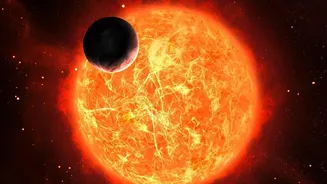
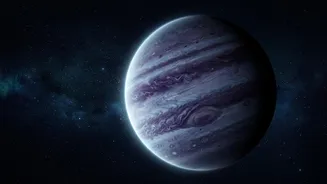
JWST has already successfully used this technique to detect water vapor in the atmospheres of several fascinating and exotic exoplanets. One notable example is WASP-18 b, a gas giant ten times more massive than Jupiter that is so hot—nearly 2,700 degrees Celsius—that most water molecules should be torn apart. The fact that Webb detected the subtle signs of the water that remains speaks to its extraordinary sensitivity. Another world, the "warm Jupiter" WASP-80 b, revealed signs of both water vapour and methane. The telescope has even detected water in the planet-forming disk of a young star system, PDS 70, in the very region where rocky, Earth-like planets might be assembling. These worlds are often tidally locked, with one side perpetually facing their star, leading to extreme temperatures and conditions unlike anything in our solar system.
What These Discoveries Mean
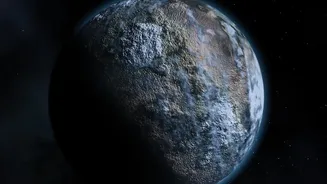
Finding water on a scorching gas giant doesn't mean we've found a habitable world. Planets like WASP-39b and WASP-18 b are far too extreme to support life. However, these early detections are a vital proof of concept. They demonstrate that JWST's technology works as designed and can reliably measure the chemical makeup of atmospheres light-years away. This capability is now being turned toward smaller, cooler, rockier worlds that orbit within their star's 'habitable zone'—the region where temperatures could allow liquid water to exist on the surface. While some initial tantalizing signals of water on rocky worlds like GJ 486 b have been debated, with scientists carefully working to distinguish a planetary atmosphere from features on the star itself, the tools are now in place. Each detection, even on an uninhabitable planet, refines our understanding of how planets form and evolve, bringing us one step closer to answering the ultimate question.