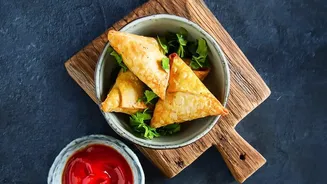


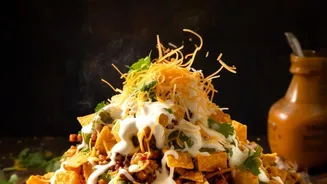

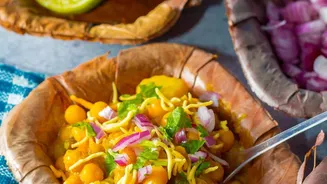
As Diwali approaches, the air fills with festivity and the craving for something spectacular. Samosa Chaat, a riot of textures and tastes, is that perfect festive indulgence, combining crunchy samosas with an explosion of tangy toppings.
The Anatomy of Perfect Samosa Chaat
Samosa Chaat is
more than just a snack; it's an experience. At its heart is the humble samosa, which is crushed and then lavishly layered with an assortment of toppings. The magic lies in the balance. The warmth of the chickpea curry, the coolness of the yogurt, the sweetness of tamarind chutney, the fresh kick of mint-coriander chutney, and the sharp bite of raw onions all come together. It’s a dish that engages every part of your palate—sweet, sour, spicy, and savoury—all underscored by the delightful crunch of the samosa and sev.
The Star Player: The Samosa
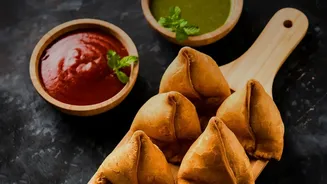
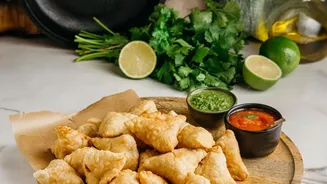
The foundation of this dish is, of course, the samosa. You have two choices: homemade or store-bought. If you're planning for a big Diwali gathering, high-quality store-bought samosas can be a fantastic time-saver. The key is to ensure they are properly crispy. If they've gone soft, a few minutes in an air fryer or a hot oven will bring them back to life. The ideal samosa has a sturdy, flaky crust that can hold up to the wet toppings without immediately turning soggy, and a flavourful, spiced potato filling that complements the other ingredients. For an authentic North Indian experience, a classic potato and pea filling is traditional.
The Tangy Trio: Essential Chutneys and Toppings
A great chaat is defined by its chutneys. You will need three main players. First, the Sweet Tamarind Chutney (Imli Chutney), a dark, glossy condiment made from tamarind, jaggery, and spices like ginger powder and roasted cumin. This provides the essential sweet and sour notes. Second is the Green Chutney, a vibrant and spicy blend of fresh coriander, mint, green chillies, and lemon juice. This cuts through the richness and adds a fresh, herbal kick. Many recipes also call for a spicy red chutney for extra heat. Finally, whisked plain yogurt, which should be thick and creamy, provides a cooling contrast to the spices. Don't forget the final garnishes: finely chopped red onions, fresh coriander, and a generous sprinkle of fine nylon sev for that quintessential crunch.
Recipe: Assembling the Ultimate Diwali Samosa Chaat
This recipe serves four and can be easily scaled up for a party. Ingredients: - 8 large, crispy Punjabi-style samosas - 2 cups of warm Chole (spiced chickpea curry) - 1 cup thick, plain yogurt, lightly whisked - 1/2 cup sweet tamarind chutney - 1/2 cup green mint-coriander chutney - 1 medium red onion, finely chopped - 1 cup nylon sev - 1/2 cup fresh coriander, chopped - 1/4 cup pomegranate seeds (optional) - Chaat masala for sprinkling Instructions: 1. Prepare your station. Have all your components ready—warm the chole and samosas if necessary, and place all chutneys and toppings in separate bowls for easy access. 2. To assemble each plate, place two hot samosas in a shallow bowl. Gently crush them with the back of a spoon to break them into large, bite-sized pieces. 3. Ladle a generous amount of warm chole over the broken samosas. 4. Drizzle a few spoonfuls of the whisked yogurt over the top, followed by the tamarind chutney and the green chutney. Add more or less of each chutney to suit your taste. 5. Sprinkle a liberal amount of chopped onions, fresh coriander, and pomegranate seeds if using. 6. Finish with a heavy shower of sev and a pinch of chaat masala. Serve immediately to ensure the samosa stays as crunchy as possible.
Tips for a Diwali Chaat Party
If you're serving Samosa Chaat at a party, consider setting up a DIY chaat bar. Lay out all the components—crushed samosas, warm chole, bowls of chutneys, yogurt, and various toppings—and let your guests build their own perfect plate. This not only saves you assembly time but also becomes a fun, interactive part of the celebration. It allows everyone to customize their spice and sweetness levels. Using mini samosas can also be a great option for a party, as they are easier for guests to handle and allow for smaller, sample-sized portions. The most important rule is to assemble just before eating to prevent a soggy final product.