
The Sun's Final Act
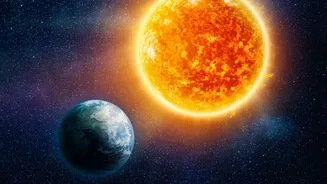
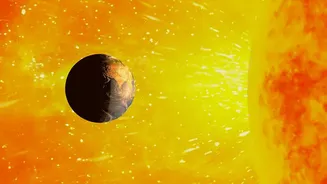
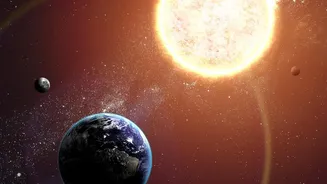
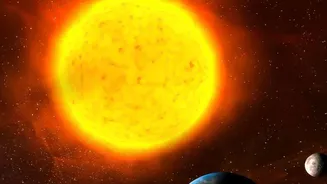
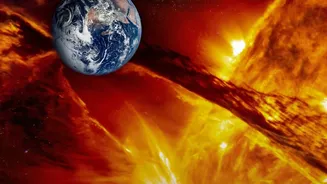
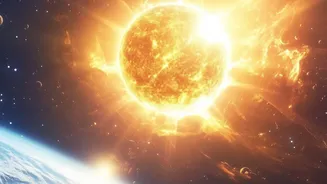
Our Sun is about halfway through its 10-billion-year lifespan. In roughly another five billion years, it will exhaust the hydrogen fuel in its core and begin to die. This process will cause it to swell dramatically into a red giant, expanding its outer
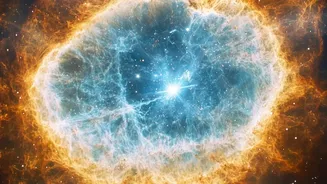
layers to a size that will engulf the inner planets. Mercury and Venus are almost certain to be consumed, and Earth's fate hangs in the balance, though it will be rendered uninhabitable long before then. After this phase, the Sun will shed its outer layers, leaving behind a dense, Earth-sized core called a white dwarf. This stellar remnant will contain about half the Sun's original mass.
A New Gravitational Dance
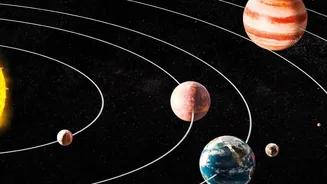
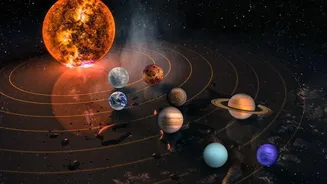
For a long time, astronomers believed this transition would be relatively gentle for the outer solar system. The idea was that as the Sun lost mass, its gravitational pull would weaken, causing the giant planets—Jupiter, Saturn, Uranus, and Neptune—to drift into wider, but still stable, orbits. It was thought they could circle the faint white dwarf for trillions of years, long after the inner solar system was gone. However, recent research from Caltech offers a more dramatic and violent alternative. This new perspective changes the fundamental assumption about how the Sun will lose its mass.
The Sun's Shakes and Shoves
The latest simulations suggest the Sun will not lose mass smoothly. Instead, it will happen through lopsided, violent ejections of material. The researchers describe these as 'stochastic kicks'—uneven bursts that give the dying star a series of small but significant shoves. Each push, though minor on its own, will send gravitational ripples through the solar system. Over thousands of years, the cumulative effect of these kicks will disrupt the delicate gravitational balance that has kept the giant planets in their orderly paths for billions of years. The Sun itself becomes the agent of chaos.
A Cosmic Billiards Game
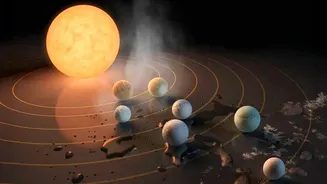
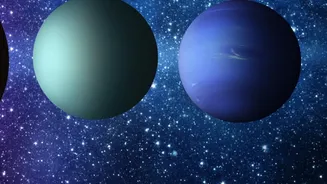
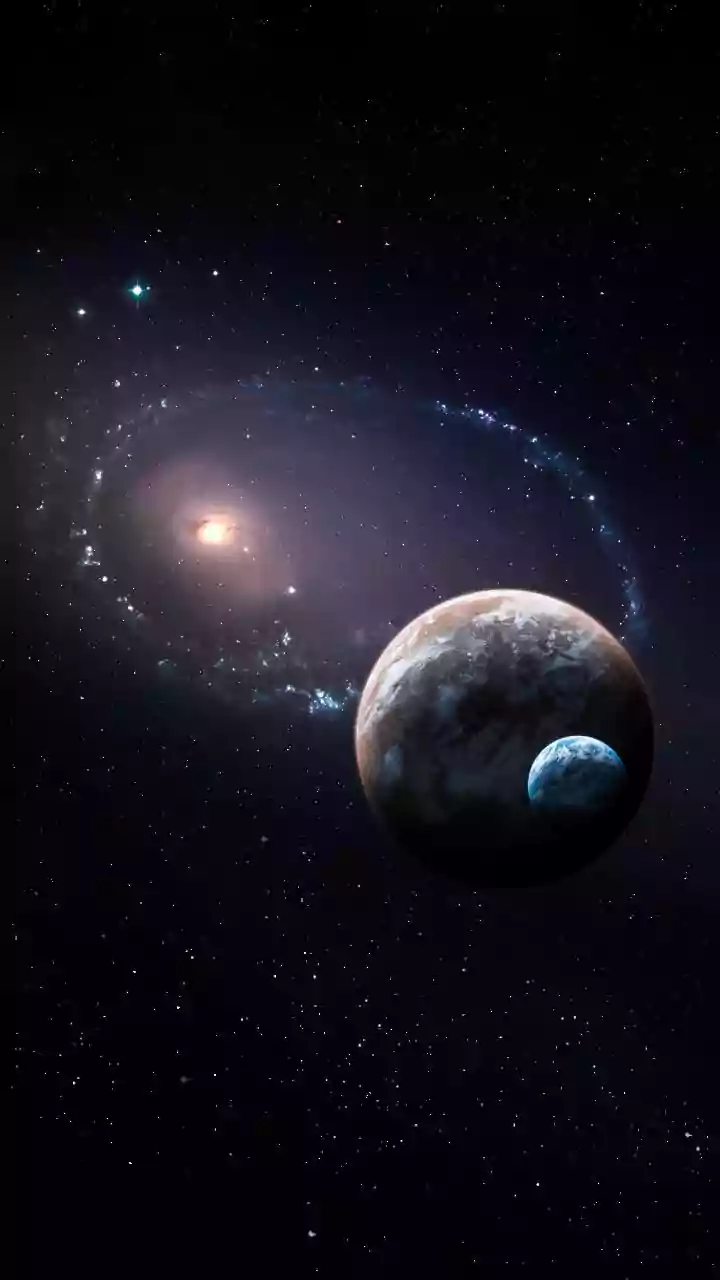
As the Sun's gravitational influence becomes erratic, the giant planets will begin to strongly perturb one another's orbits. Their once-predictable paths will become chaotic and intersecting. The Caltech team ran hundreds of simulations, and the results pointed toward a messy end. In many scenarios, the planetary system becomes unstable within a few billion years after the Sun becomes a white dwarf—a timeframe a billion times shorter than some previous estimates. Some simulations showed planets being ejected from the solar system entirely, becoming rogue planets wandering through interstellar space. Others showed Uranus and Neptune swapping places before the system ultimately falls apart. This instability suggests that even planetary systems that appear stable can be thrown into disarray by the death of their host star.
A Distant, But Inevitable, End
It is crucial to remember that these events are projected to occur billions of years from now and pose no threat to humanity. Life on Earth will likely be extinguished by the Sun's increasing brightness long before it even enters its red giant phase. What this research provides is a more complete picture of our cosmic home's ultimate destiny. It revisits an idea once considered by Isaac Newton—that the solar system might be mortal—and confirms it, but with a twist. The cause of the final instability isn't just the slow creep of chaos or a chance encounter with a passing star, but the death throes of the Sun itself, which will shake apart the very system it created.