

Understanding a 'Bright Pass'
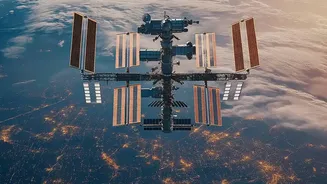
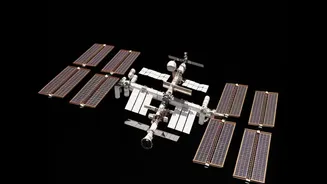
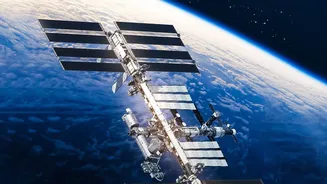
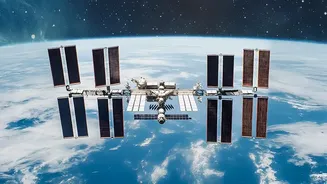
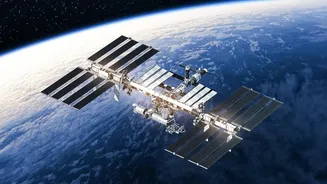
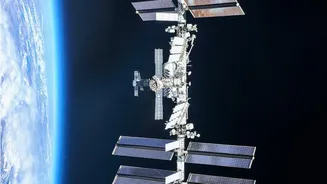
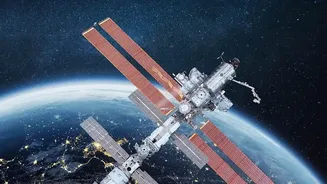
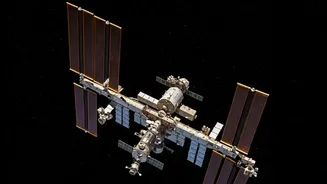
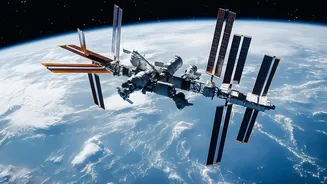
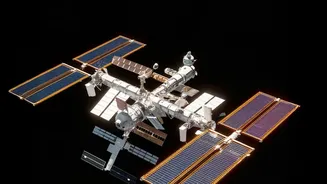
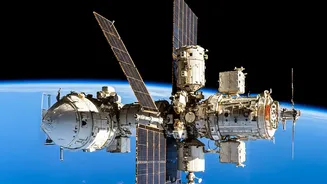
Before you start looking, it helps to know what makes a viewing opportunity a good one. The International Space Station (ISS) doesn't have its own lights visible from the ground; what we see is sunlight reflecting off its massive solar panels. For a pass
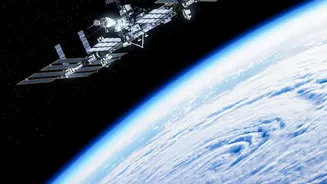
to be visible, it needs to fly over shortly after sunset or before sunrise. During these times, the sky is dark for you on the ground, but the station, orbiting about 400 kilometres up, is still bathed in sunlight. The brightness of a pass is measured on a magnitude scale where lower, negative numbers mean a brighter object. The brightest passes, rivaling the planet Venus, happen when the station flies high above the horizon, its panels catch the sunlight at a perfect angle, and its path is closer to you.
Top Apps for Spotting the Station
Several excellent apps take the guesswork out of tracking the ISS. They use your phone's GPS to provide precise viewing times and locations. One of the most popular is NASA's official Spot The Station app, which provides simple, reliable alerts and sighting data. Another favourite is ISS Detector, which not only tracks the ISS but can be expanded to include other satellites, comets, and planets. Its user-friendly interface shows upcoming passes and even checks local weather conditions to warn you about cloud cover. Heavens-Above is another powerful tool, long popular as a website, that offers detailed sky charts showing the station's track against the stars. For those who enjoy an interactive experience, apps with augmented reality (AR) like SkyView or the AR mode in Spot The Station let you point your phone at the sky to see the exact trajectory the ISS will follow.
Setting Up for a Successful Sighting
Once you've downloaded an app, the setup is straightforward. Allow the app to access your location to get accurate predictions. The most crucial feature to enable is notifications. These apps will send you an alert minutes before a visible pass is about to begin, telling you the exact time, duration, and the direction to look (e.g., 'appears in the WSW, disappears in the NE'). Familiarise yourself with the app's data. It will typically show the maximum height the station will reach in the sky, measured in degrees (90 degrees is directly overhead). The higher the elevation, the better and brighter the view. Many apps also provide a brightness or magnitude rating; look for passes with a low negative number for the most spectacular sightings.
Tips for the Perfect Viewing Experience
You don't need any special equipment to see the ISS; it's one of the brightest objects in the night sky, often outshining every star. However, a few simple steps can improve your experience. Head outside a few minutes early to let your eyes adjust to the darkness. If possible, choose a location with an open view of the sky, away from tall buildings and bright city lights. Know which direction to face—most passes travel roughly from west to east. When you spot it, you'll see a steady, bright point of light moving silently and quickly across the sky, much faster than an aeroplane and without any flashing lights. A pass typically lasts for a few minutes. While not necessary, a pair of binoculars can enhance the view, sometimes giving the station a golden hue from its solar panels.