




For Raw Leg Power, Pedal On
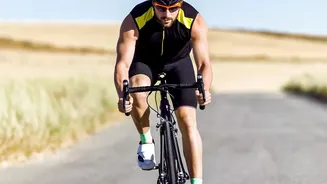
If your primary goal is to build sheer strength and endurance in your legs, cycling has a clear edge. The mechanics of pedalling heavily target the major muscles of the lower body: the quadriceps, hamstrings, glutes, and calves. The downstroke of the pedal engages
the quadriceps and glutes, which are responsible for producing the majority of your power. The upstroke, especially with clip-in pedals, works the hamstrings and hip flexors. This repetitive, resistance-based motion is excellent for developing muscular endurance and creating that lean, toned look many cyclists are known for. For those looking to really build strength, tackling hills or increasing resistance on a stationary bike can amplify these effects significantly, making cycling a superior choice for focused lower-body power development.
For Agility and Balance, Glide and Weave
When the focus shifts to coordination, balance, and agility, skating—particularly inline skating—takes the lead. Unlike the stable, fixed position on a bicycle, skating demands constant micro-adjustments to maintain your balance on a narrow wheelbase. This dynamic movement deeply engages your core, lower back, and the smaller stabilizing muscles in your hips and legs that often go unused in other activities. The side-to-side motion of pushing off and gliding works the hip abductors and adductors (inner and outer thighs) more effectively than the linear motion of cycling. This constant challenge to your body's ability to sense its position in space, known as proprioception, leads to significant improvements in overall coordination, stability, and reflexes.
The Cardiovascular and Calorie-Burn Contest
Both activities are stellar cardiovascular workouts, but the intensity can vary. Cycling can burn anywhere from 400 to over 900 calories per hour, depending on speed and intensity. Skating offers a comparable, though sometimes slightly lower, range. Some studies suggest a steady pace of skating can burn around 285-350 calories in 30 minutes, while interval skating can burn up to 450 calories in the same period. Skating has been found to be a better aerobic workout than cycling because it's harder to coast, forcing more continuous effort. However, high-intensity cycling, especially with hills, can easily surpass a casual skate in calorie burn. Ultimately, the 'better' cardio workout depends entirely on the effort you put in.
Joint Impact and Injury Risk
Here, both exercises score high marks for being low-impact, making them excellent alternatives to high_impact activities like running. Cycling is particularly gentle on the joints since your body is supported by the saddle, relieving pressure from the knees and ankles. Skating is also considered low_impact due to its smooth, gliding motion. However, the risk of injury from falls is significantly higher with skating, especially for beginners. Proper protective gear, including a helmet, wrist guards, and knee pads, is essential. While cycling carries risks, primarily from traffic or falls at speed, the learning curve is generally considered less steep for most adults.
Making Your Choice: Power or Poise?
The decision comes down to what you want to achieve and what you'll enjoy most. If your fitness plan is centered around building powerful quads and glutes for explosive strength, the focused resistance of cycling is your best bet. If you're looking for a more holistic workout that enhances your balance, core strength, and overall agility, the dynamic challenge of skating is unmatched. Of course, there's no rule against doing both. Integrating skating and cycling into your routine can offer the benefits of both worlds, creating a well rounded fitness plan that builds power while enhancing coordination.