



Why We Need Robotic Builders
Establishing a permanent base on the Moon is a monumental engineering challenge. The lunar environment is hostile, with extreme temperature swings, high radiation levels, and no atmosphere. Sending humans to perform the foundational work of construction—like
site grading, building shelters, and laying foundations—would be incredibly risky and prohibitively expensive. Every hour an astronaut spends on construction is an hour they are exposed to these dangers. Furthermore, the cost of launching building materials from Earth is astronomical. This is where robotics comes in. Autonomous systems can work tirelessly in hazardous conditions, preparing sites long before the first human crews arrive. They are the logical and most practical solution to the core problems of lunar construction, shifting the paradigm from 'what can we carry there?' to 'what can we build there?'.
The Autonomous Construction Crew
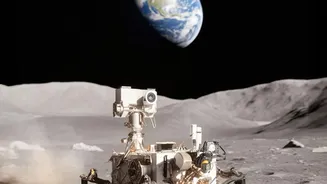
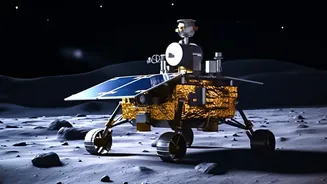
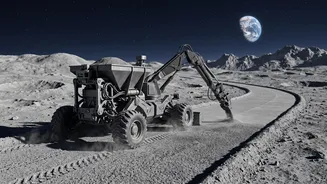
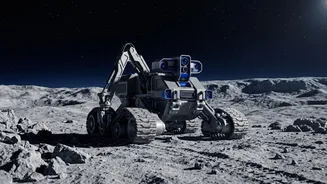
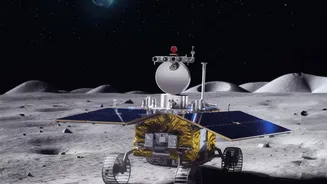
The future lunar construction site will be a hub of robotic activity. Fleets of rovers will work in concert, each performing specialized tasks. Some, equipped with advanced sensors like LiDAR, will survey the terrain to create detailed maps. Others will act as bulldozers and excavators, clearing rocks and levelling the ground for landing pads and habitats. A key challenge is coordination. With communication delays between Earth and the Moon making real-time control impractical, these robots need to be highly autonomous. They will rely on sophisticated software to make on-the-spot decisions, coordinate with other machines, and adapt to unforeseen obstacles. Agencies like NASA and private companies such as Lunar Outpost are developing the software and hardware for these multi-robot teams, envisioning a future where over 100 machines could operate simultaneously.
Building with Moon Dust
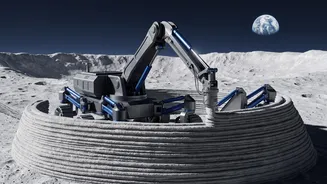
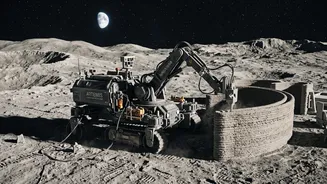
The most significant breakthrough in lunar construction is the concept of 'In-Situ Resource Utilization' (ISRU), which essentially means living off the land. The Moon is covered in a layer of fine, abrasive soil and dust called regolith. Instead of launching heavy materials from Earth, robots will be designed to use regolith as a primary building material. This could involve various techniques. For instance, robots could use concentrated solar energy or microwaves to melt the regolith, fusing it into a solid, glass-like material to create paved surfaces for roads and landing pads. This not only solves a logistical nightmare but also mitigates the serious problem of lunar dust, which can damage equipment and pose a health risk to astronauts. Other concepts involve robots 3D printing structures layer by layer using regolith as a base material, a topic deserving its own closer look.
The Challenges Ahead
While the vision is clear, the path to achieving it is filled with technical hurdles. The extreme lunar environment takes a toll on machinery. The fine, abrasive regolith can clog moving parts, and the dramatic temperature shifts can stress materials to their breaking point. Furthermore, without a GPS-like system on the Moon, navigation and precise positioning are major challenges that require innovative solutions. Robots must be incredibly robust, resilient, and intelligent. They need to be able to perform complex tasks like offloading large payloads from landers, assembling structures with high precision, and even repairing themselves. Current research focuses on creating these durable systems and the AI that will allow them to function independently for long durations, turning a desolate landscape into a worksite.