


A New Space Race Fueled by Startups
The dream of working in India's space sector is no longer tethered solely to the Indian Space Research Organisation (ISRO). A profound shift, accelerated since 2020, has unlocked the industry for private enterprise, leading to a Cambrian explosion of startups.
Today, over 400 private space companies are registered in India, transforming the career landscape for young engineers. This new ecosystem is not just supplementing ISRO; it's building a parallel, commercially-driven space economy. Historic government reforms, including the Indian Space Policy 2023 and the creation of IN-SPACe as a single-window agency to authorise private activities, have laid the foundation for this growth. The policy clarified that ISRO would transition away from routine manufacturing and focus on advanced research, effectively handing the baton for operational systems to the private sector.
Follow the Money: Investment Pours In
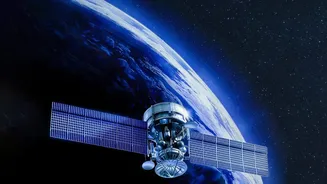
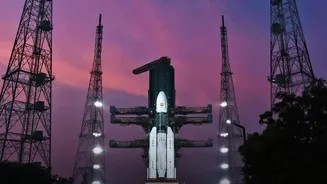
This policy shift has been met with a surge in investor confidence. Since 2021, Indian space-tech startups have attracted hundreds of millions of dollars in funding. In 2026 alone, the sector has already seen significant investment, with companies like the Google-backed Pixxel raising $100 million in a single round. This capital is flowing into a diverse group of companies. Hyderabad's Skyroot Aerospace, which launched India's first privately developed rocket, and Chennai's Agnikul Cosmos, known for its 3D-printed rocket engines, are building launch vehicles to deploy small satellites. Others like Pixxel are building constellations for high-resolution earth imaging, while Dhruva Space offers full-stack satellite solutions. This influx of cash isn't just about building rockets; it's about building an industry and, crucially, hiring the talent to power it.
The Jobs Beyond Rocket Science
While aerospace and mechanical engineers are still central, the new space jobs are remarkably diverse. The fastest-growing roles are often at the intersection of space and software. Companies are desperate for data scientists, remote sensing engineers, and GIS analysts who can interpret the terabytes of data sent back by Earth-observation satellites. These roles involve using Python and machine learning to create solutions for agriculture, climate monitoring, and urban planning. There is also soaring demand for software engineers with skills in C++, Python, and embedded systems to develop on-board flight software and autonomous navigation systems. Beyond software, there is a need for experts in propulsion systems, guidance and control, satellite systems, avionics, and robotics. The expansion is creating thousands of new, specialised jobs, with one estimate suggesting Indian companies will need around 40,000 technically skilled professionals in the coming years.
Building the Right Skill Set for Launch
For aspiring space professionals, a B.Tech in aerospace, mechanical, electronics, or computer science engineering is the most common entry point. However, companies are finding that theoretical knowledge alone isn't enough. They are increasingly looking for practical experience and are even hiring from adjacent industries like automotive, defence electronics, and robotics, then retraining them. Key skills that cut across most roles include strong engineering fundamentals, programming proficiency, and data literacy. An understanding of systems thinking—how different components of a spacecraft or ground station interact—is also highly valued. While premier institutions like the IITs, NITs, and the Indian Institute of Space Science and Technology (IIST) remain prime recruiting grounds, the talent search has broadened. Startups are also using internships, specialized university partnerships, and employee referrals to find the right people.