


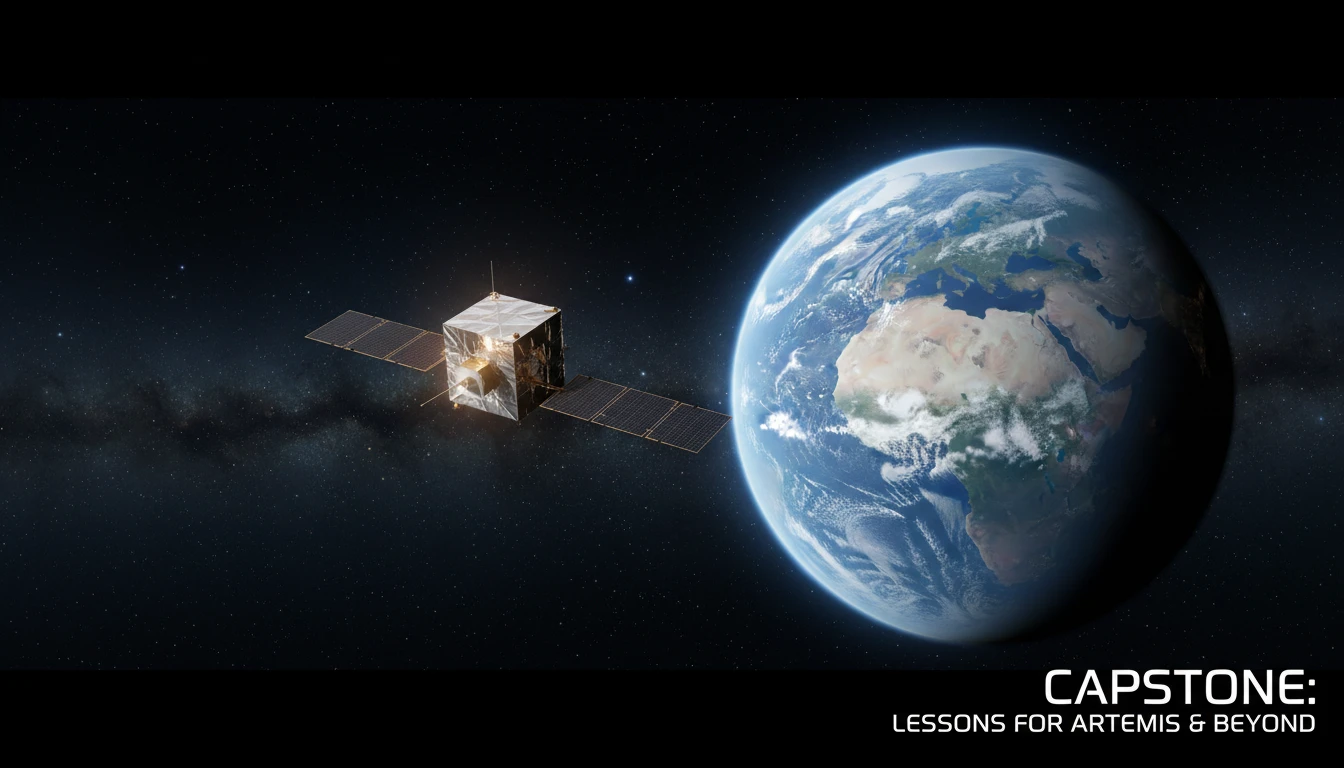


Meet the Trailblazing Satellite
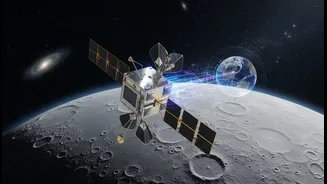
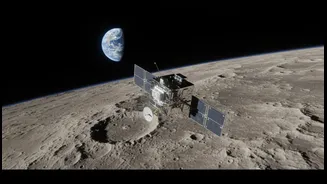
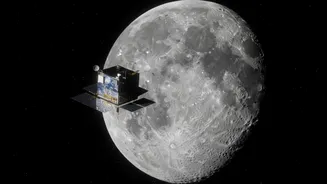
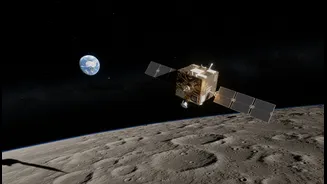
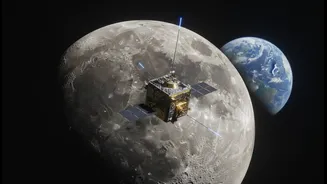
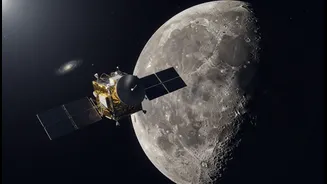
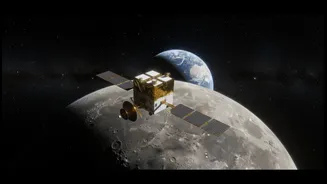
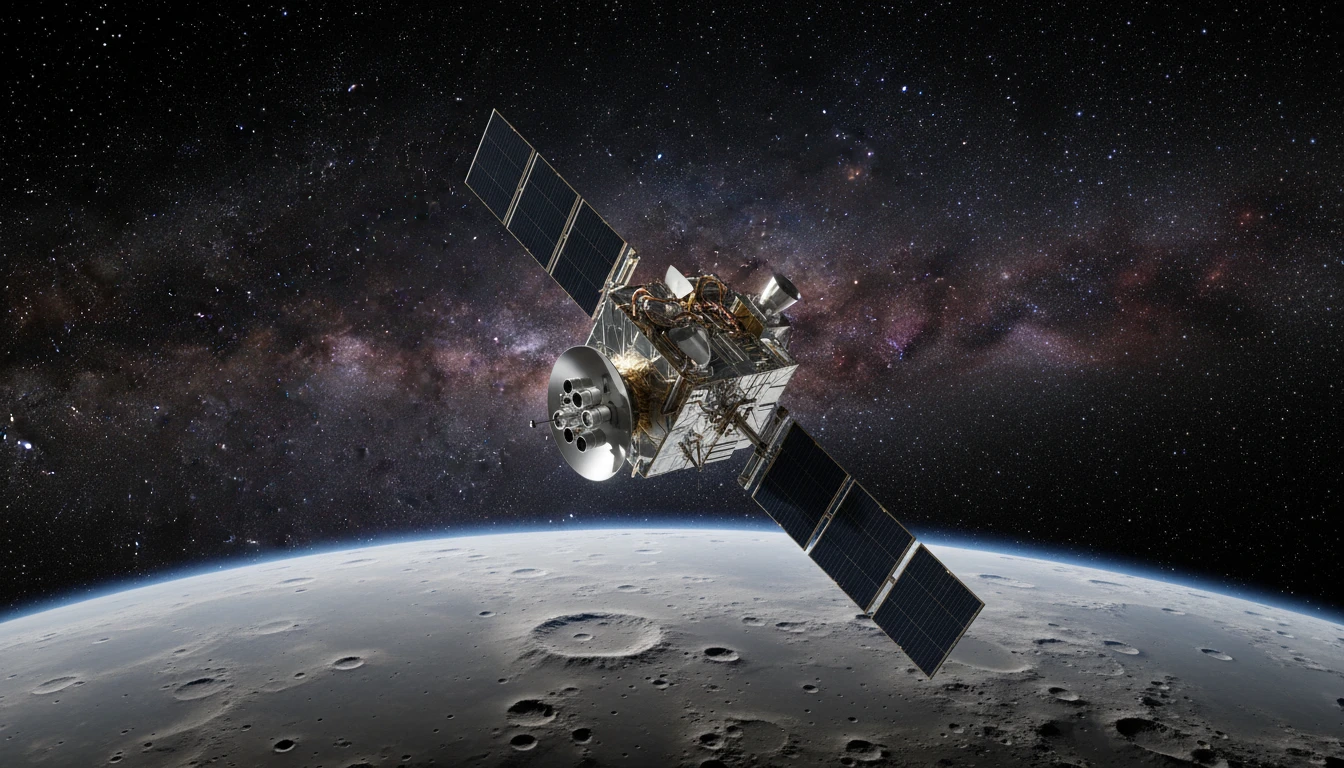
CAPSTONE, short for the Cislunar Autonomous Positioning System Technology Operations and Navigation Experiment, is a compact satellite, roughly the size of a microwave oven. Owned and operated by the Colorado-based company Advanced Space for NASA, it was
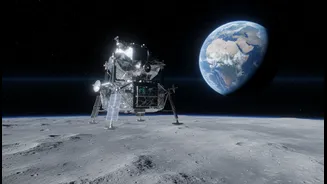
launched in June 2022 with a monumental task: to serve as a pathfinder for future lunar missions, especially NASA's Artemis program, which aims to establish a sustained human presence on and around the Moon. After successfully demonstrating its primary objectives, NASA's official activities with the craft concluded in June 2026, marking the mission a major success. The spacecraft was the first commercial mission to operate at the Moon, representing a new collaboration model between NASA and private industry.
A GPS System for the Moon
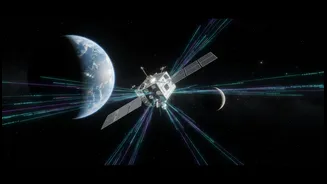
One of CAPSTONE's most significant achievements was testing an innovative navigation system. Currently, spacecraft in deep space rely on giant antennas on Earth to determine their location. This process is time-consuming and creates a bottleneck as more missions head to the Moon. CAPSTONE tested a new method, the Cislunar Autonomous Positioning System (CAPS), designed to let spacecraft figure out their own position autonomously. The experiment involved CAPSTONE communicating directly with NASA’s Lunar Reconnaissance Orbiter (LRO), which is also orbiting the Moon. By measuring the distance and speed between the two spacecraft, CAPSTONE’s software could calculate its own position, similar to how your phone uses signals from multiple GPS satellites. The successful test proves that future lunar missions can navigate more independently, a crucial capability for the busy environment envisioned around the Moon.
Charting an Unconventional Path
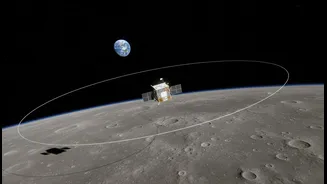
The other primary goal of the mission was to be the first spacecraft to fly in a unique and highly efficient lunar orbit, known as a near-rectilinear halo orbit (NRHO). This unusual, highly elliptical path is a gravitational sweet spot, balanced perfectly between the Earth and the Moon. A spacecraft in this orbit requires very little fuel to stay in place, making it ideal for a long-term installation like the planned Gateway space station—a future outpost for astronauts. By spending nearly two years successfully flying this path, CAPSTONE provided invaluable real-world data, confirming that the orbit is stable and suitable for Gateway, significantly reducing risks for future missions. The orbit also provides an uninterrupted line of sight to Earth for constant communication.
Paving the Way for Artemis
The success of CAPSTONE is a direct stepping stone for NASA’s Artemis program. The Gateway, which will serve as a command center and staging point for missions to the lunar surface, is designed to use the very NRHO that CAPSTONE just validated. The navigation technology it tested will be essential for the many spacecraft—landers, rovers, and crew vehicles—that will need to operate and dock with the Gateway without overwhelming Earth-based support systems. During an extended mission phase, CAPSTONE also tested advanced software for autonomous maneuvering and a more resilient form of deep-space communication called delay/disruption tolerant networking (DTN). This technology stores data when a connection is lost and forwards it automatically when the link is restored, a vital feature for reliable deep space operations. By proving these concepts, the small satellite has provided the confidence and data needed to push forward with building a permanent infrastructure for humanity at the Moon.