



The Core Problem: A Seasonal Mismatch
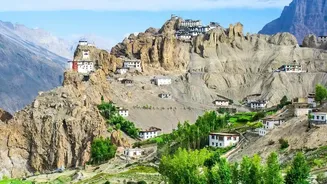
Ladakh is a cold desert, receiving less than 100mm of rainfall annually. For centuries, its agriculture has depended entirely on the predictable meltwater from Himalayan glaciers. Farmers would sow crops like barley and wheat in April and May, relying
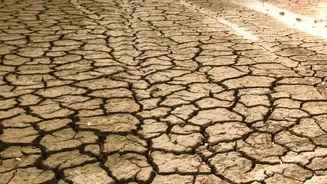
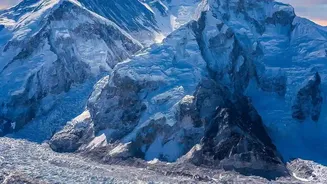
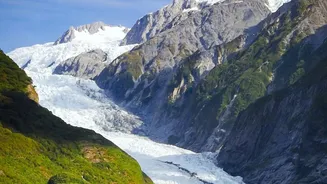
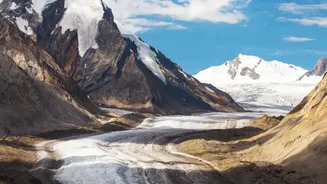
on snowmelt streams for irrigation. However, climate change has disrupted this ancient rhythm. Glaciers are receding at an alarming rate, and winter snowfall has become increasingly erratic. The smaller, lower-altitude glaciers that once fed villages are disappearing. The larger glaciers, now found only at much higher altitudes, melt later in the summer, well after the spring sowing season has passed. This creates a critical period of water shortage in early spring, when river flows are minimal but agricultural demand is at its peak. The water that does flow from premature snowmelt in winter often goes unused, while fields lie barren in April and May.
An Ingenious Solution: The Ice Stupa
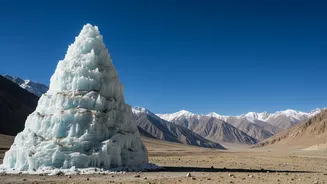
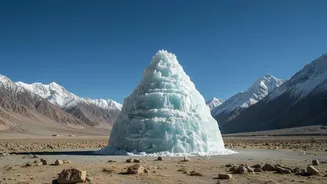
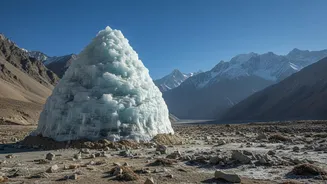
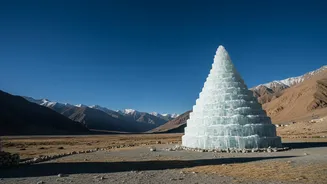
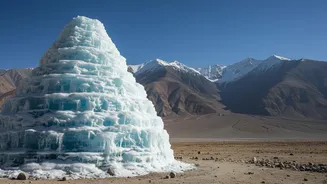
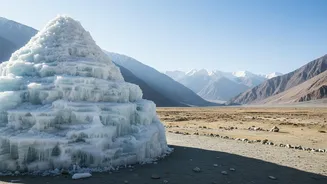
Enter the ice stupa, a revolutionary idea pioneered by Ladakhi engineer and innovator Sonam Wangchuk in 2013. While visiting a site, Wangchuk noticed a patch of ice that had survived the summer under the shade of a bridge, despite being at a low altitude. This sparked an idea: what if you could store the unused winter stream water in a way that it would last until spring? The concept is elegantly simple and requires no electricity or pumps. A pipe channels water from a higher upstream point during the freezing winter months. Due to gravity, the water travels down and then rises up through a vertical pipe at a lower altitude, spraying out from a sprinkler. As this water hits the frigid winter air, it freezes instantly, falling and accumulating around a basic frame. Over the winter, it grows into a massive cone of ice that resembles a Buddhist stupa, hence the name.
The Science of a Slow Melt
The conical shape is the key to the ice stupa's success. A cone exposes the minimum possible surface area to the direct sun for the volume of water it holds. Compared to a flat field of ice, which would absorb sunlight and melt quickly, the vertical stupa stays frozen for much longer. The first prototype, built in 2014, stood six metres tall and held 150,000 litres of water. It lasted until mid-May, well into the planting season, proving the concept worked. As spring temperatures rise, the stupa begins to melt slowly, releasing a steady stream of water precisely when farmers need it most for irrigating their newly planted fields. These artificial glaciers can store millions of litres of water, bridging the gap until the natural glacial melt begins in June.
Transforming Barren Land and Lives
The impact has been transformative for participating communities. Since the first prototype, dozens of ice stupas have been built across Ladakh, with some reaching heights of over 20 metres. These structures are turning barren land green. During the inauguration of one of the first major projects in 2015, villagers planted over 5,000 tree saplings using the meltwater. The project, largely driven by the NGO Students' Educational and Cultural Movement of Ladakh (SECMOL) and the Himalayan Institute for Alternatives, Ladakh (HIAL), empowers local communities to become active participants in solving their own climate challenges. Beyond agriculture, the initiative has spurred eco-tourism and winter sports, providing alternative livelihoods. The success has garnered international acclaim, including a Rolex Award for Enterprise for Sonam Wangchuk, and the concept is now being trialled in other mountain regions, from the Swiss Alps to Chile.