







Why the Traditional Resume Is Losing Its Edge
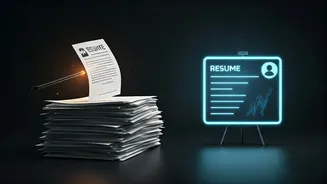
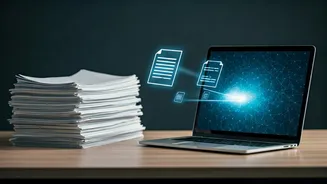
The humble resume has served generations of job seekers well, but its limitations are becoming more apparent in the digital age. Recruiters, often sifting through hundreds of applications for a single role, spend mere seconds on each document. A traditional
resume tells them what you’ve done; it doesn’t show them *how* you do it. It lists skills like 'Python proficiency' or 'content writing', but offers no immediate proof. This is where the document falls short. It's a static summary in a world that values dynamic evidence. Experts argue that relying solely on a resume is like describing a film instead of showing the trailer—you lose all the impact.
The Rise of the 'Portfolio of Links'
Instead of a simple replacement, think of this shift as an evolution. The new strategy, endorsed by many modern hiring managers, is to build a 'portfolio of links'. This is a curated digital footprint that acts as living proof of your capabilities. It allows a potential employer to move beyond bullet points and engage with your actual work, your thought process, and your professional personality. A well-crafted online presence can demonstrate technical skills through a code repository, creative talent through a design portfolio, or industry expertise through insightful articles. It transforms your application from a flat statement into an interactive experience, making it far more compelling and memorable for a time-poor recruiter.
Your First Link: A Polished LinkedIn Profile
Your LinkedIn profile is no longer just an online resume; it’s your professional headquarters. It should be the strongest and most comprehensive link you share. Go beyond just listing your education and internships. Use the 'Featured' section to showcase presentations, articles, or projects. Actively seek recommendations from professors and former managers. Write a compelling, keyword-rich 'About' section that tells your professional story. A complete, active LinkedIn profile signals to recruiters that you are serious about your career and understand the modern professional landscape. It’s often the first place a hiring manager will look after seeing your name, so make that first impression count.
Your Second Link: Proof of Work
This is where you show, not tell. The specific platform depends on your field. For developers and data scientists, a clean and well-documented GitHub profile is non-negotiable. It’s direct evidence of your coding style and problem-solving abilities. For designers, illustrators, and architects, a portfolio on Behance, Dribbble, or a personal website is crucial. For writers and marketers, a blog (on platforms like Medium or a personal site) showcasing your writing style and strategic thinking is invaluable. Even if your projects are from college, they demonstrate initiative and skill. The goal is to give a recruiter a one-click path to seeing tangible proof of the skills you claim to have.
Your Third Link: The Personal Hub
While not mandatory for everyone, a simple personal website or online CV can be a powerful tool for differentiation. This acts as a central hub that you control completely. You can introduce yourself with a short bio, embed your best projects, link to your LinkedIn and GitHub, and even host your resume for download. Services like Carrd, Linktree, or even a simple WordPress or Google Sites page can be set up in an afternoon. It shows a level of digital savvy and allows you to present a unified, professional brand that is entirely your own narrative, free from the constraints of a specific platform's layout.
So, Should You Delete Your Resume?
The headline is provocative, but the reality is more nuanced. No, you should not delete your resume just yet. Many companies still use Applicant Tracking Systems (ATS) that require a document upload to get you through the initial screening. However, the role of the resume has changed. Think of it now as a business card, not your entire life story. It should be a clean, concise, one-page document that is easy for both a human and a bot to scan. Crucially, it must include clear links to your LinkedIn profile and your portfolio. Your resume gets you in the door; your links are what will get you the interview.