


Prepare Your Vintage Fabric
Before you can begin sewing, your vintage silk needs proper preparation. Start by carefully inspecting the drapes for any damage, stains, or areas of significant wear. If they are dusty or have a musty smell, it’s best to clean them. Hand washing is often
the safest method for old silk. Use lukewarm water and a very mild, non-alkaline detergent. Avoid harsh scrubbing or wringing, which can damage the delicate fibres. Instead, gently squeeze the water out and roll the fabric in a clean towel to absorb excess moisture before laying it flat or hanging it to air dry away from direct sunlight. Once dry, press the fabric on a low heat setting, preferably with a pressing cloth, to remove wrinkles and prepare it for cutting. It's also recommended to pre-wash the fabric to prevent future shrinkage after your project is complete.
Gather the Right Tools for Silk
Working with silk requires specific tools to avoid snags, pulls, and frustration. Because the fabric is slippery and delicate, standard equipment may cause damage. Ensure you have a sharp rotary cutter or very sharp fabric scissors for clean cuts. When it comes to sewing, use a fine, sharp needle designed for microfibers or silk; a 60/8 or 70/10 size is ideal for lightweight silks. A standard needle can snag or pull the threads. For thread, a high-quality cotton thread is often recommended over silk or polyester. Cotton thread is less likely to tear the delicate fabric if a seam is stressed; the thread will break before the silk does. Finally, use fine, sharp silk pins to hold pieces together without leaving permanent holes.
Measure and Cut with Precision
Accurate measuring and cutting are critical when dealing with slippery silk. For cushion covers, measure your cushion insert and add about half an inch to an inch on all sides for seam allowance. For a simple envelope-style cover, you'll need one front piece (e.g., 17x17 inches for a 16-inch cushion) and two overlapping back pieces. A common method is to cut two back pieces that are the same width as the front but roughly half the height plus an extra four to five inches for the overlap. For the table runner, decide on the final dimensions. A good rule of thumb is for the runner to be about one-third the width of your table and hang over each end by 6-10 inches. When cutting, lay the fabric flat on a large surface. Using a cutting mat and rotary cutter can help maintain straight lines. Some sewists find it helpful to place tissue paper under the silk to give it more stability while cutting.
Sewing Your Envelope Cushion Covers
An envelope closure is a fantastic beginner-friendly option as it requires no zippers or buttons. Start with your two back pieces. On one long edge of each piece, create a clean, double-folded hem and stitch it down. Now, lay your front cushion piece down with the right side facing up. Place the two back pieces on top, right sides facing down, so they align with the edges of the front piece. The hemmed edges of the back pieces should overlap in the middle. Pin all four sides securely. Sew around the entire perimeter with a half-inch seam allowance. To prevent the delicate silk from unravelling, finish the raw seams inside with a zigzag stitch or an overlocker. Clip the corners at an angle before turning the cover right-side out, then gently push out the corners to get a crisp shape.
Crafting an Elegant Table Runner
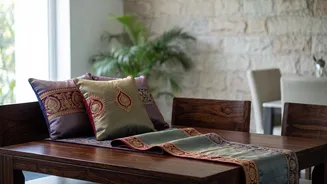
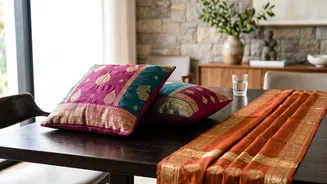
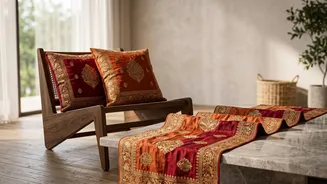
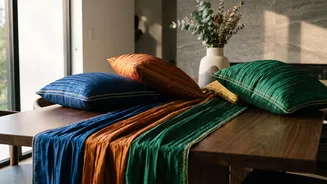
A table runner can be as simple or complex as you like. For an easy yet polished look, create a reversible runner. Cut two identical pieces of silk to your desired final dimensions, plus a half-inch seam allowance on all sides. Place the two pieces together with the right sides facing each other and pin them carefully. Sew around the edges, leaving a 5-inch opening on one of the long sides for turning. Remember to backstitch at the beginning and end. Clip the corners to reduce bulk. Turn the runner right-side out through the opening and press all the seams flat, using a low heat setting. For the final step, hand-stitch the opening closed using an invisible or ladder stitch for a seamless finish. Your elegant, upcycled table runner is now ready to grace your festive table.