







Breaking Down the Headline Number
The latest Periodic Labour Force Survey (PLFS) from the Ministry of Statistics and Programme Implementation reveals that India's unemployment rate for people aged 15 and above climbed to 5.4% in the first quarter of the 2026-27 fiscal year. This represents
a notable increase from the 5.0% recorded in the January-March quarter. The PLFS is the government's primary tool for measuring employment trends, offering a quarterly snapshot of the labour market. The 5.4% figure means that out of every 1,000 people in the labour force—those who are either working or actively seeking work—54 were unemployed during this period. While a single number provides a quick summary, the real story lies in the details beneath this headline statistic.
The Rural-Urban Divide Deepens
The overall increase in unemployment was largely driven by trends in the countryside. Rural unemployment saw a significant jump to 4.8%, up from 4.3% in the preceding quarter. In contrast, the urban unemployment rate experienced a much smaller rise, ticking up to 6.7% from 6.6%. This rural distress is a critical indicator, as a large portion of India's workforce resides in these areas. The widening gap suggests that job creation in rural India is not keeping pace with the number of people seeking employment. While urban centres remain the hub for salaried jobs, they also face intense competition for limited roles, keeping the unemployment rate there persistently higher than in rural areas.
A Worrying Trend for Youth and Women
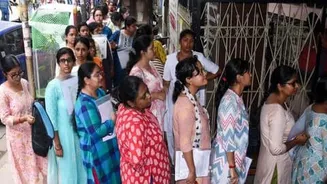
Perhaps the most concerning aspect of the new data is the sharp increase in youth unemployment. For individuals aged 15-29, the unemployment rate jumped to 15.9%, a series high for the current PLFS. This suggests that young people entering the workforce are finding it increasingly difficult to secure a job. The situation is particularly acute for women. The unemployment rate among urban females stood at a high 8.7%. Furthermore, the overall Female Labour Force Participation Rate (FLFPR) — the share of working-age women who are employed or looking for a job — saw a decline, falling to 33.2% from 34.7% in the previous quarter. This drop indicates that fewer women are participating in the economy, a trend that could have long-term consequences for household incomes and overall economic growth.
Labour Force Participation and Job Quality
Beyond just unemployment, another key metric, the Labour Force Participation Rate (LFPR), also showed a decline. The overall LFPR for those aged 15 and above fell to 54.6% from 55.5% in the previous quarter, marking a five-quarter low. A falling LFPR can indicate that people are discouraged and have stopped looking for work altogether. However, there was a small silver lining regarding the quality of employment for those who are working. The data shows a slight increase in the share of regular wage and salaried employees in both rural and urban areas. In rural areas, this share rose from 15.5% to 16.1%, and in urban areas, it increased from 48.9% to 49.3%. This suggests a slow but steady shift towards more formal and stable employment, even as the overall job market tightens.
Economic Context and The Path Forward
This uptick in unemployment reverses a multi-year trend of a steadily falling rate since the pandemic. The rise points to underlying challenges in the economy, such as a mismatch between the skills of graduates and the demands of the job market. Millions of new job seekers enter the workforce each year, creating immense pressure to generate sufficient opportunities. The data highlights the complex nature of India's employment challenge, where headline growth doesn't always translate directly into enough quality jobs for its large and young population. Policymakers will be watching these numbers closely, as they will influence decisions on everything from monetary policy and inflation control to targeted government schemes aimed at boosting job creation, particularly for the youth and women.