








From Theory to Trenches
A degree in archaeology in India is rich in theory, covering ancient history, prehistory, and art and architecture. Students spend years learning about the great discoveries that have shaped our understanding of the subcontinent's past. However, this
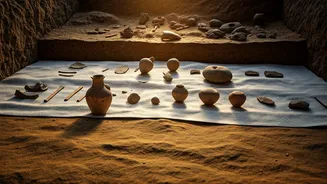
classroom knowledge often remains abstract. The reality of an archaeological career is not just knowing about the past, but knowing how to uncover and preserve it. This requires hands-on experience in excavation techniques, site survey methods, and artifact analysis—skills that cannot be fully learned from a textbook. Many graduates find themselves ill-equipped for the physical and methodological demands of fieldwork, creating a disconnect between their academic qualifications and the practical needs of the profession.
The Fieldwork Deficit
Meaningful fieldwork opportunities during an archaeology degree are often few and far between. While some universities and institutions try to provide exposure, it is not always a core, mandatory part of the curriculum. Logistical challenges, funding issues, and the sheer number of students can make organising large-scale training excavations difficult. The Archaeological Survey of India (ASI) offers a prestigious but limited internship program, which cannot cater to the thousands of students graduating each year. This scarcity of on-site experience means many students never learn the systematic process of digging, the patience required for documentation, or the teamwork essential to a successful excavation. Without this fundamental experience, their career prospects can be severely limited.
The 21st-Century Archaeologist's Toolkit
Modern archaeology extends far beyond the trench. Today's professionals need a diverse set of technical skills. Geographic Information Systems (GIS) are used to map sites, remote sensing helps identify buried structures without digging, and 3D modeling preserves artifacts and monuments digitally. Furthermore, there is a growing demand for specialists in bio-archaeology, archaeobotany, and ancient DNA analysis. Most Indian university programs have been slow to integrate these technologies and interdisciplinary sciences into their core courses. This creates a significant skill gap, leaving graduates unprepared for a job market that increasingly values technical proficiency in areas like data analysis, digital preservation, and scientific sample collection.
Forging a Path Forward
Closing this gap requires a concerted effort from universities, government bodies, and heritage organisations. Curricula must be updated to integrate mandatory, credit-based fieldwork. Universities can partner with the ASI and state archaeology departments to create more structured internship and training opportunities. Workshops on modern techniques like GIS, drone mapping, and digital photogrammetry should become standard. Encouraging interdisciplinary study, where a history student can take a course in geology or a science student can specialise in archaeological chemistry, would also create more well-rounded and employable graduates. Private organisations and NGOs focused on heritage can also play a role by offering practical workshops and volunteer opportunities.